Serving Youngstown, OH & nearby
(234) 297-4828
Youngstown, OH

Garage Door Maintenance for Canfield's 1970s Housing Stock

Canfield's houses mostly went up around 1977 - steel sectional doors, extension springs, chain-drive openers. Maintenance here means different parts than older Youngstown-area stock.

Garage Door Maintenance for Canfield's 1970s Housing Stock
Youngstown, OH
8 services
5 service areas
Diagnosis first, then the fix

How Long It Takes

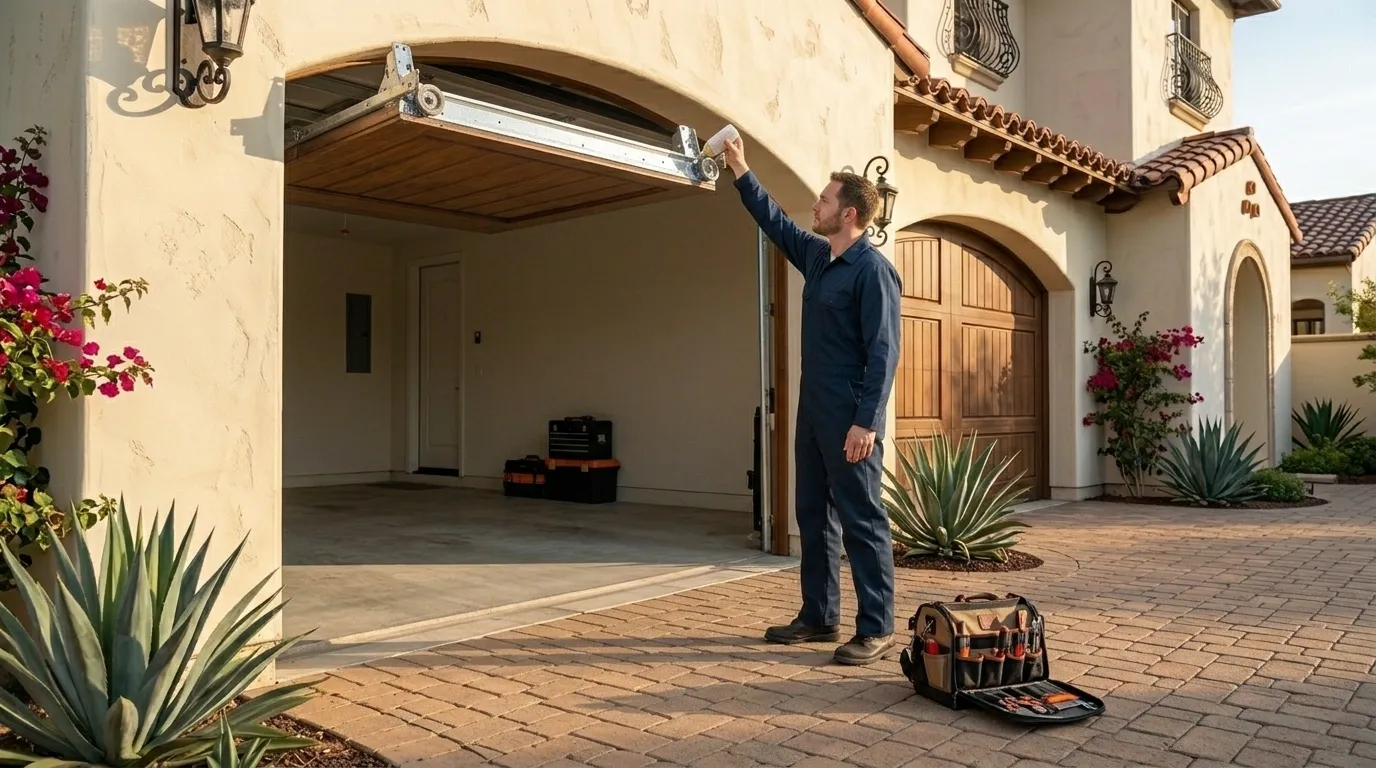
A standard maintenance visit runs the same checklist regardless of the door's age: lubricate rollers and hinges, check spring tension, inspect cable fraying, tighten track brackets, test the auto-reverse safety sensors, and look at weatherstripping. On a door from the Canfield era - built around 1977, a decade or so newer than the 1938-2000 spread across the wider service area - the hardware is usually original steel sectional panels on extension springs, sometimes with a chain-drive opener added later. That's a more predictable setup than the older one-piece wood doors still found on earlier houses elsewhere in the service area, so the inspection tends to move faster because there are fewer surprise parts to chase down. We're not quoting a specific number of minutes here because it depends on what we find once the door's open, but a door with intact original hardware and no rust seizing the springs is a shorter visit than one where corrosion has locked the pulleys.

Getting It Booked In

We work out of Youngstown and Canfield is an 8-mile trip, which keeps a maintenance call a straightforward add-on to the day rather than a special trip. There's no local branch or depot here - just a truck coming from Youngstown - so we don't promise a same-morning slot the way a company physically based in town might. What we can do is bundle a maintenance visit with any repair call if you're already having an issue, since the inspection and the fix use the same time on-site.

The DIY Question

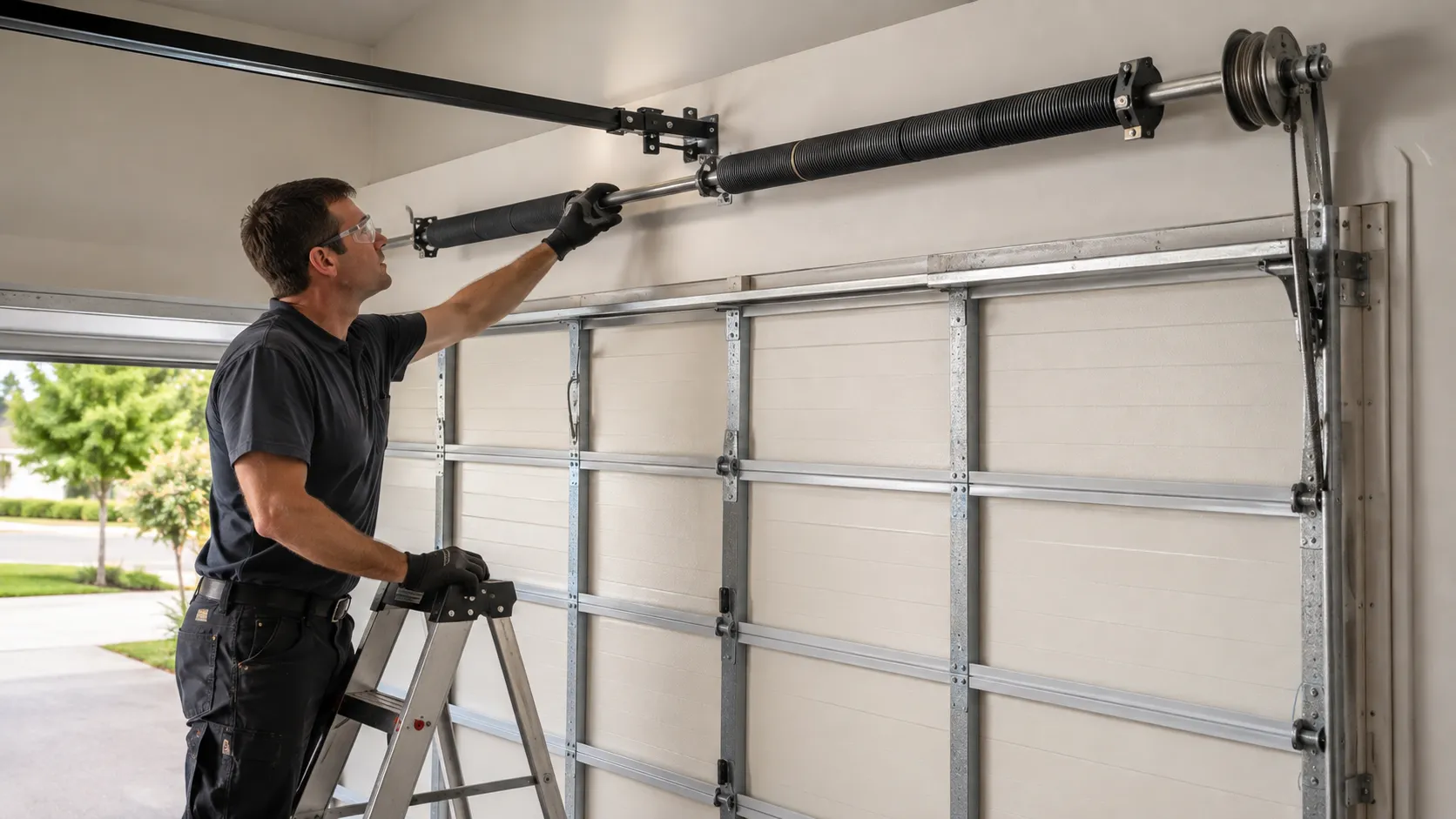
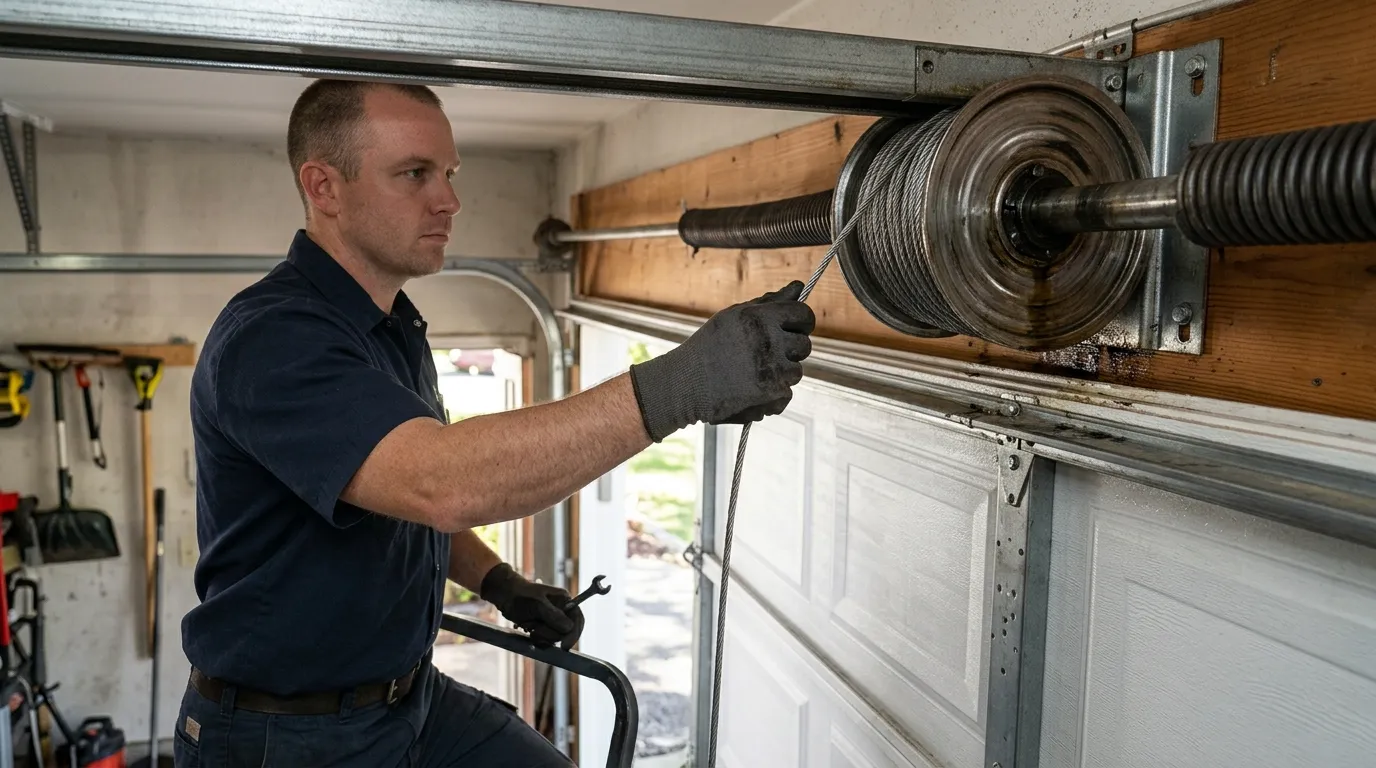
Lubricating hinges and rollers with a garage-door-specific spray, and visually checking that cables aren't frayed, is reasonable for an owner to do a couple times a year. Testing the auto-reverse feature - set something under the door and make sure it stops and reverses - is also safe and worth doing yourself. What isn't worth doing yourself: touching the spring. Extension springs, which is what most Canfield-era doors from the 1970s were built with, store enough tension to cause a serious injury if the winding cone slips, and they're not intuitive to adjust safely without the right bars and clamps. If a door feels heavy to lift by hand, or one side lifts before the other, that's a spring or cable problem, not a lubrication problem, and it's not a DIY fix.

Where This Job Goes Sideways

The most common failure point on a door from this era is an extension spring that's outlived its cycle count without anyone noticing, because unlike a torsion spring set failing, an extension spring failure is loud and sudden rather than a slow give. The second is a chain-drive opener from a later retrofit whose sprocket has worn unevenly against the original track alignment, since the opener and the door weren't necessarily installed together. We'll be honest about the limitation here: if the extension springs on a 1970s-era door are original, replacing just one and leaving its mismatched partner is asking for a second failure within a year or two - we'll tell you to do both, even though that costs more than fixing what's actually broken.

What You Are Seeing

If the door is noticeably harder to lift by hand than it used to be, or drops the last foot instead of lowering evenly, that's spring fatigue - normal after enough open-close cycles on a house this age. Rust streaking down from the spring coils, especially after a winter, points to moisture getting into a spring that's due for lubrication or replacement. A door that shudders or bangs partway through its travel, on the other hand, usually means a track bracket has worked loose rather than anything to do with the spring at all - two different symptoms that get confused for one another more than they should.

Why It Happens Here

The climate band across this service area is classified cold and severe, and that matters more for doors built in the 1970s than for newer installs, because the original extension springs and steel panels weren't specified with today's cold-weather coatings. Freeze-thaw cycling over a winter stiffens old lubricant inside the spring coils and track, which is exactly the kind of wear that shows up as the "door feels heavy" complaint above. None of that is unique to any one house - it's just what happens to hardware from this build era after enough winters in this part of Ohio.
How it works

From “it’s stuck” to “it’s fixed”

Tell us what’s wrong - Youngstown garage door service

Tell us what’s wrong

Describe the symptom - won’t open, loud bang, opener runs but the door won’t move.

On-site diagnosis - Youngstown garage door service

On-site diagnosis

A technician tests the door under power and by hand and finds what actually failed.

Clear, up-front plan - Youngstown garage door service

Clear, up-front plan

You get the fix that’s needed and what drives the cost - before any work starts.

Repaired & tested - Youngstown garage door service

Repaired & tested

The repair is done, the door is set true and tested, and the work area left clean.

Serving Youngstown, OH - tell us what your door’s doing and we’ll take it from there.

How we work

What to expect

Diagnosis firstEvery visit starts by finding what actually failed - not a pre-written parts list.
The right part for the doorSprings and openers matched to the door’s weight and age, so the fix holds up.
Straight answersWhen a repair makes more sense than a replacement - or the reverse - you hear it plainly.
Clean, careful workTension released safely, hardware set true, the door tested under power before we leave.
64,628
Residents in Youngstown
8
Garage door services
5
Neighborhoods & suburbs
OH
Serving Youngstown, OH
Questions

Frequently asked

Straight answers about garage door repair in Youngstown. Still unsure? Ask us directly.

How often should I get my garage door serviced in Canfield?

Once or twice a year is standard for most doors, more often if you notice the door getting harder to lift or making new noise. Doors from Canfield's typical 1970s build era with original extension springs benefit from a fall check before winter stiffens the hardware, since cold makes existing wear worse.

Do you have a location in Canfield?

No - we run out of Youngstown, about 8 miles away, and cover Canfield as part of the wider service area. There's no local branch here, just a truck coming out for the appointment.

Is it worth replacing extension springs instead of repairing them?

If one extension spring on an original 1970s setup has failed, we'll usually recommend replacing both sides together rather than just the broken one, since the surviving spring has the same age and cycle count and tends to fail soon after. That costs more upfront but avoids a second service call.

Ready to get your garage door sorted?

Request a QuoteCall