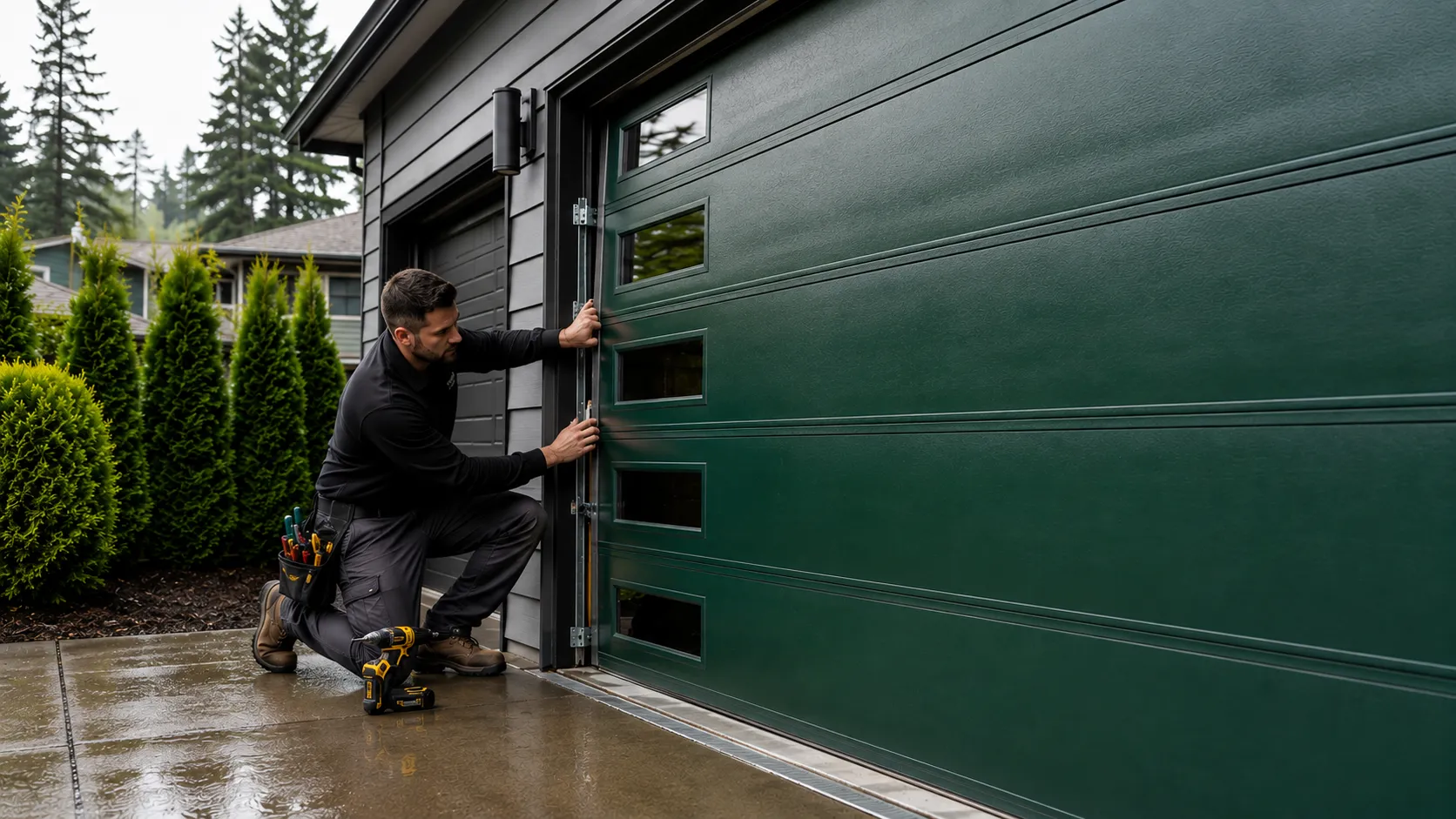
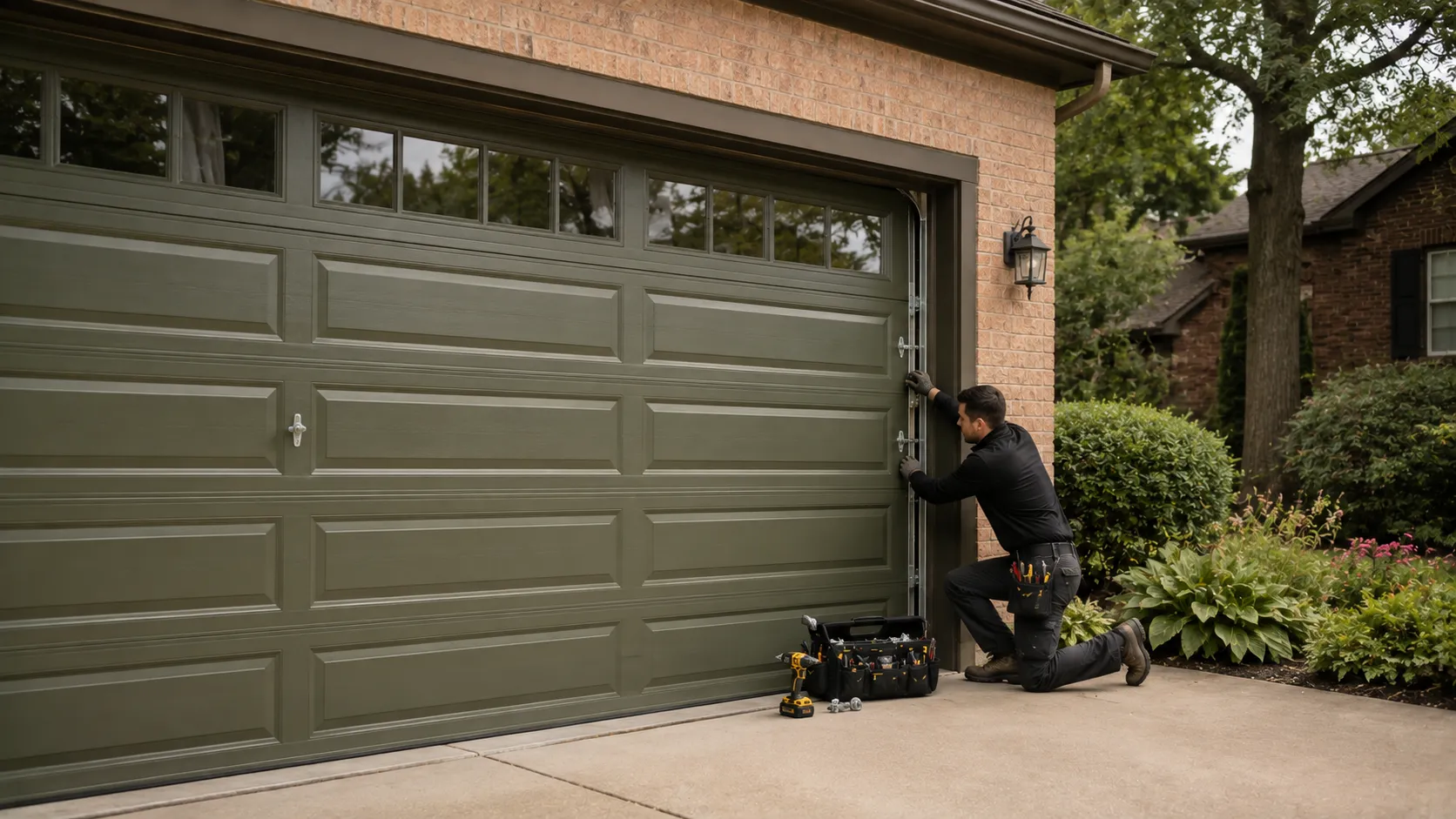
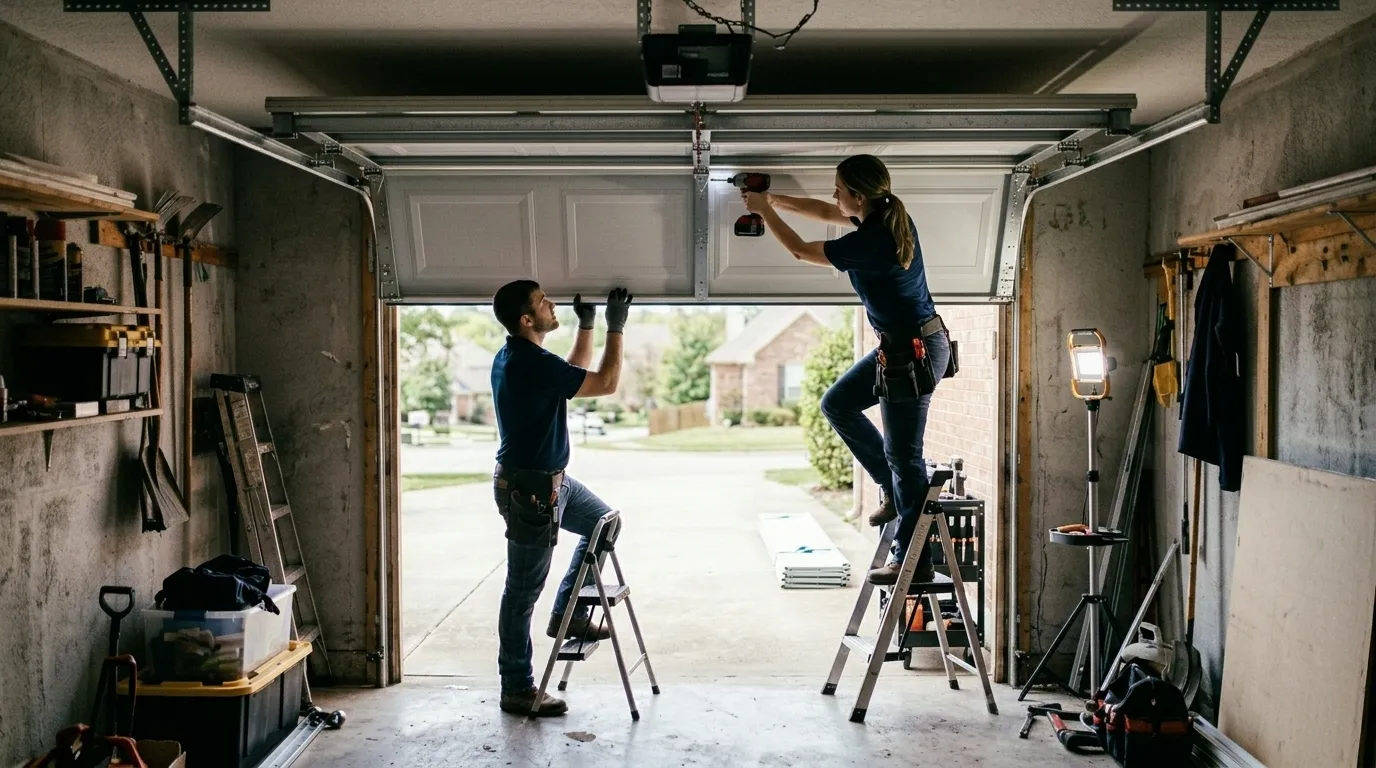
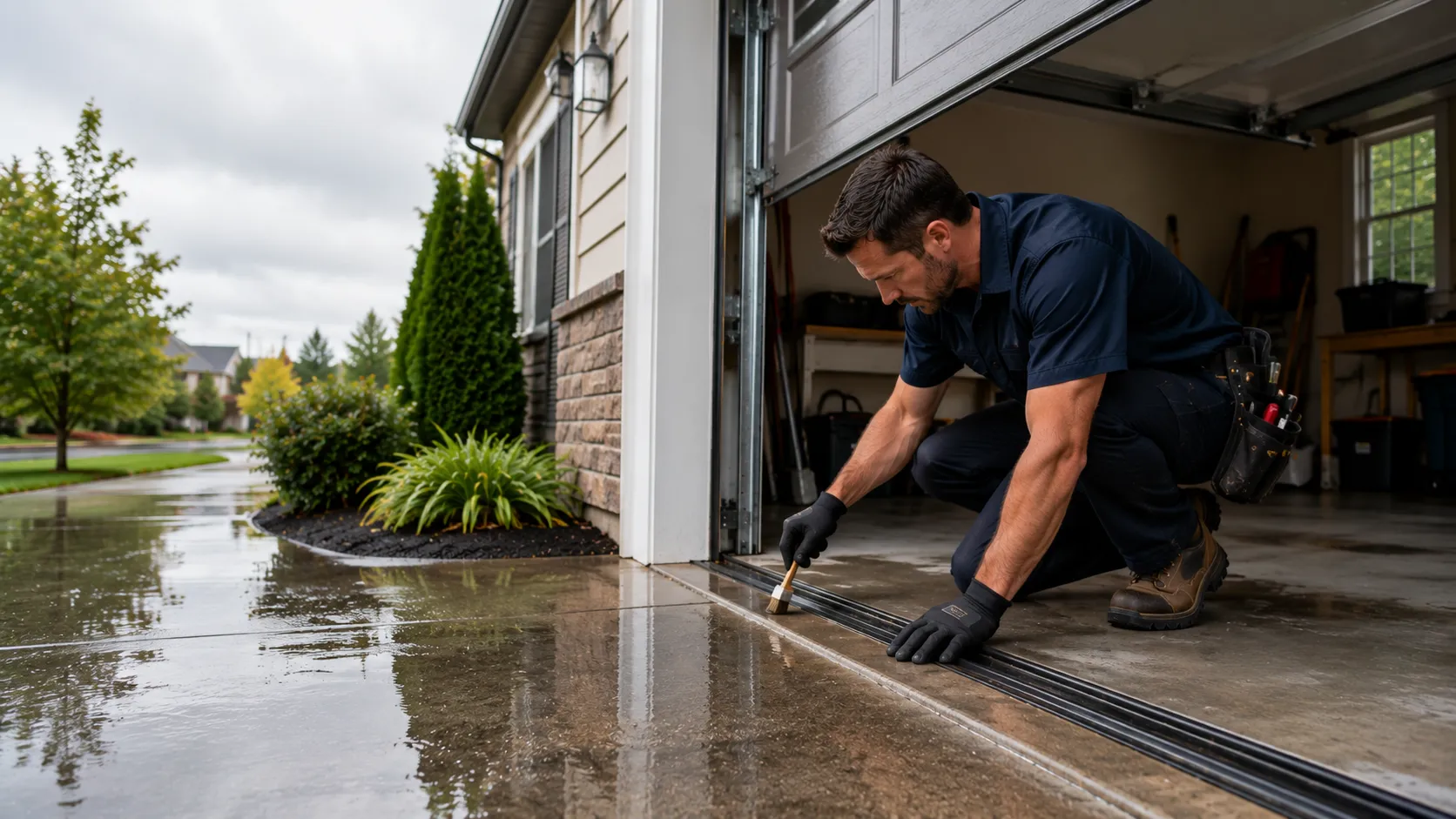
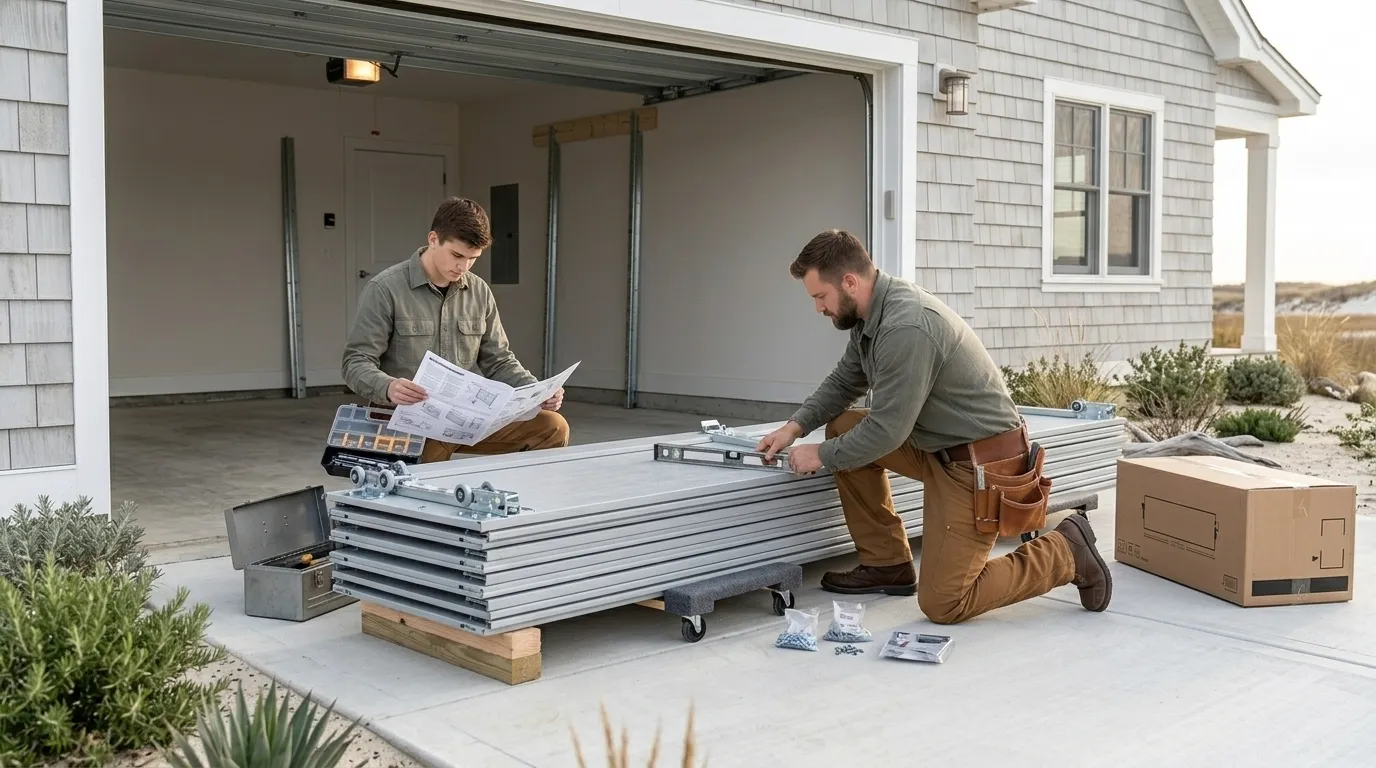
Austintown's houses mostly date to the mid-1960s, which means original extension-spring cable setups still doing hard duty. We come from Youngstown, 5 miles out, to fix them.
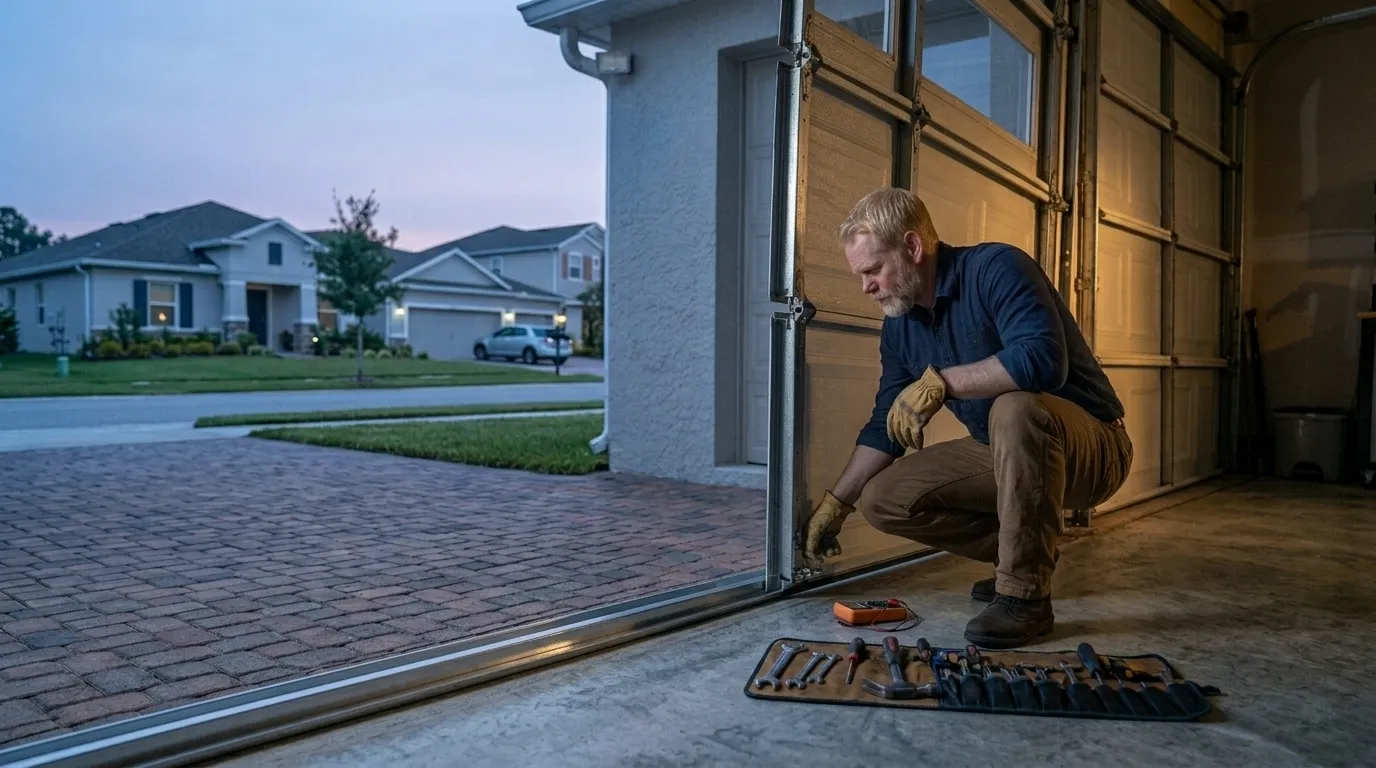
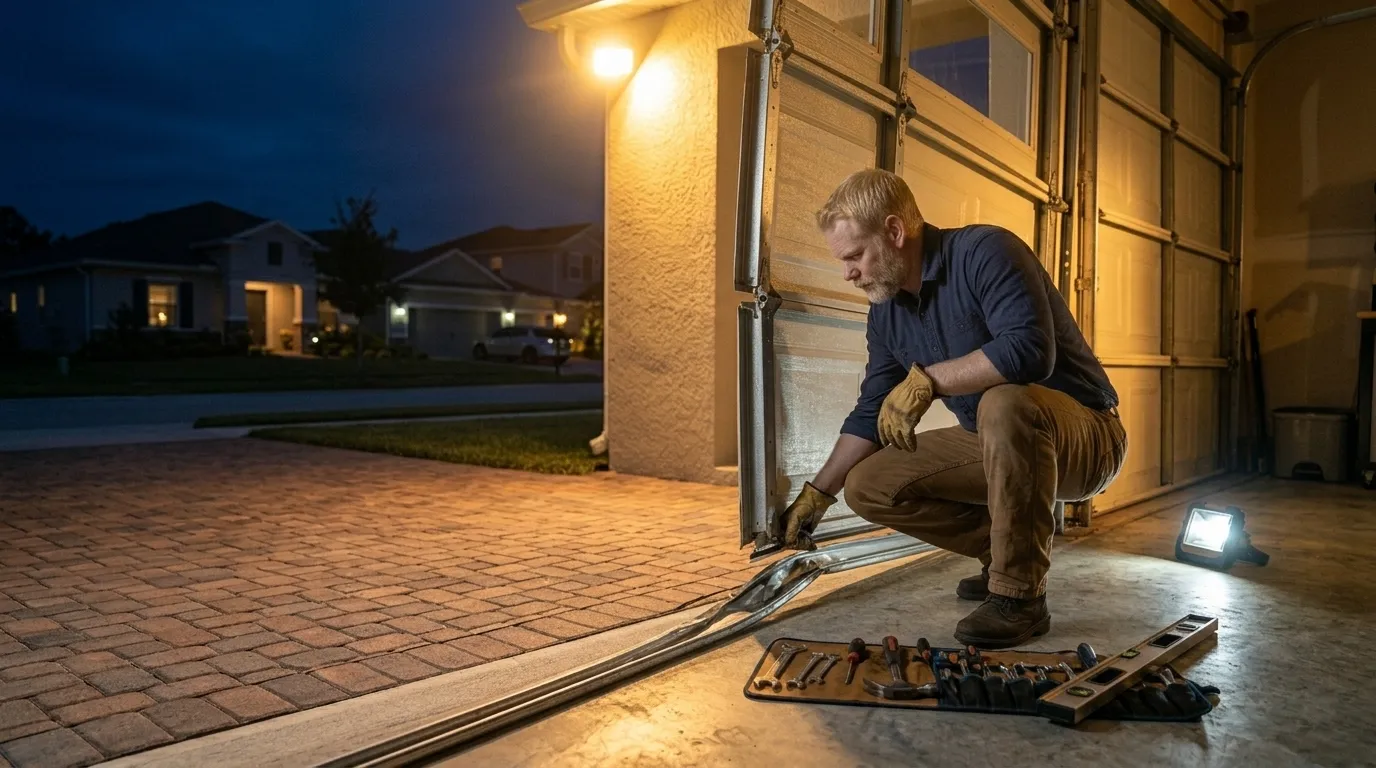
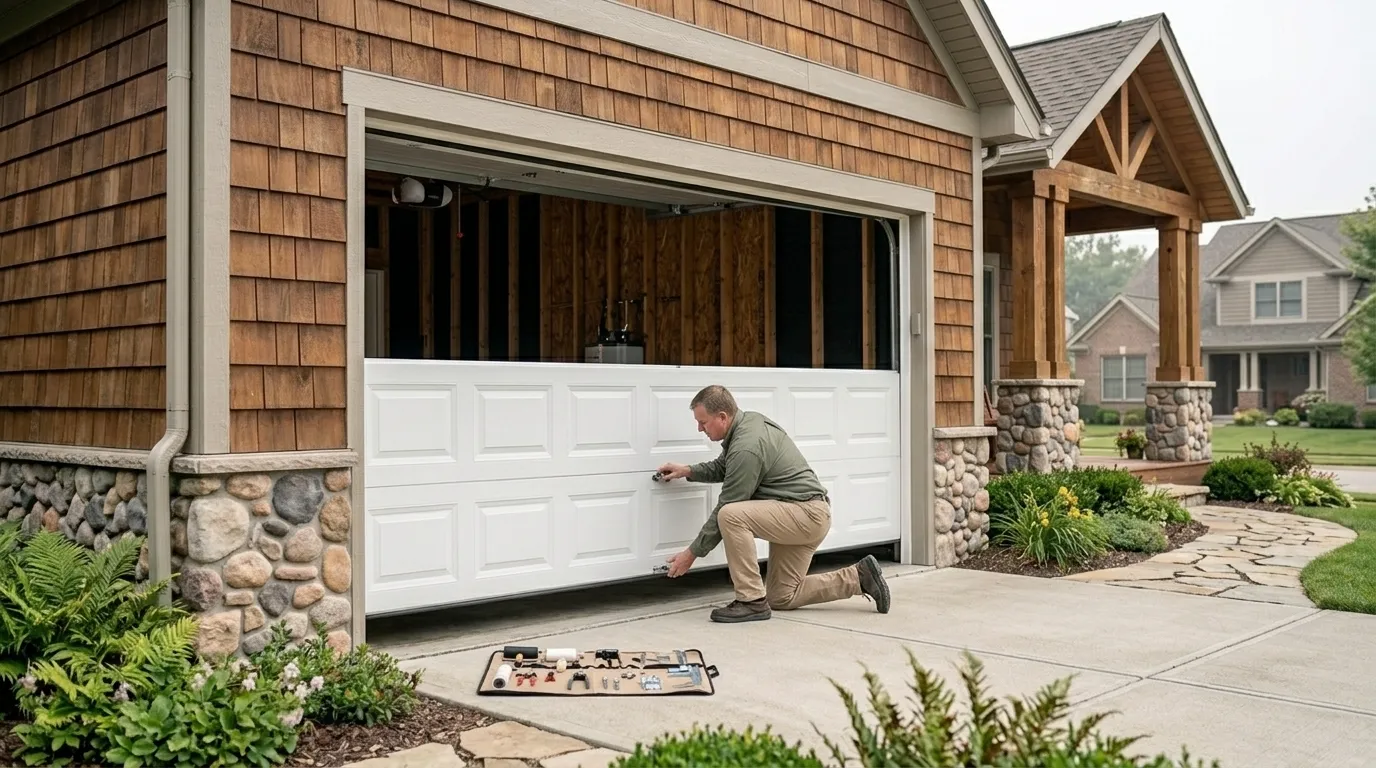
The call we get most from this side of town starts the same way: the door slams down on one side, or it won't budge past a foot off the floor and one cable is hanging loose by the bottom bracket. That's a snapped or frayed lift cable, and it's almost never the whole story - a cable doesn't fray on its own, it frays because the drum it's wound on has slipped, or the spring on that side is already weak and putting uneven load on the wire.
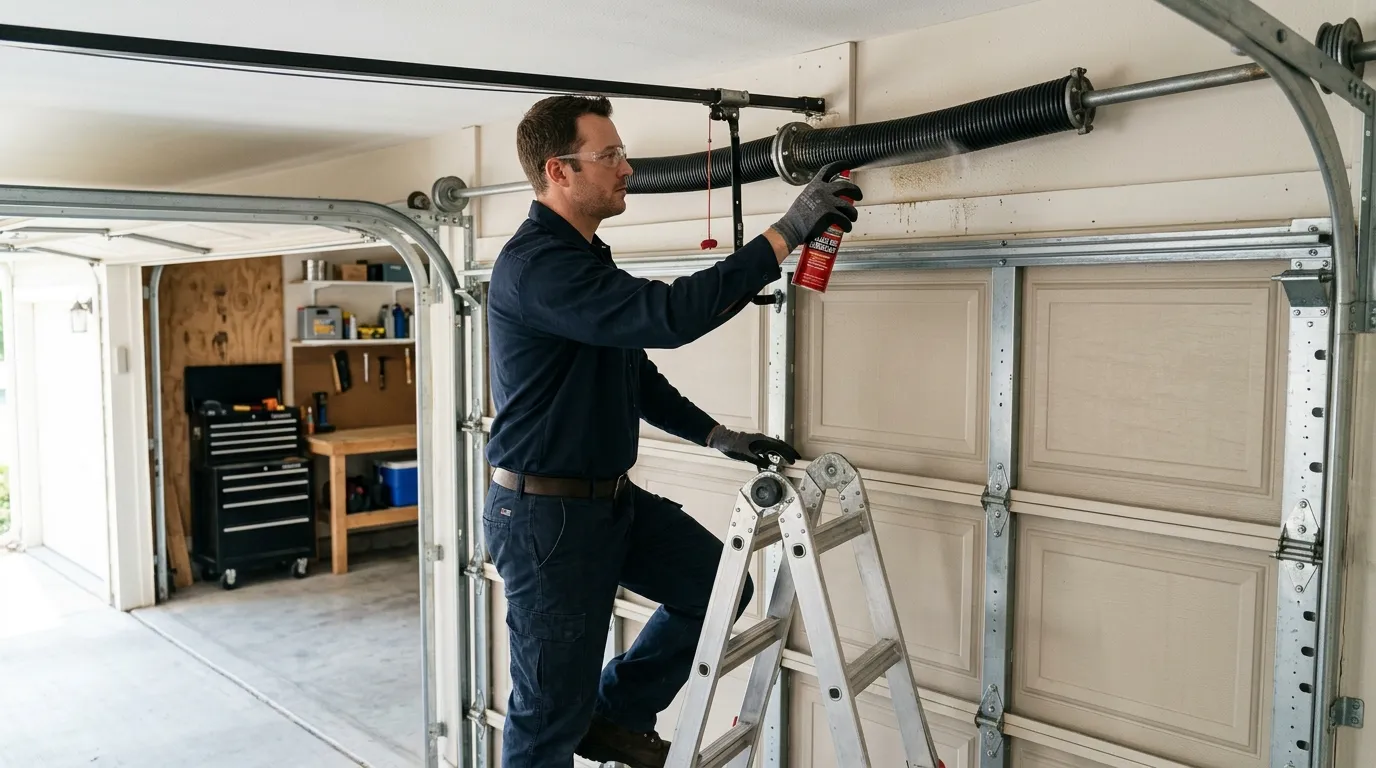
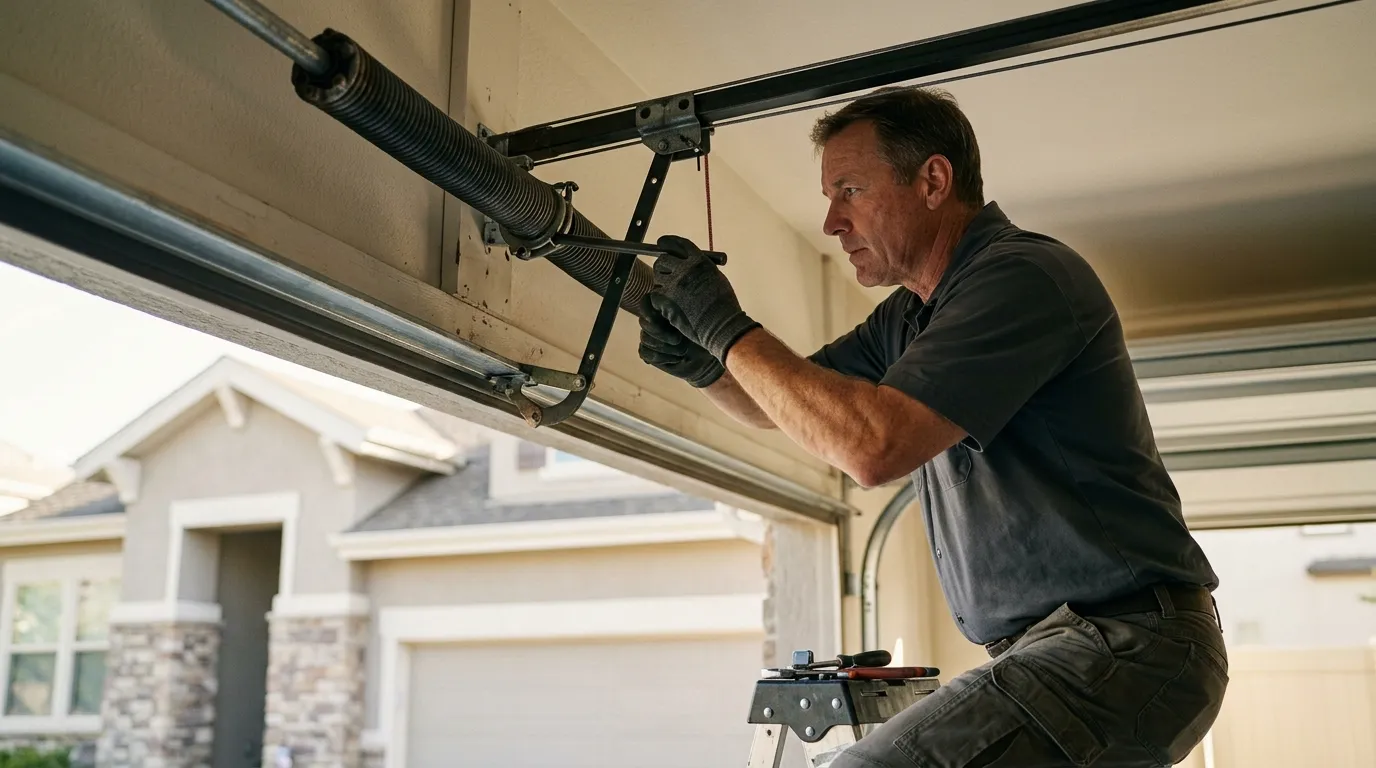
Austintown's housing stock centers on 1967, and a lot of that original two-car garage hardware is still in service. Doors from that era were built with extension springs stretched along the horizontal tracks, and the cables ride over pulleys down to the bottom brackets - a system that works fine for decades until one strand starts to go. Because the whole area went up in roughly the same building push, we see the same failure on block after block: not a coincidence, just matching age.
A garage that faces the wind gets it worse. Ohio winters put real stress on these lines - cold makes steel cable brittle and extension springs lose tension faster than in a mild climate, so a marginal cable that would limp along another year somewhere warmer gives out here in January instead.
The DIY Question
A broken lift cable is not a bolt-it-back-on job. The cable is under load from a stretched extension spring even when the door looks still, and if you unhook the wrong bracket first, that spring can whip the cable or the pulley loose hard enough to hurt you. We're not saying this to sell the visit - it's just true of the mechanism.
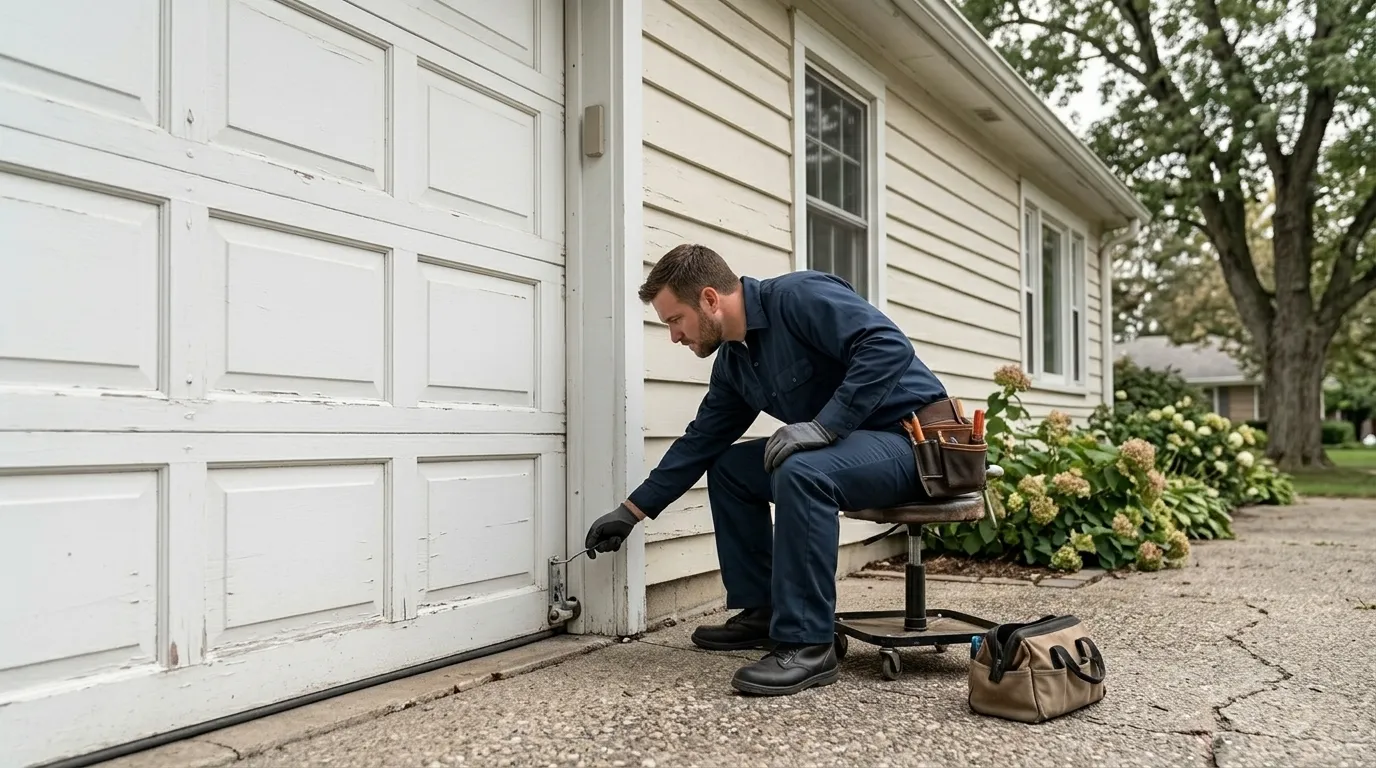
What you can safely check yourself: look at the cable where it wraps the bottom bracket and where it sits on the drum at the top. If you see broken strands, rust bloom, or the cable riding off the drum groove, that's your answer, and it's not getting better on its own. If the door is already off track or leaning, leave it - don't try to force it level or pull the release cord to "see what happens."
One honest limit: if the drum or pulley on original 1960s hardware is worn oval instead of round, a cable replacement alone won't hold - the new cable will just fray again in a season. We'll tell you straight if that's what we're looking at instead of just swapping the wire and sending you a bill you'll pay again next year.
Stocked Parts
Because so much of Austintown's housing lines up around the same 1967 build year, the cable gauges and drum sizes repeat house to house, and we carry what fits that generation of extension-spring hardware on the truck rather than special-ordering it. Standard 1/8-inch aircraft cable, the bottom-bracket clips that match older track widths, and stationary cones sized for the pulleys these doors originally shipped with.
Where it gets slower is torsion conversions - some owners upgraded from the original extension setup to torsion springs over the decades, and those jobs use different drums and cable lengths depending on who did the conversion and when. If your garage has been retrofitted, we may need to confirm the spec before we cut new cable, which can mean a short parts wait rather than a same-visit fix. We'd rather tell you that up front than guess and come back twice.
Getting It Booked In
We run out of Youngstown, about 5 miles from Austintown, so the truck is close by rather than crossing the whole service area to reach you. Across the wider territory we cover 41,076 owner-occupied houses, and Austintown's roughly 14,437 households are a meaningful share of that - this isn't a side stop, it's regular route work.
Median household income here runs lower than the broader service area's $60,598, closer to the low $50,000s, and that's part of why we lead with the repair option before replacement: a cable and drum job costs a fraction of a new door, and for hardware that's otherwise sound, fixing the cable is the right call, not the upsell. Bring us the make and rough age of the door if you know it, and we'll bring the matching cable stock.
How it works
From “it’s stuck” to “it’s fixed”
01
Tell us what’s wrong
Describe the symptom - won’t open, loud bang, opener runs but the door won’t move.
02
On-site diagnosis
A technician tests the door under power and by hand and finds what actually failed.
03
Clear, up-front plan
You get the fix that’s needed and what drives the cost - before any work starts.
04
Repaired & tested
The repair is done, the door is set true and tested, and the work area left clean.
Serving Youngstown, OH - tell us what your door’s doing and we’ll take it from there.
Why do so many Austintown garages have the same cable problem at the same time?
Because the neighborhood was mostly built around 1967, the extension-spring hardware installed then is aging out on a similar timeline across many houses. It's not one bad batch - it's just matching construction dates catching up at once.
Is a snapped cable always a spring problem too?
Not always, but often. A cable frays when load on it is uneven, which usually traces back to a weakening spring or a worn drum. We check both before we call it a simple cable swap, since replacing just the cable on a bad drum won't hold.
Do you carry cable parts on the truck or order them?
Standard extension-spring cable and hardware for the common 1960s-era setups, yes - that's most of what we see here. If your garage was converted to torsion springs at some point, we may need to confirm sizing before cutting new cable.
Does winter make cable failures worse here?
Yes. Cold makes steel cable more brittle and pulls extra tension through an already-weak extension spring, so a marginal cable is more likely to snap in a hard Ohio winter than during a milder stretch of the year.