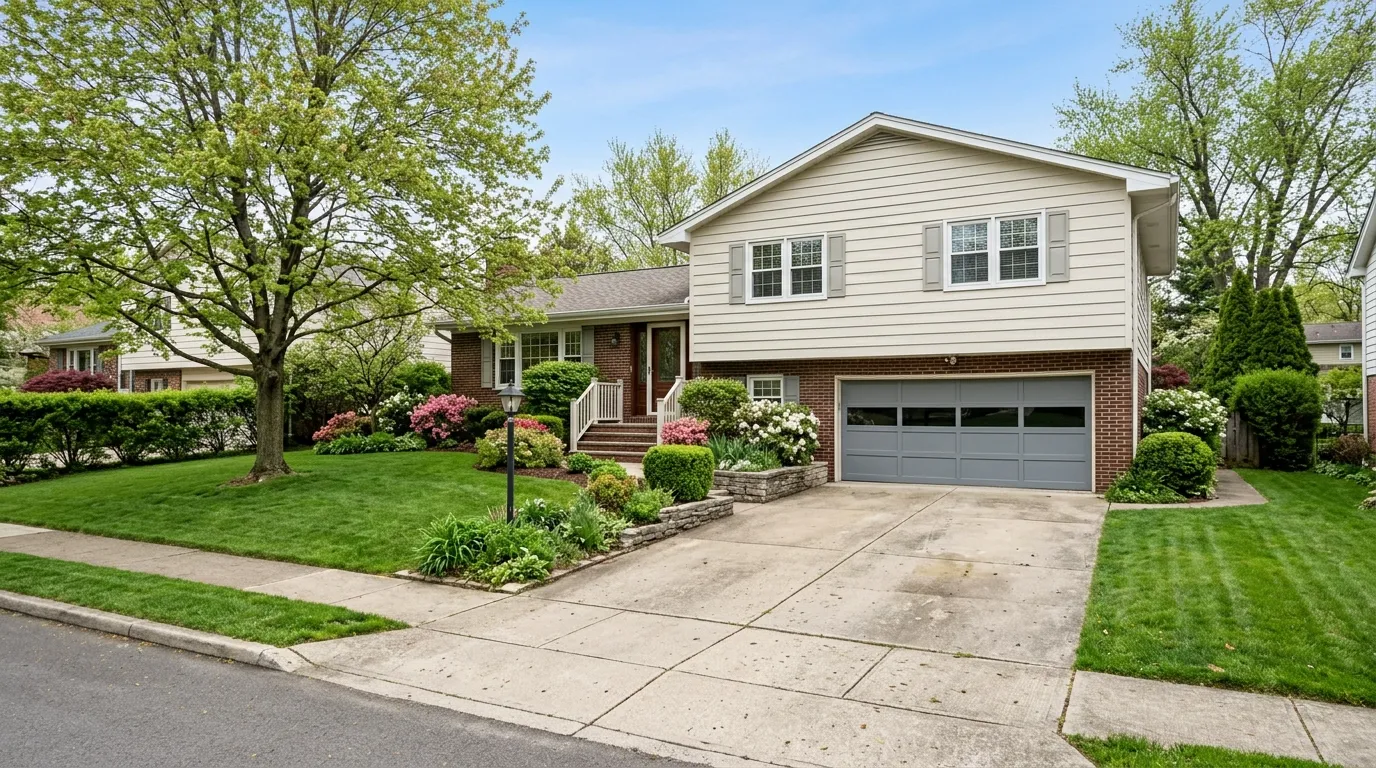
Austintown's houses mostly went up around 1967, a few years past Youngstown's citywide median. That gap changes what installers find behind the trim. Here's what we see.
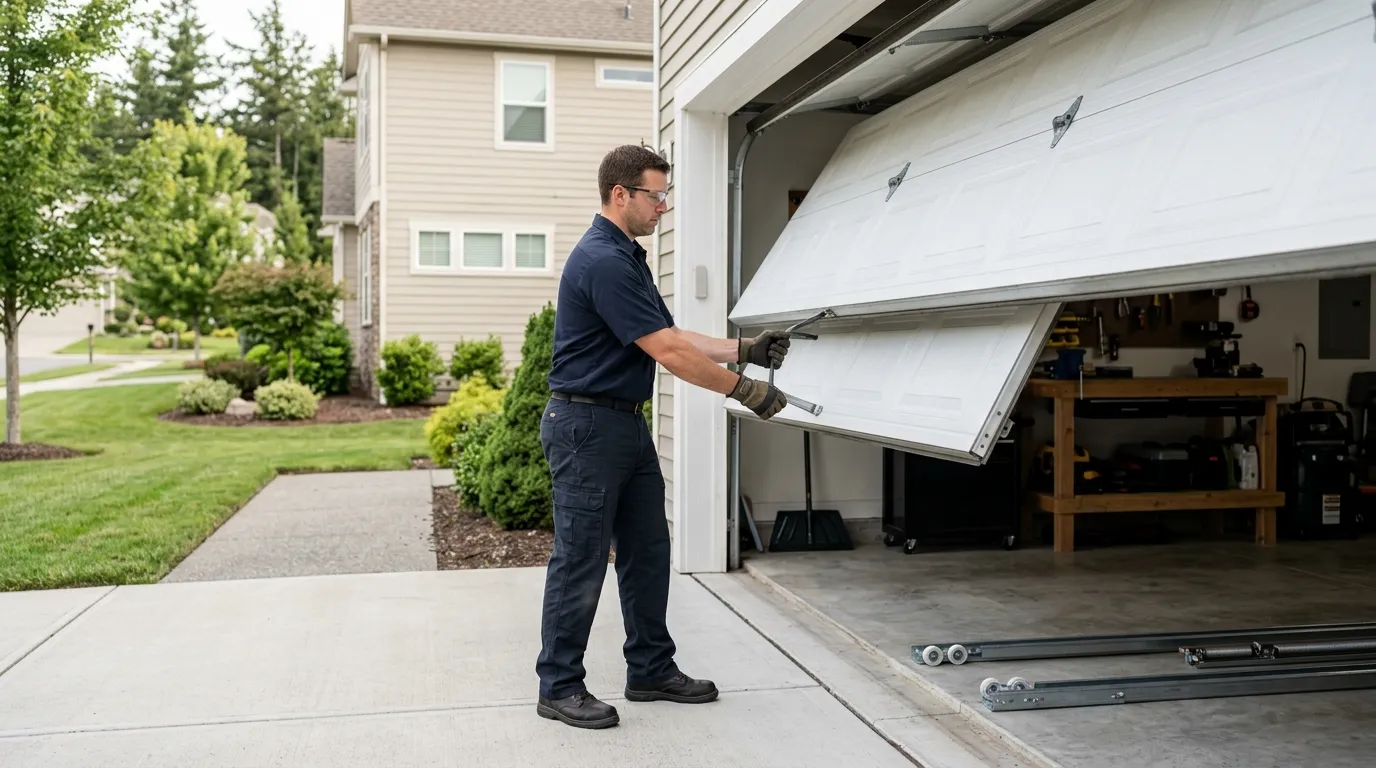
Youngstown's own housing stock centers on a median build year of 1964, but Austintown's tilts a few years later, closer to 1967. That's not a big gap on paper, but it lands right in the stretch when track hardware and header framing changed from what builders used just before. On a lot of Austintown jobs we still find the older style bracket underneath newer trim, because whoever remodeled the house years back didn't touch the door.
The service area overall runs mostly 1960s-70s construction across its 28 named communities, and Austintown sits right in that band. That means openings sized for doors that don't match anything sold today, framing that's shifted slightly over 55-plus years, and headers that were never built to carry a modern insulated door's weight. New installation here usually starts with correcting the opening, not just swapping a door into it.
Winters in this part of Ohio fall into the cold-severe band, and that matters for a new install more than people expect. A door and opener sized for a mild climate will bind, ice up, or strain the opener motor here. We size springs and account for door weight with that climate in mind, not with a catalog default.
The DIY Question
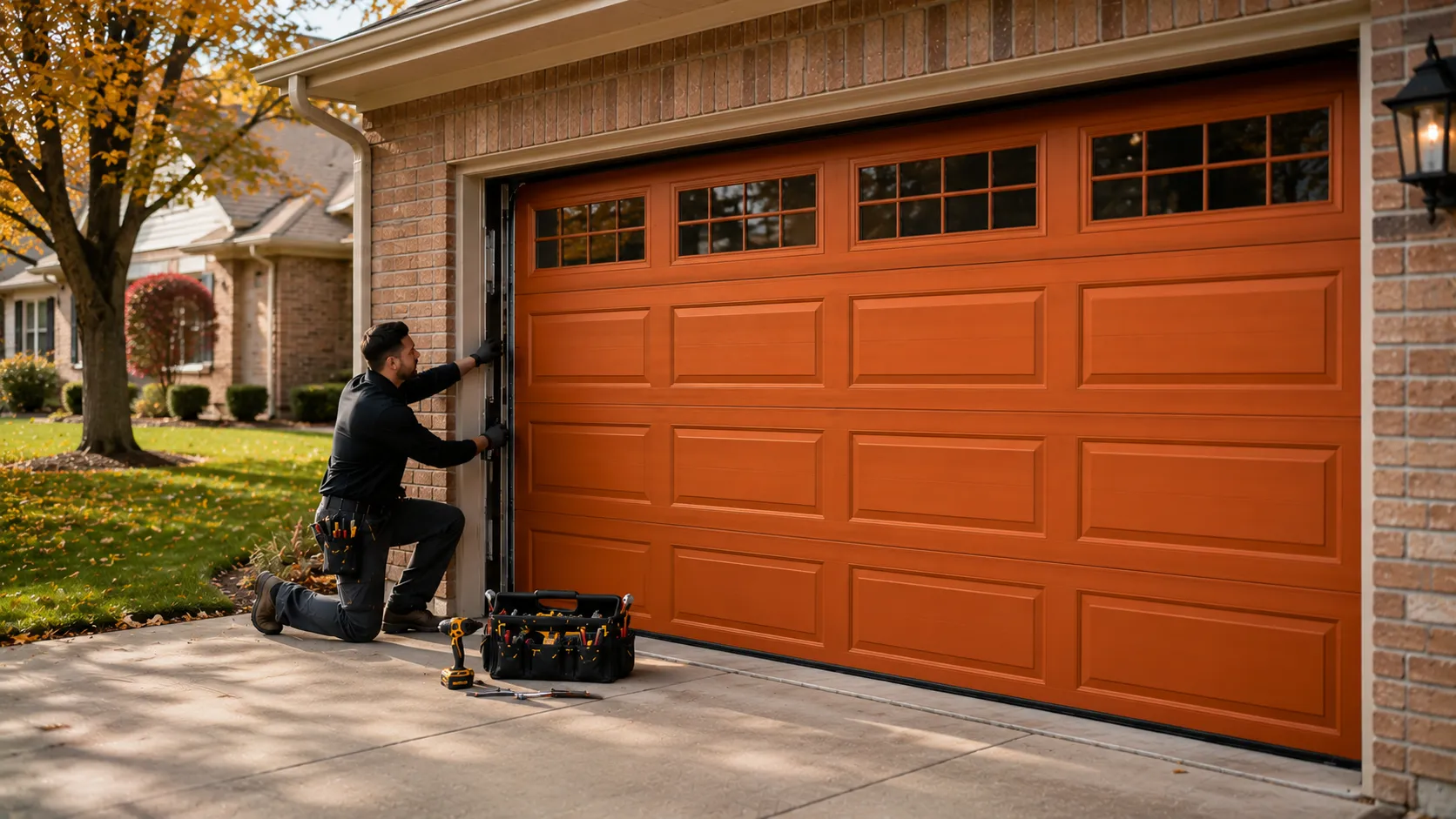
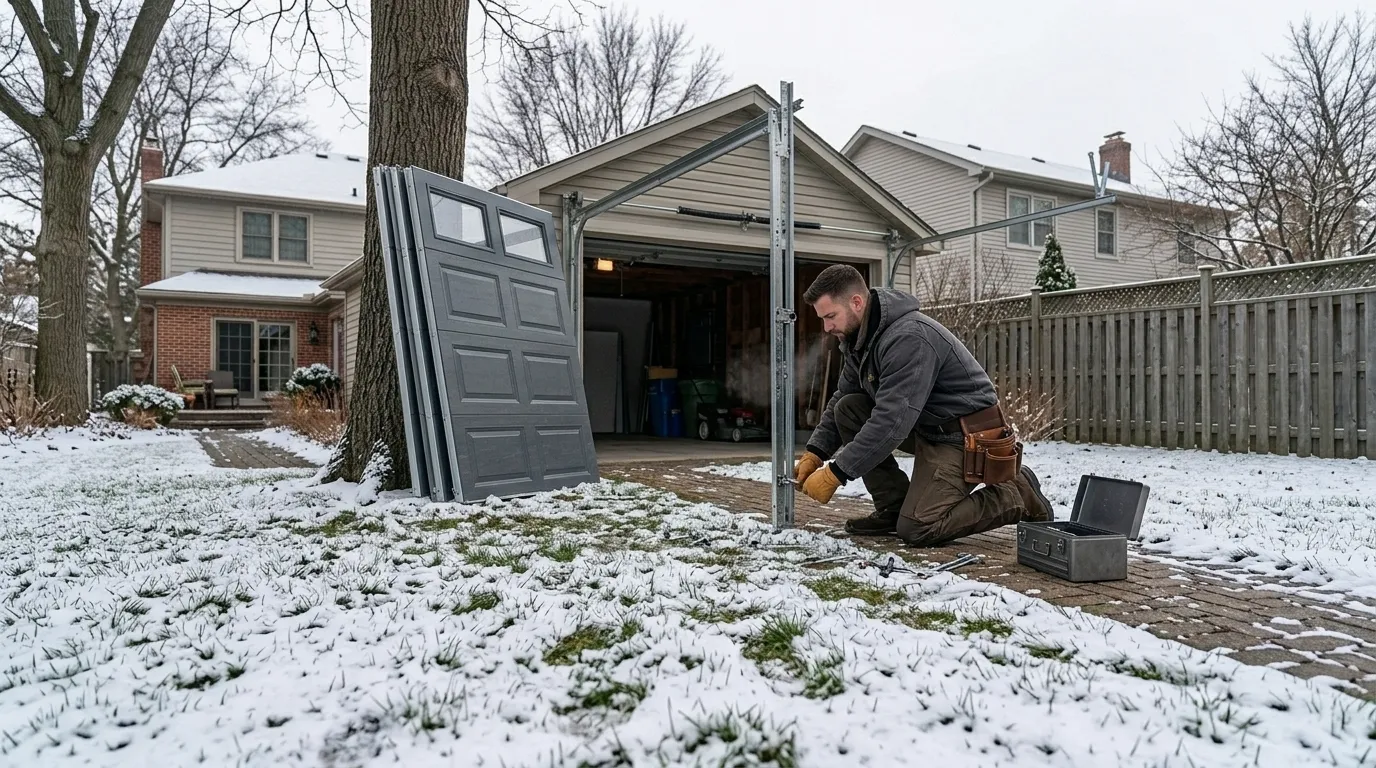
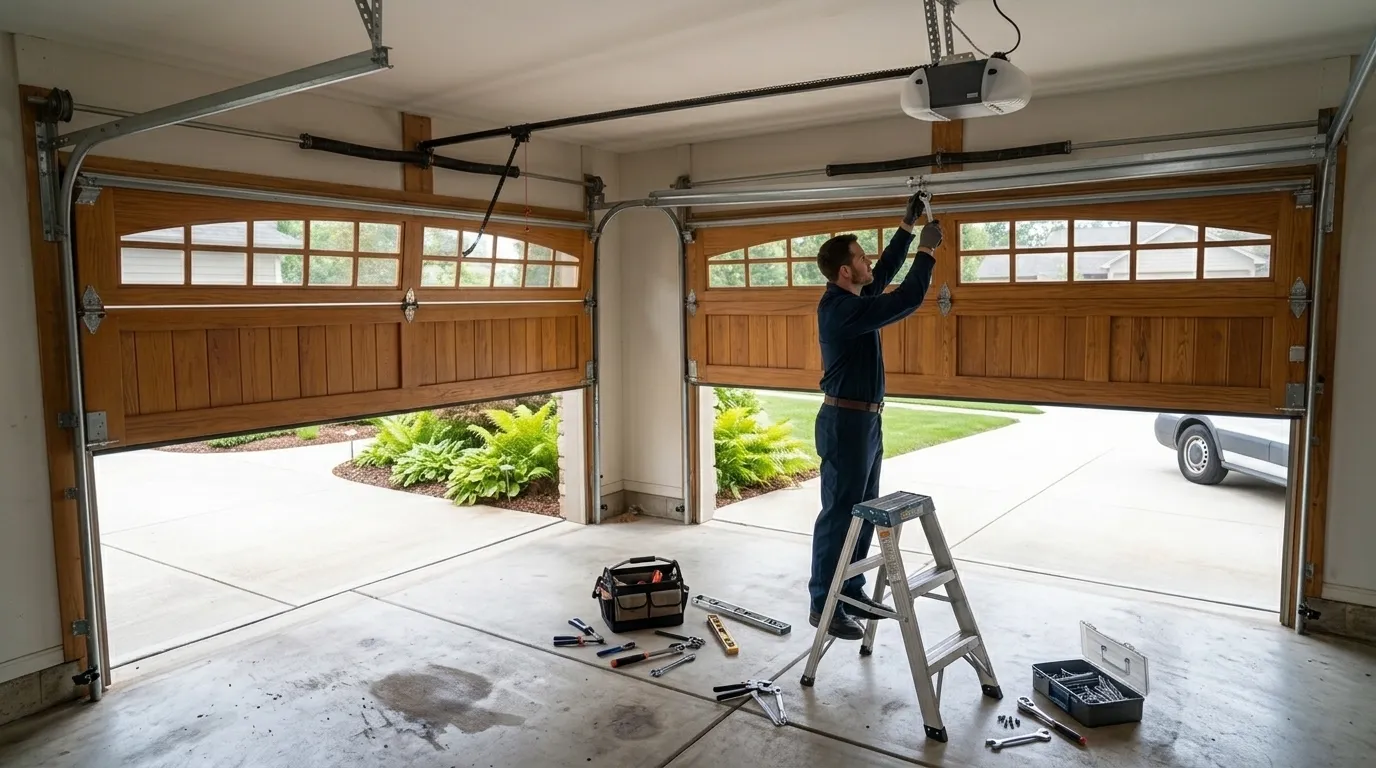
A new door kit from a box store will physically fit most Austintown openings. What it won't account for is the framing quirks that show up in houses from the 1960s stock this area is built on - headers that are an inch or two off true, or jambs that were shimmed decades ago and never squared back up.
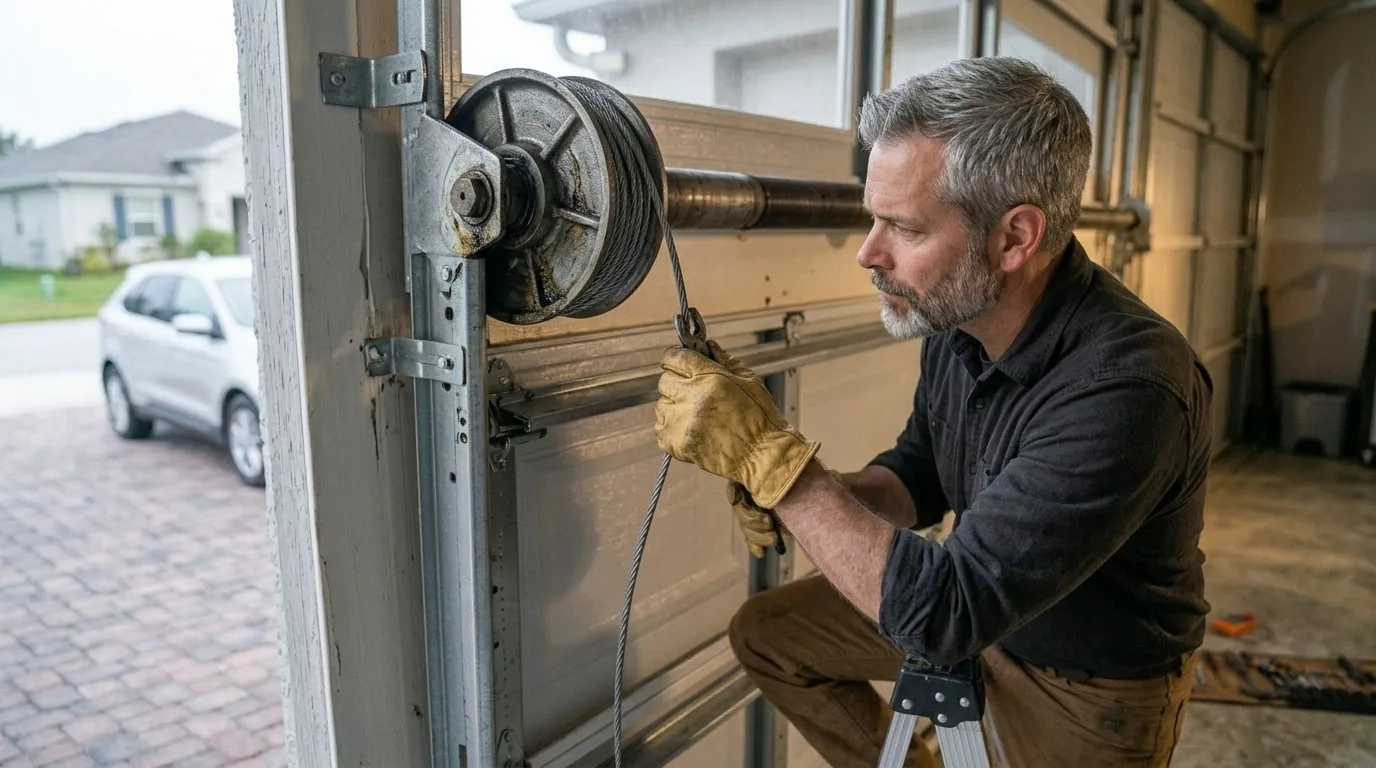
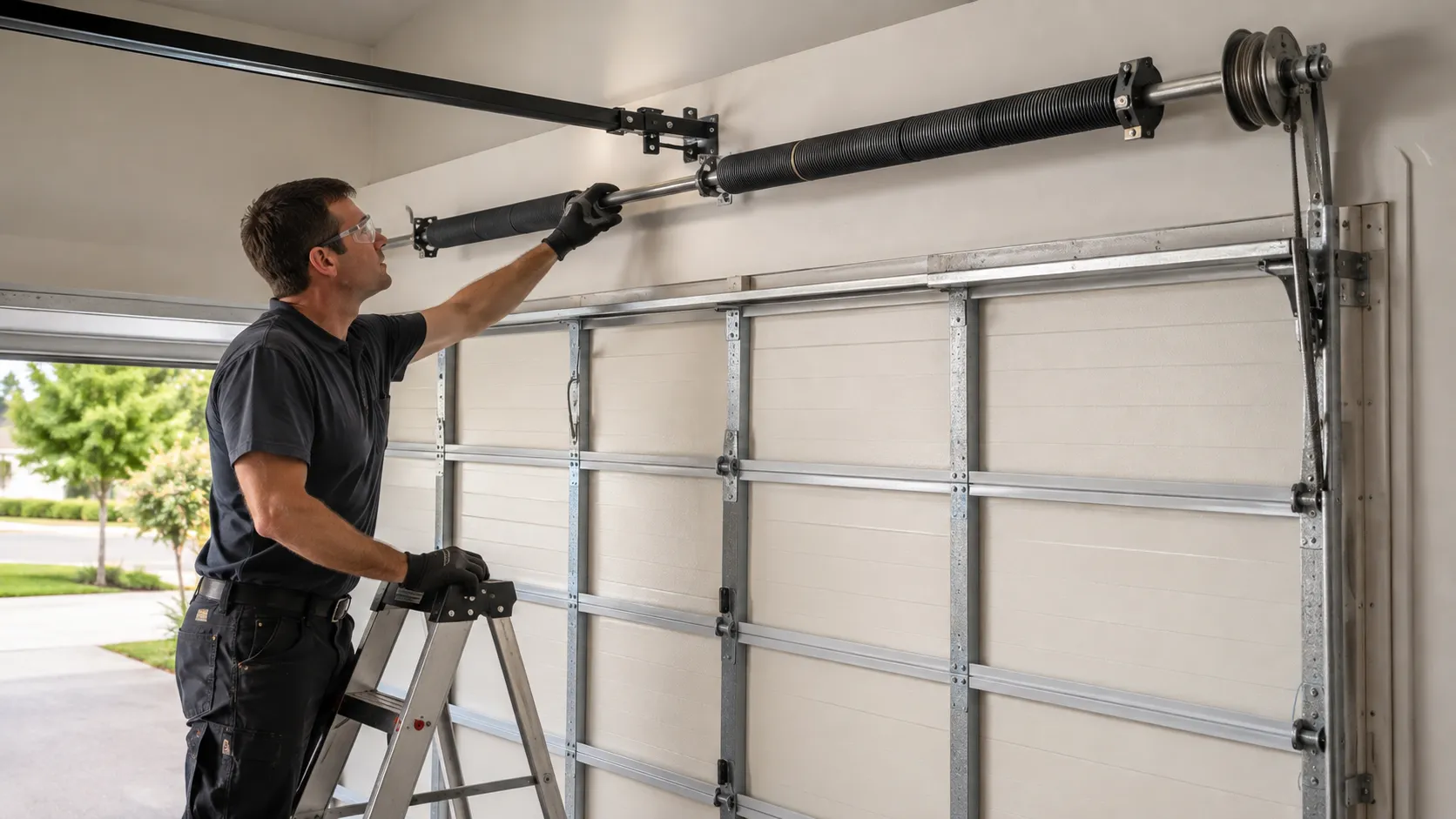
We'll say plainly: a straightforward panel swap on a door that's already square and properly framed is within reach for a patient homeowner with the right tools. Where it goes wrong is spring tension on a double door, or discovering mid-install that the header can't carry the new door's weight without reinforcement. That's not a place to learn by trial. If you're set on doing it yourself, at minimum have someone who knows torsion springs check the numbers before you order the door.
Stocked Parts
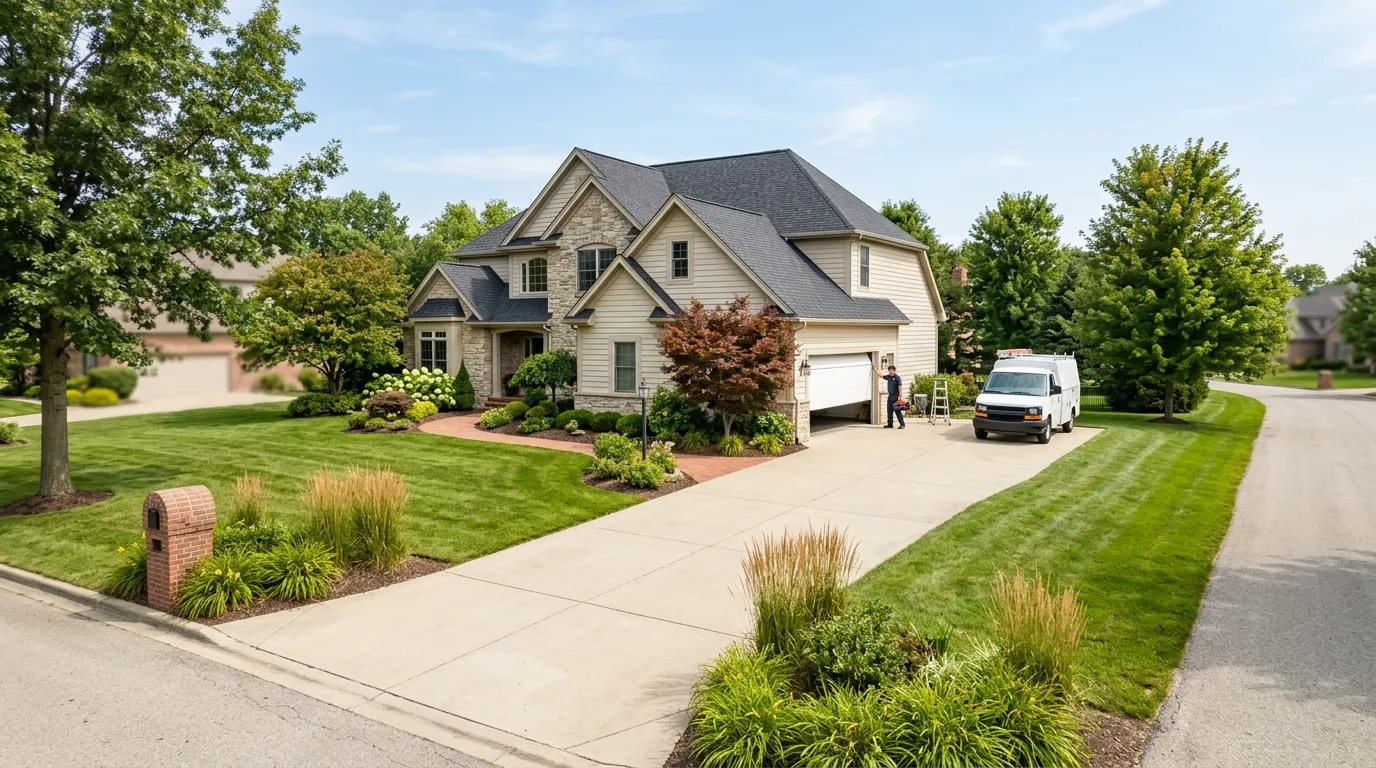
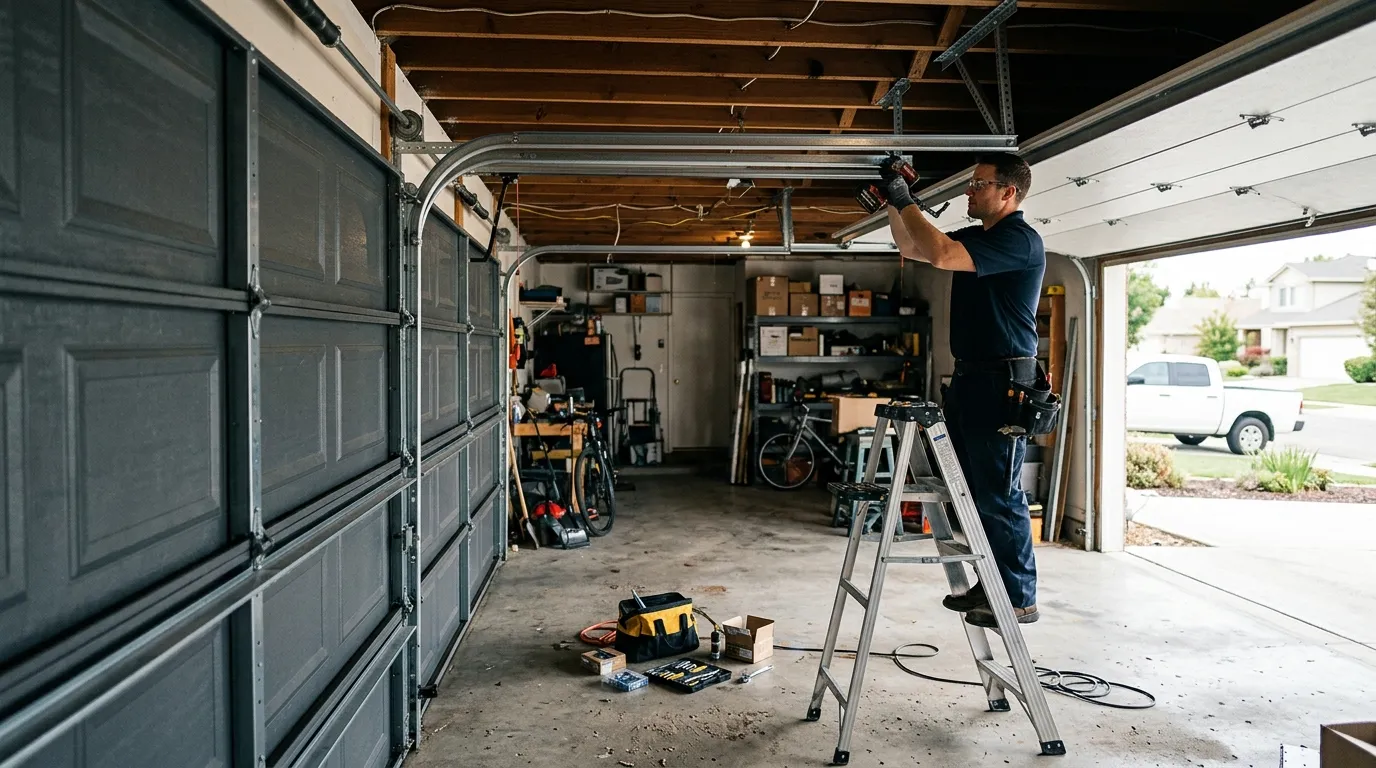
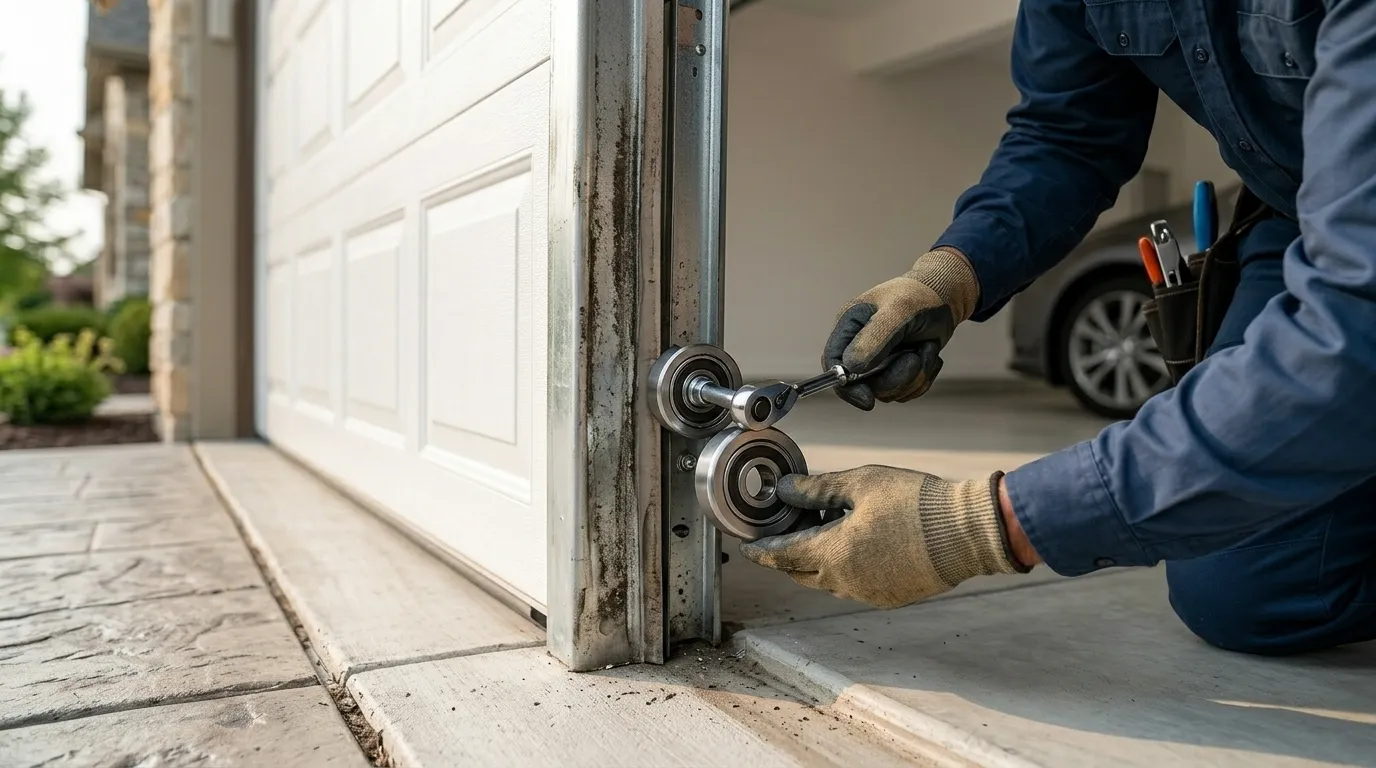
We come out from Youngstown, about 5 miles to Austintown, so what's on the truck the day we show up matters more than what we could special-order. For new installs, that means standard-width torsion springs rated for cold-climate door weights, common track and roller sets, and openers built for the load a properly insulated door puts on them here.
What we don't carry on the truck: oddball widths for openings that were framed by hand before standard sizing existed, and custom panel finishes. On a house from the 1960s or earlier with a non-standard opening, that part gets ordered once we've measured, and that adds lead time. We'd rather tell you that up front than promise a same-day door that isn't sitting on the truck.
Getting It Booked In
Median household income for the wider service area runs $60,598, and Austintown's own figure sits lower, around $50,855. We mention that because it shapes what we recommend - we'll price a straightforward steel door install as the default option rather than push upgrades that don't pay back for most households here, and we'll say when a repair is the cheaper right call instead of a full replacement.
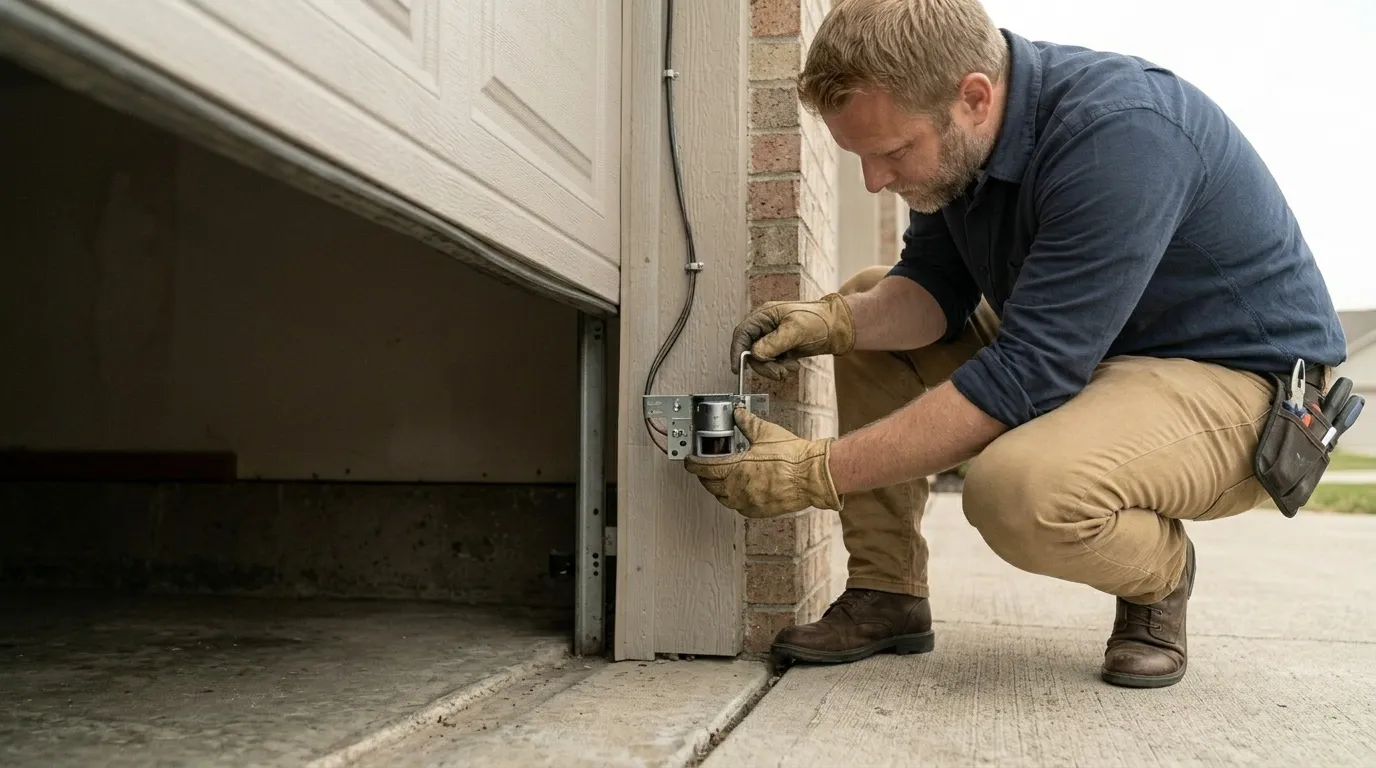
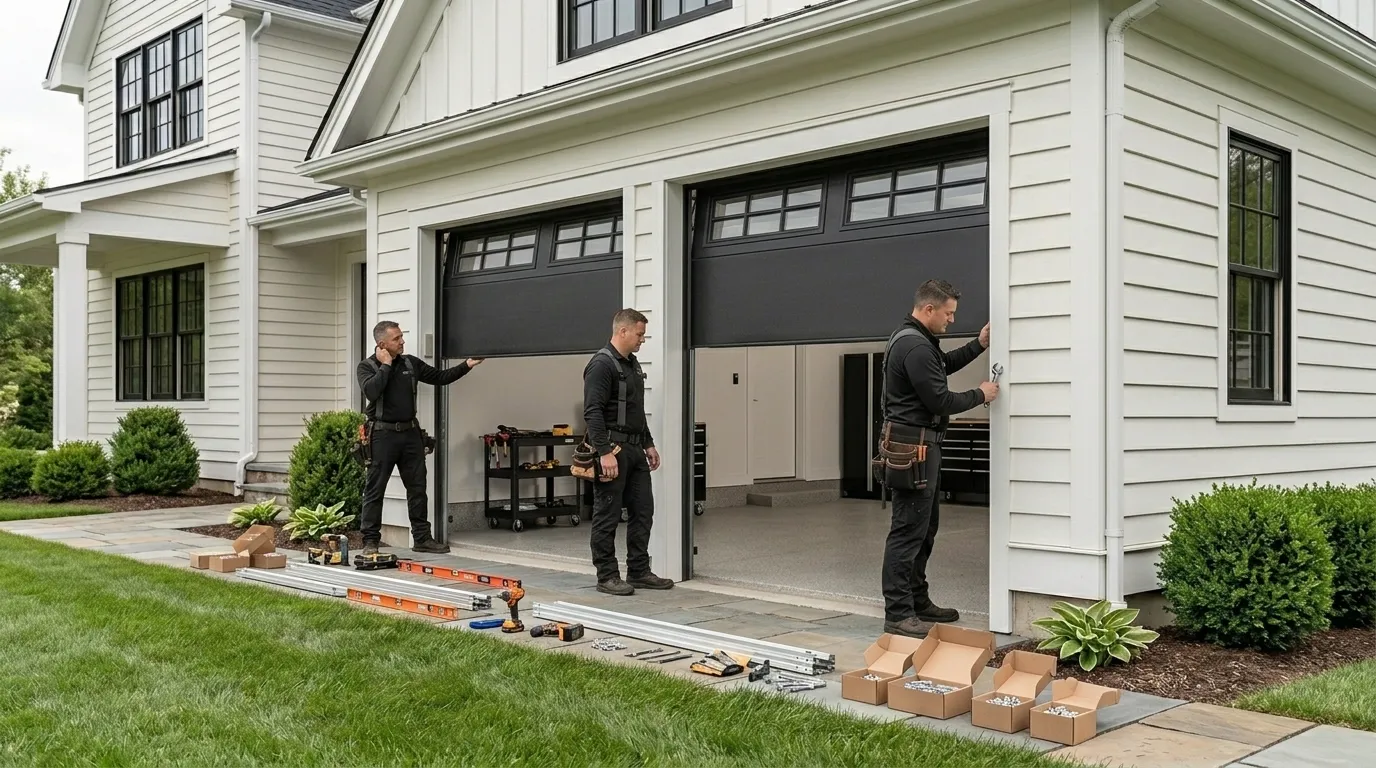
Booking a new install starts with a look at the opening, since the framing questions above usually decide the parts list before anything else does. We travel out from Youngstown for the appointment; there's no separate branch in Austintown itself, just the same crew and the same truck stock.
How it works
From “it’s stuck” to “it’s fixed”
01
Tell us what’s wrong
Describe the symptom - won’t open, loud bang, opener runs but the door won’t move.
02
On-site diagnosis
A technician tests the door under power and by hand and finds what actually failed.
03
Clear, up-front plan
You get the fix that’s needed and what drives the cost - before any work starts.
04
Repaired & tested
The repair is done, the door is set true and tested, and the work area left clean.
Serving Youngstown, OH - tell us what your door’s doing and we’ll take it from there.
Why does my Austintown house need different parts than a newer build?
Most homes in this area went up around 1967, a few years past the citywide median of 1964, which lands in a stretch where framing and header standards were shifting. Doors and springs sized for today's standard openings often don't match what's behind the trim, so we measure before we order anything.
Do you have a branch in Austintown?
No. We run out of Youngstown, about 5 miles away, and Austintown is one of the towns we cover from there. There's no separate local depot, just the same truck and crew coming out for the appointment.
Can I install a new garage door myself?
If your opening is already square and standard-sized, a panel swap is within reach for a careful DIYer. Where it goes wrong is torsion spring tension on a double door or a header that can't carry the new door's weight - both worth having checked before you buy the door.
How does winter weather affect a new door here?
This area falls in the cold-severe climate band, which changes how we size springs and pick an opener. A door and motor sized for a mild climate will bind or strain here, so we don't use a one-size default for cold-weather installs.