
Getting It Booked In
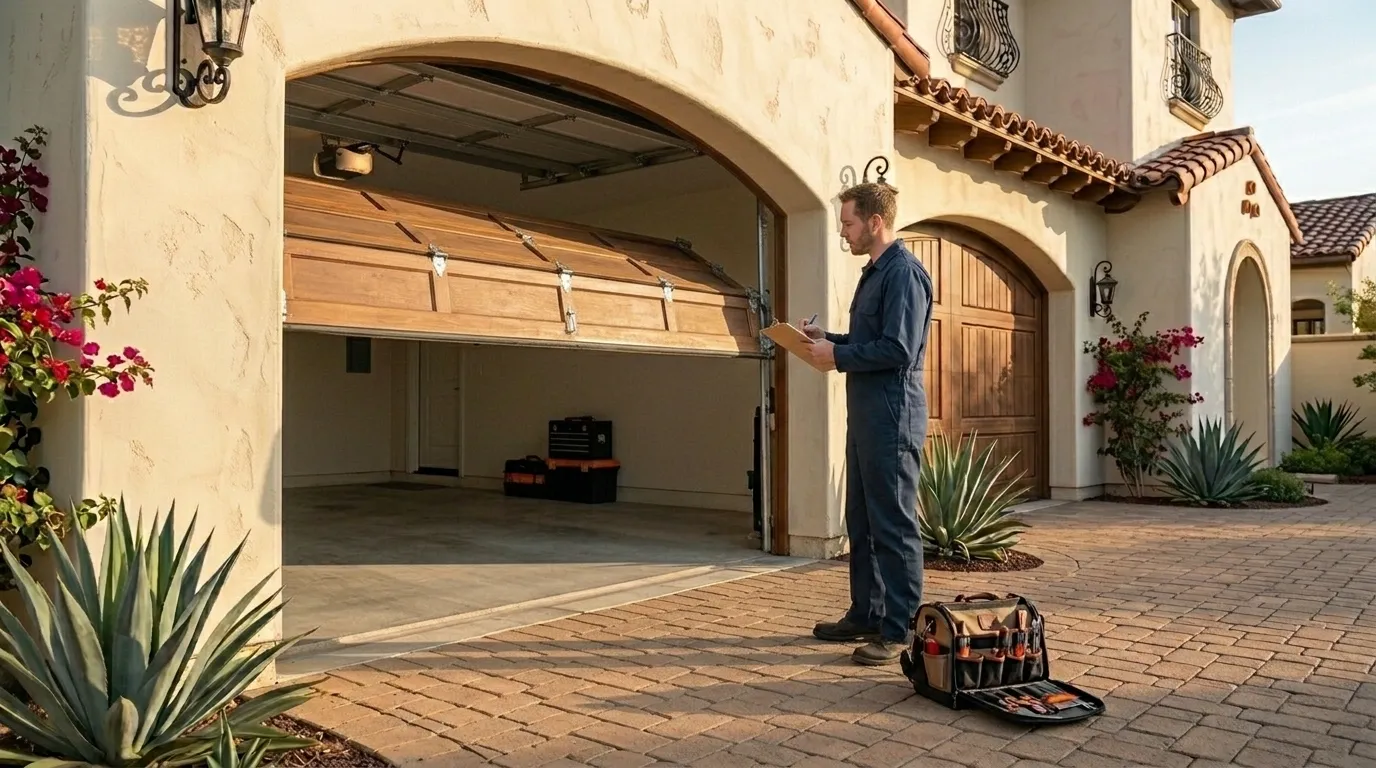
We come out to Hubbard from Youngstown, about six miles away, so we schedule maintenance runs out this way rather than treating it as a same-day add-on. Tell us the age of the house when you call - if you know it's from the early 1960s like most of the neighborhood, that tells us what hardware to expect before the truck even leaves. We don't keep a separate branch or crew based in Hubbard itself; this is a service-area town we cover on set trips, so booking a specific day works better than expecting a walk-up visit. If you're not sure when your door was last serviced, that's a normal answer - a lot of these doors have gone twenty-plus years without anyone checking the spring tension, and that's exactly the kind of thing a maintenance call is for.
Why It Happens Here
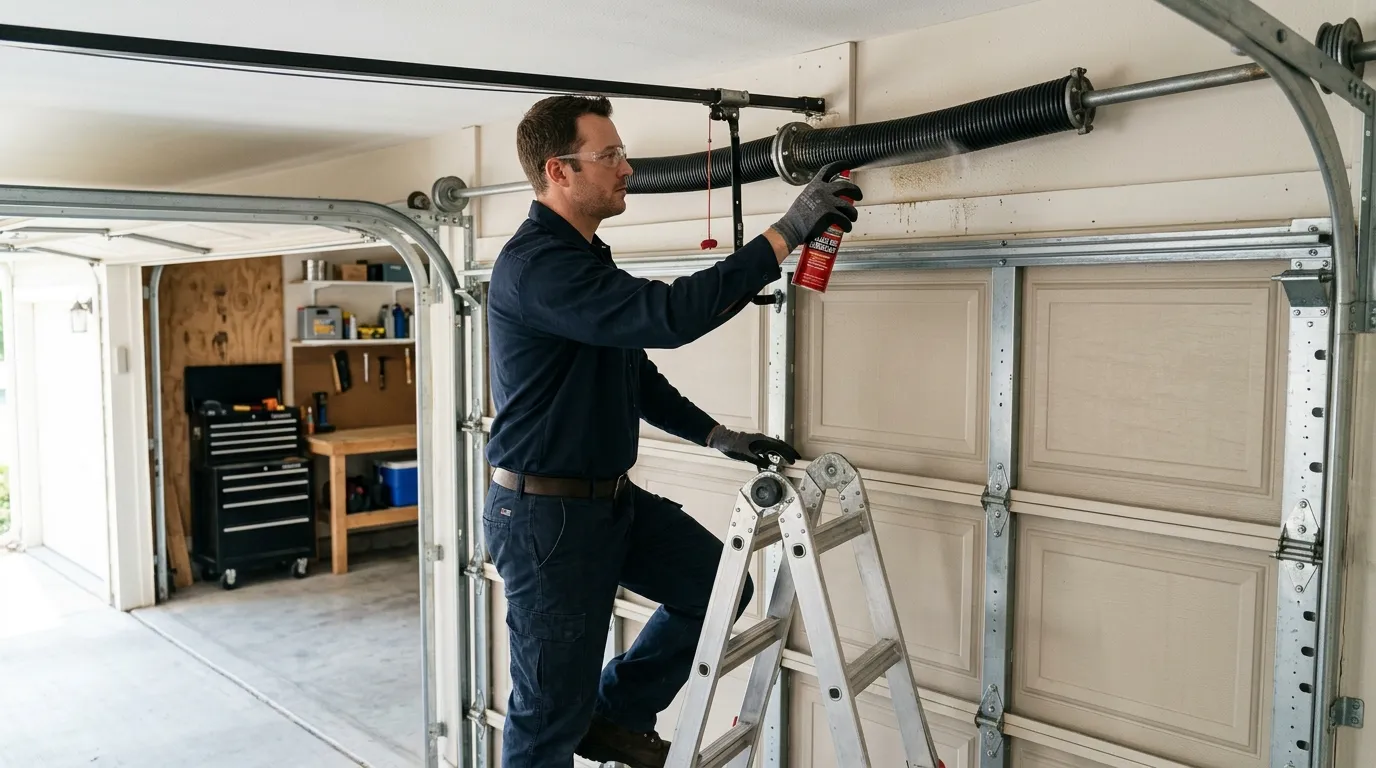
Hubbard's housing stock clusters tightly around 1963, part of a broader wave of 1960s-70s construction across this whole side of the region. That means a lot of these garages share the same weaknesses at the same time: single-torsion-spring setups sized for lighter, uninsulated doors, galvanized cable that wasn't rated for forty-plus winters, and steel jambs that were never sealed the way current code expects. Add in a cold-climate band with real winter severity, and steel contracts, lubricant thickens, and springs lose tension faster than they would in a milder market. A household income here around $62,468 means most owners can afford upkeep, but a lot of these doors simply haven't had any - nobody told them the spring has a rated cycle count, and nobody's replaced it since the door went in. That's not neglect so much as nobody flagging it.
Where This Job Goes Sideways
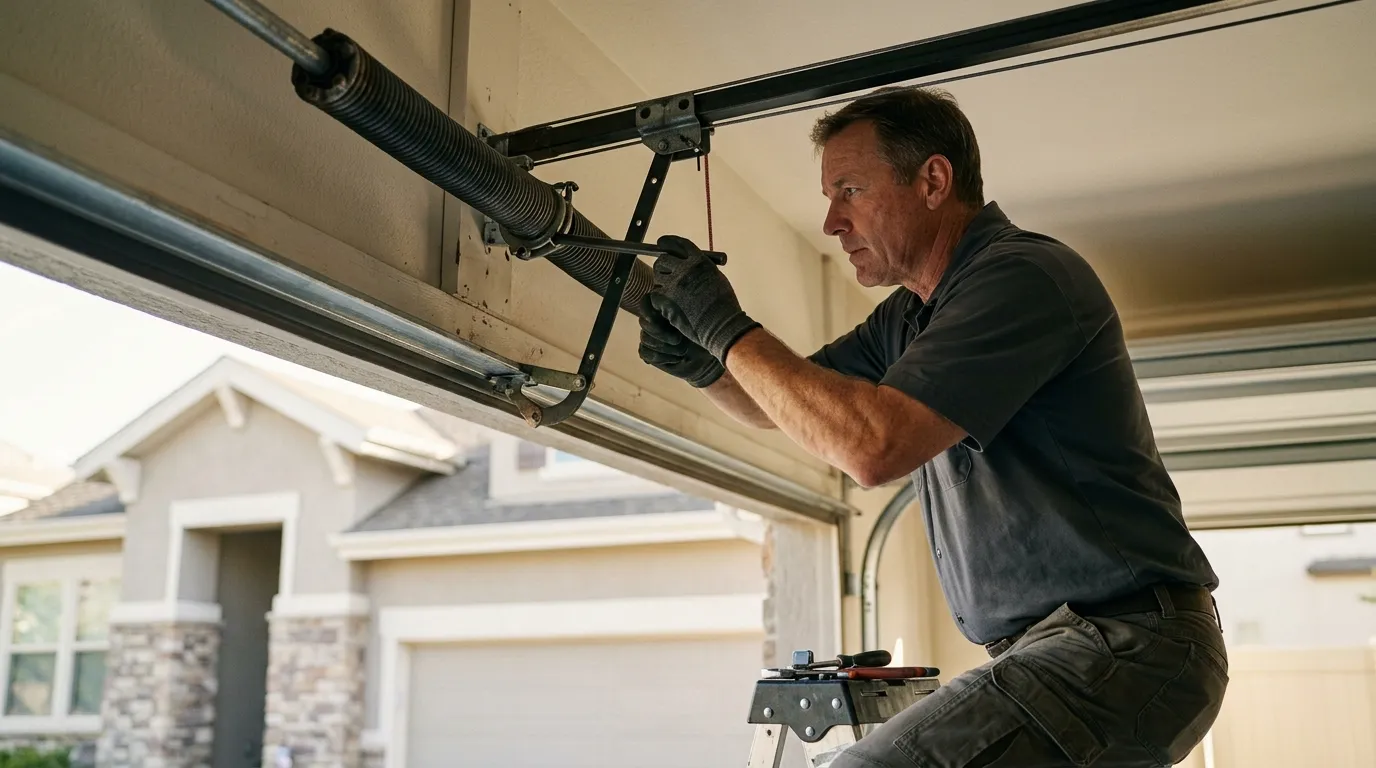
The honest failure point on a door this old is a spring that's past its rated cycles but hasn't broken yet - it looks fine, lifts fine, and then lets go without warning, usually on a cold morning when the steel's contracted and under more load. We can measure wear and flag a spring that's close to done, but we can't tell you the exact day it'll fail. If your door is original from 1963 and has never had the spring replaced, we're going to recommend replacing it proactively rather than waiting, because a snapped torsion spring under tension is a genuine safety issue, not just an inconvenience. We won't talk you into replacing a door that's still sound just because it's old - plenty of these steel doors from that era are structurally fine and just need hardware work, not a full swap.
Stocked Parts
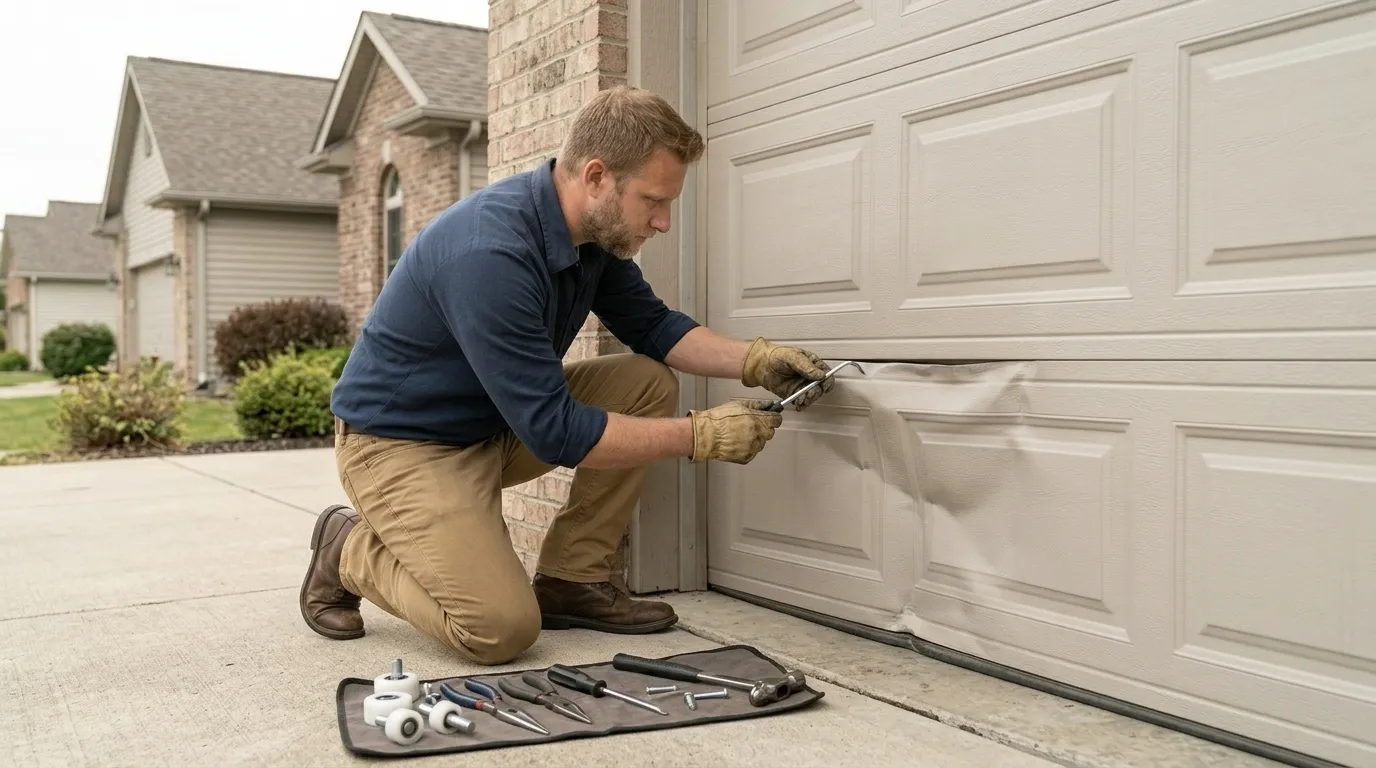
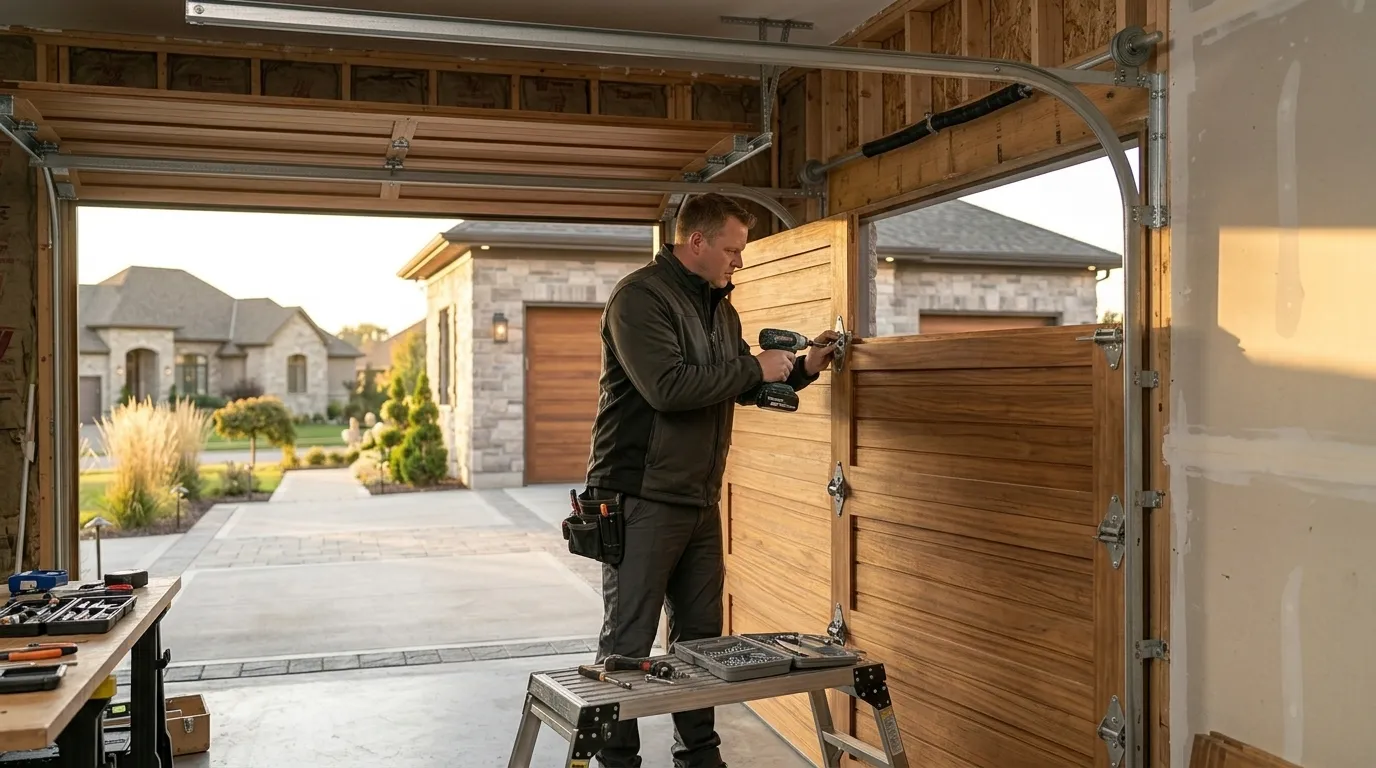
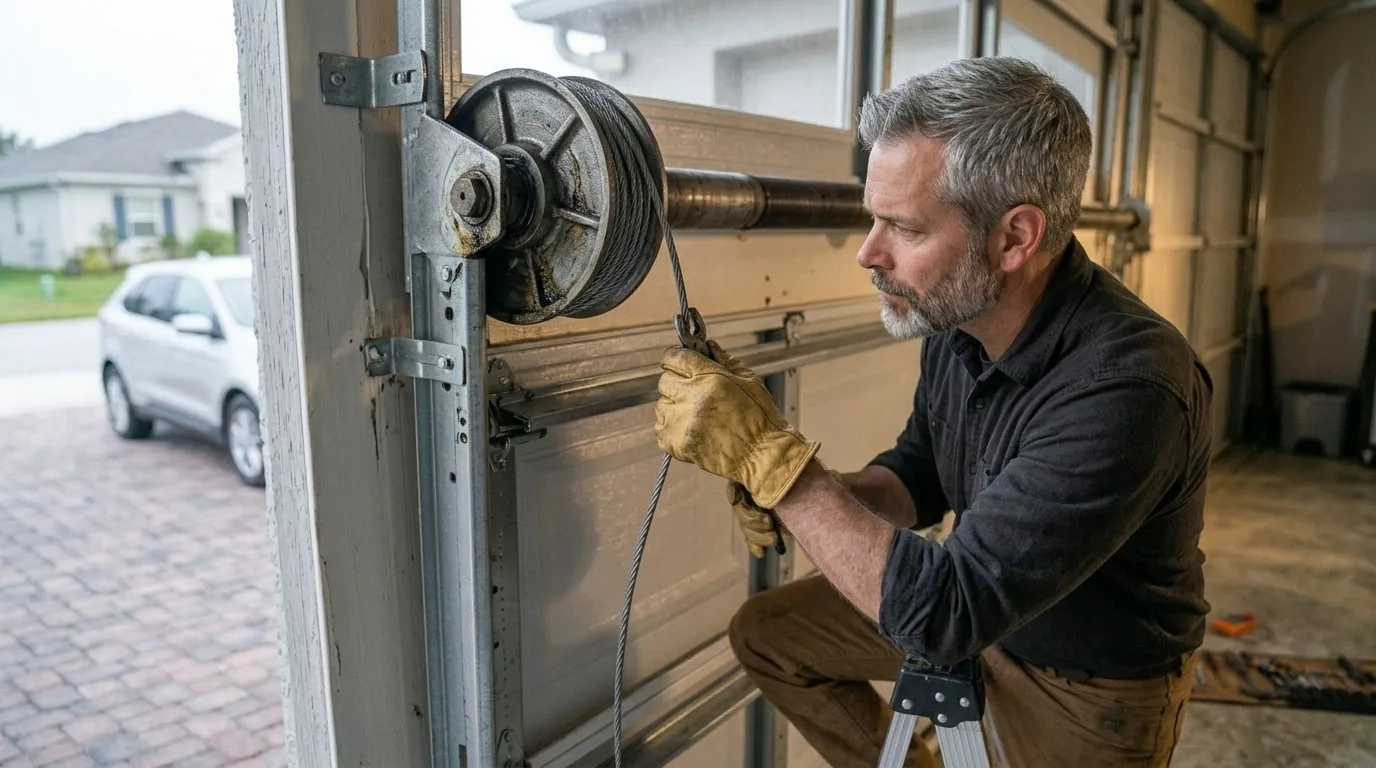
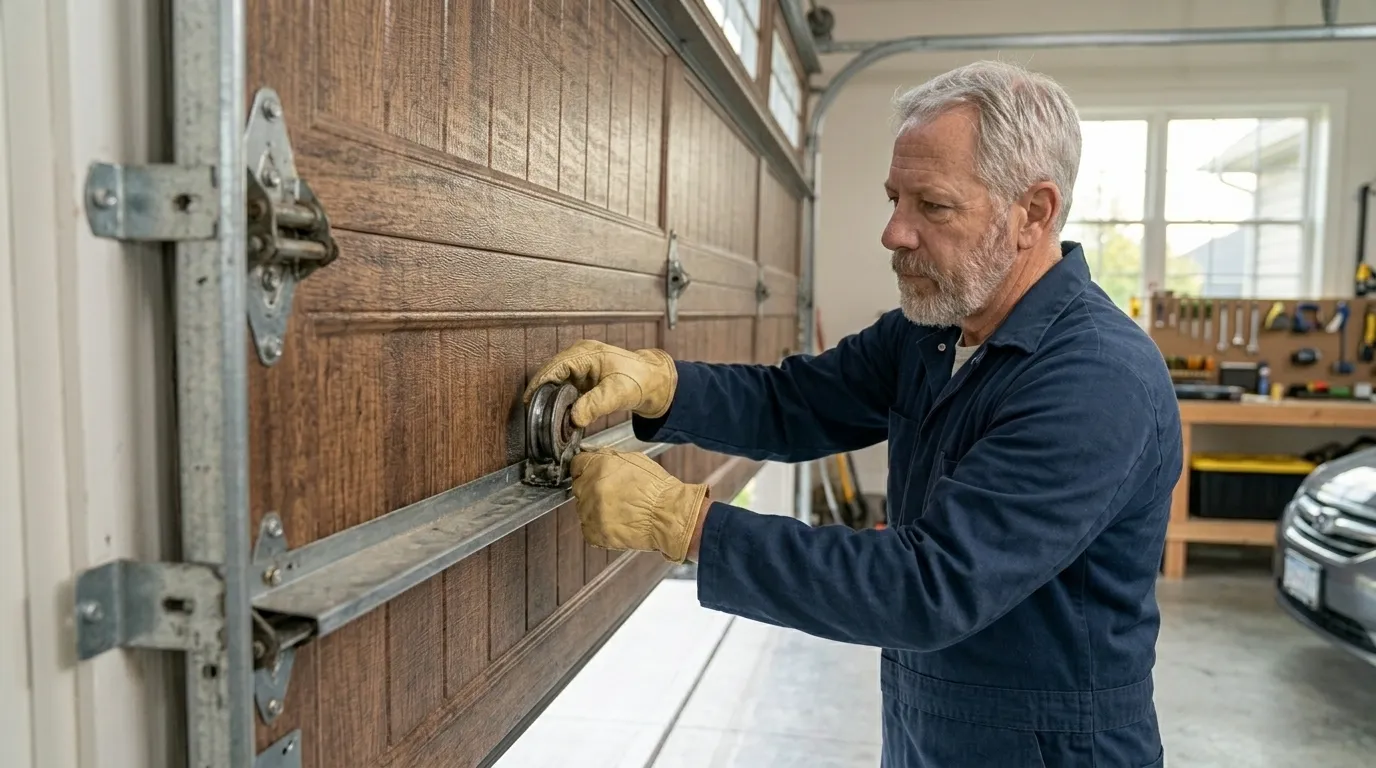
Because so much of Hubbard's housing sits in that same 1960s window, we carry torsion springs and drums sized for the older 16x7 and 9x7 single-layer steel doors common to this era, plus standard galvanized cable and steel rollers that fit that generation of track. What we don't keep on the truck are parts for less common or specialty doors - custom sizes, wood carriage-style doors, or anything outside the standard sectional steel that dominates this part of the county. On those, we'll order the part and follow up rather than pretend we can turn it around same-visit. For the majority of Hubbard's houses, though, the common failure parts are already in stock before we arrive.