Getting It Booked In
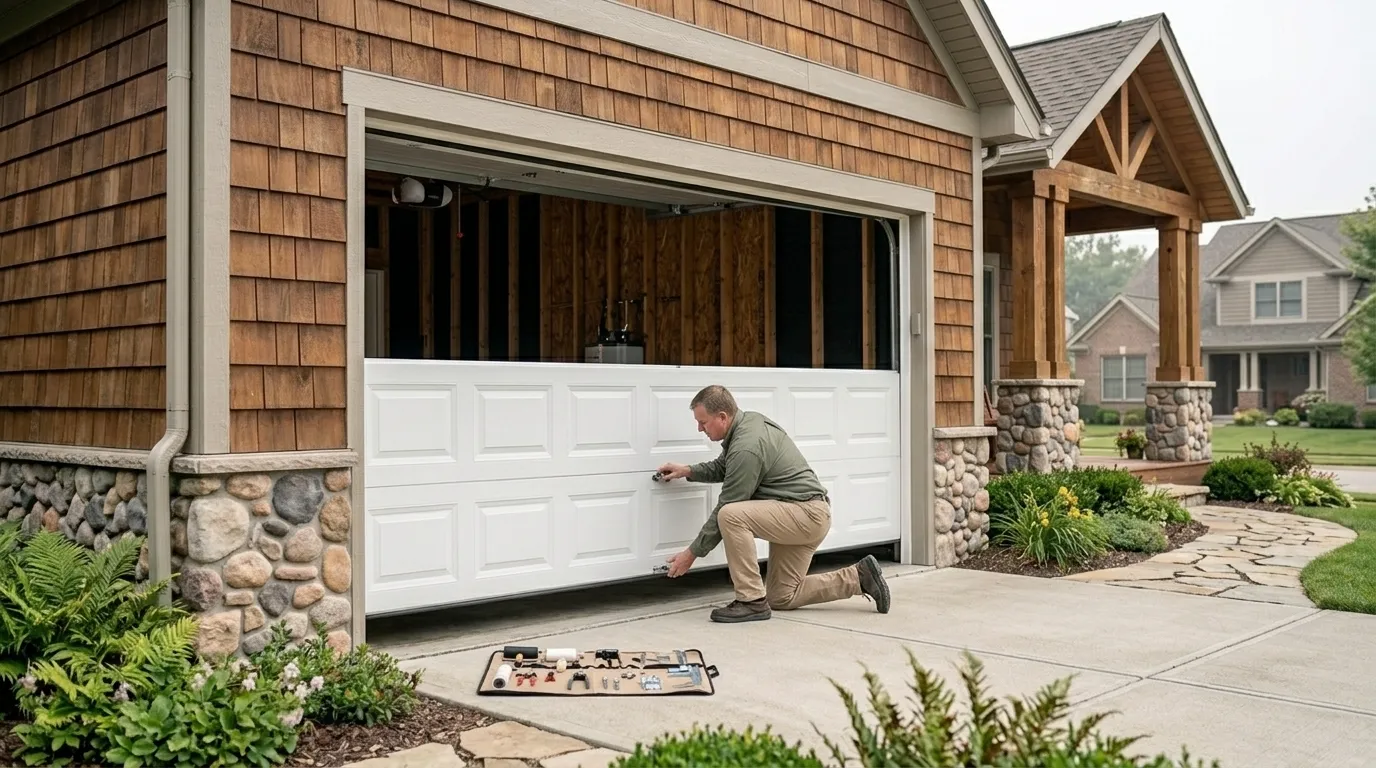
Since we cover Hubbard from Youngstown rather than out of a local yard, booking starts with a look at the door - usually a couple of photos of the damaged panel and the section number if you can find it stamped on the edge. That tells us whether we're looking at a stock match or an order.
We don't hold a Hubbard-specific schedule separate from the rest of the service area, so a booking here gets slotted in against everything else on the route that week. If you're near Hubbard's edges - Girard and Hubbard sit close together at about the same distance out - we sometimes pair those jobs on the same run, which can tighten the window a little.
You can check the general service area page for how Hubbard fits into our coverage: service area. If your job turns out to be more than a panel - a bent track or a spring that's clearly shot too - we handle the full range of that work, but the details for that live on our main panel replacement page for the wider area, not here.
Why It Happens Here
Panel damage in Hubbard mostly traces back to the age of the door, not abuse. With median construction around 1963, a lot of these garages still carry their original doors or a first-generation replacement from decades back - steel panels that have gone through fifty-plus Ohio winters of freeze-thaw cycling on the bottom section where water sits.
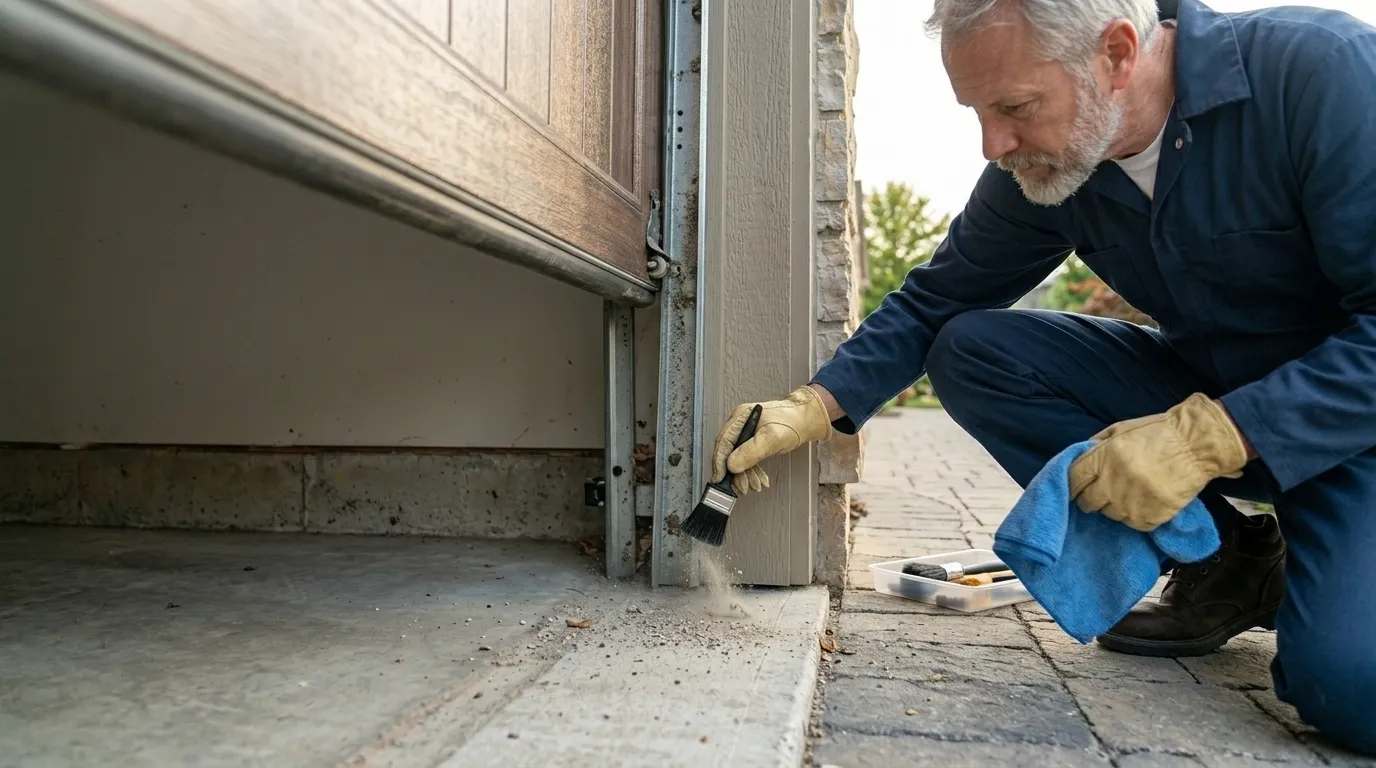
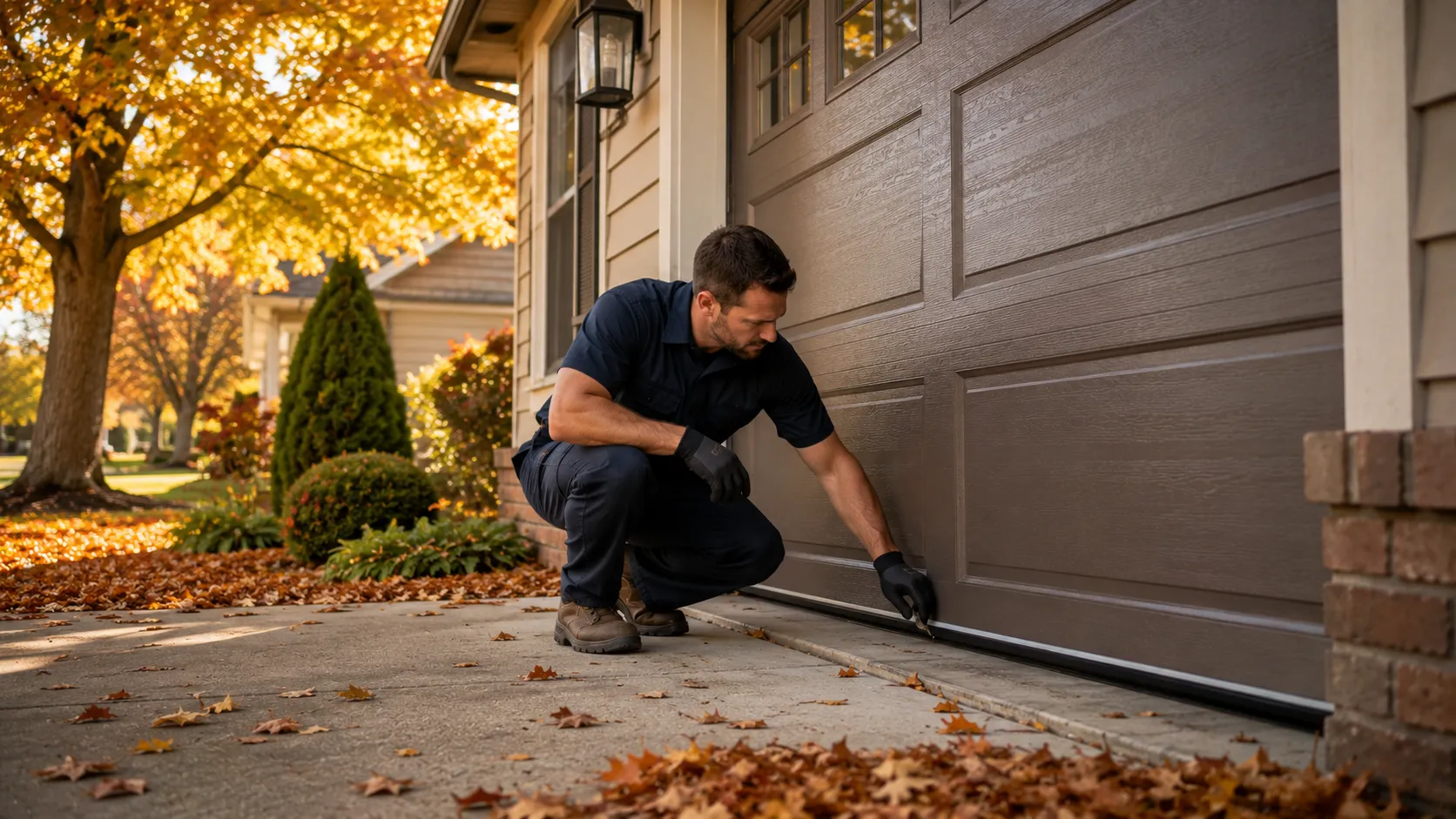
That bottom panel is almost always the one that goes first. Rust works in from the edge, the steel thins, and then a car bumper tap or a stuck roller does what a newer door would've shrugged off. This is a cold-climate problem as much as an age problem - the severe winter band this region sits in is hard on any door skin that's lost its factory coating.
We also see cracked panels from garages that were never insulated for the era's build - thinner steel flexes more, and repeated flexing near a hinge point eventually splits the seam. None of this is unique bad luck; it's what houses built in the low 1960s do by year sixty.
Where This Job Goes Sideways
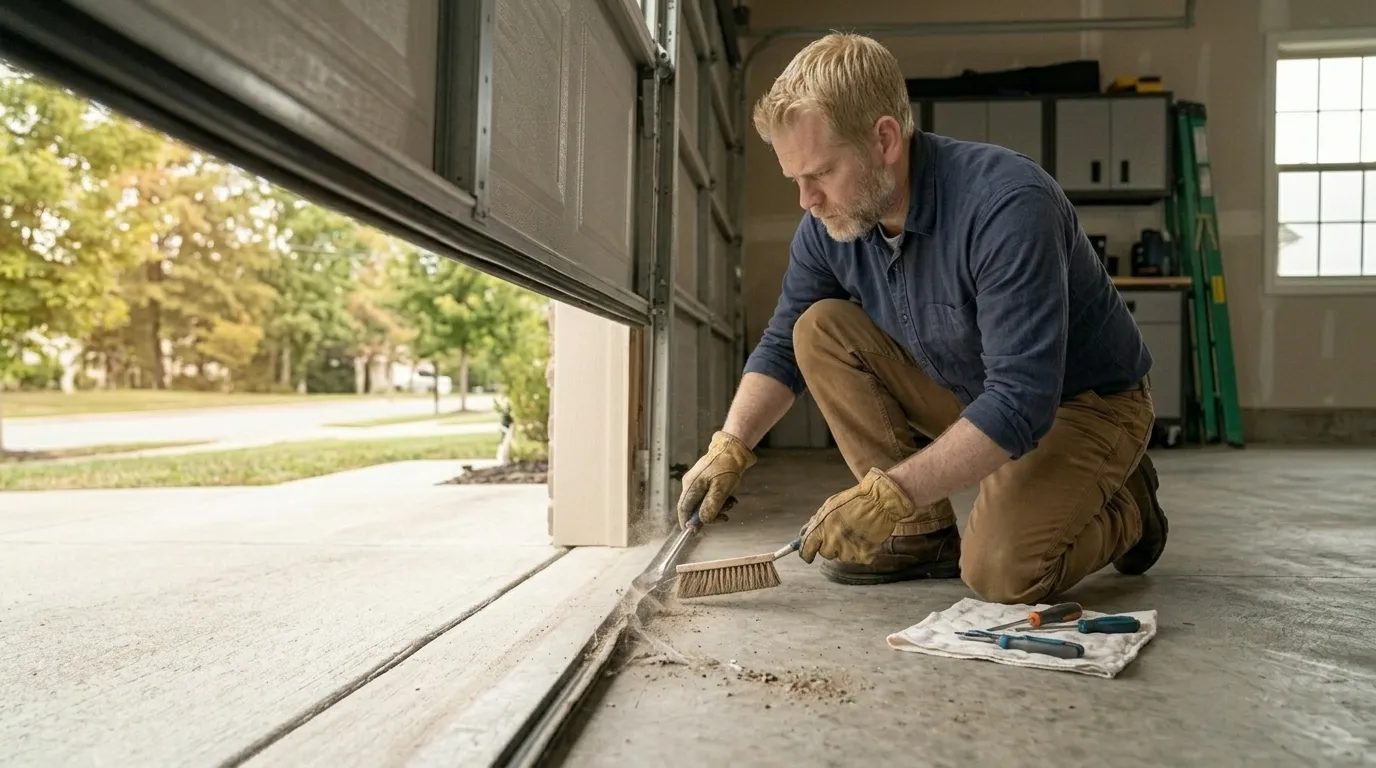
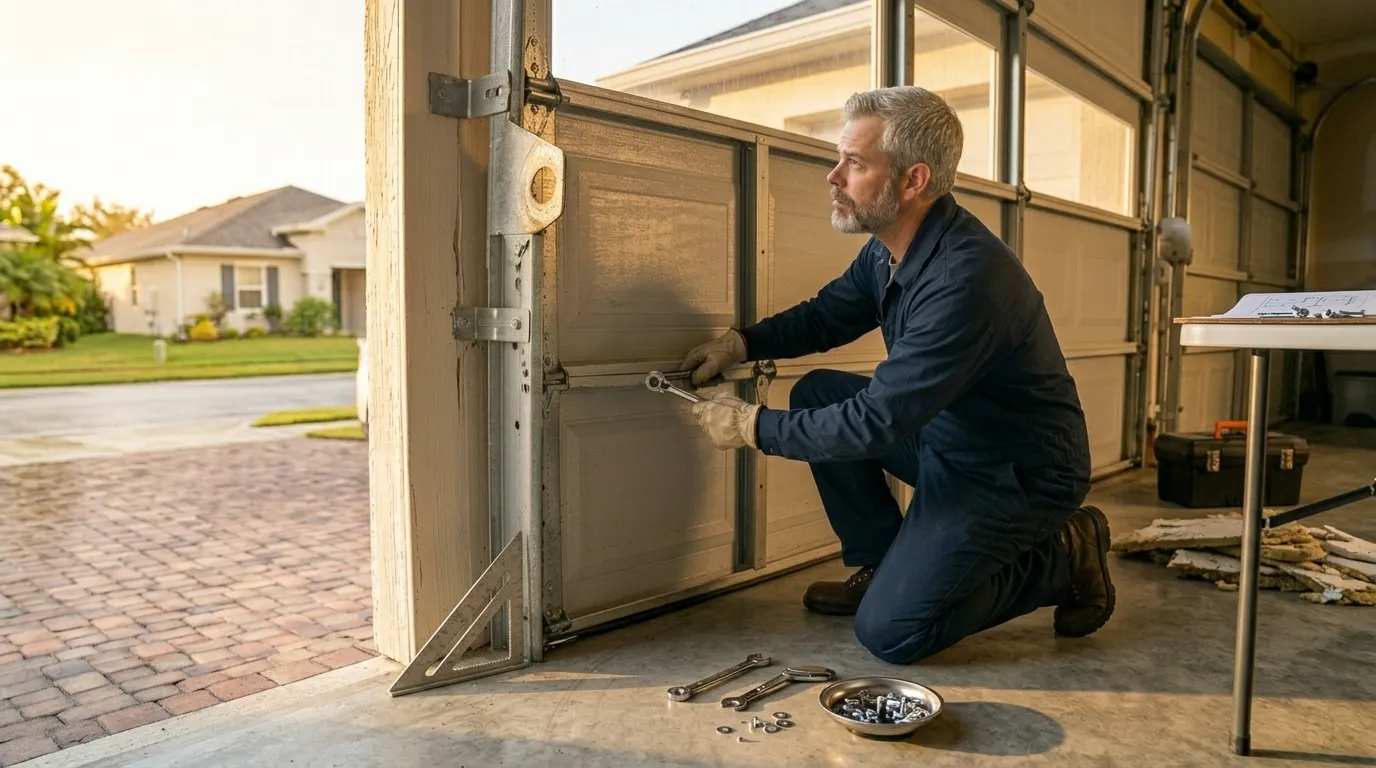
The most common surprise on these Hubbard-era doors is a panel that looks fine as a single-section swap until we get the old one off and find the track underneath has rusted or bowed from the same decades of moisture. At that point a panel swap alone won't seat right, and the job grows into track work too.
Another spot this goes wrong: torsion hardware original to a 1960s door often runs a spring size that doesn't match anything a supplier stocks today. If a panel swap disturbs that spring or its mounting, we're now sourcing two things instead of one, and the timeline moves.
We've also seen jobs where the homeowner wanted just the dented panel fixed, but the door's insulation - or total lack of it - meant the new panel didn't match the flex of the thirty-year-old ones next to it, and it showed. We'll tell you when that's likely before we start, not after.
Stocked Parts
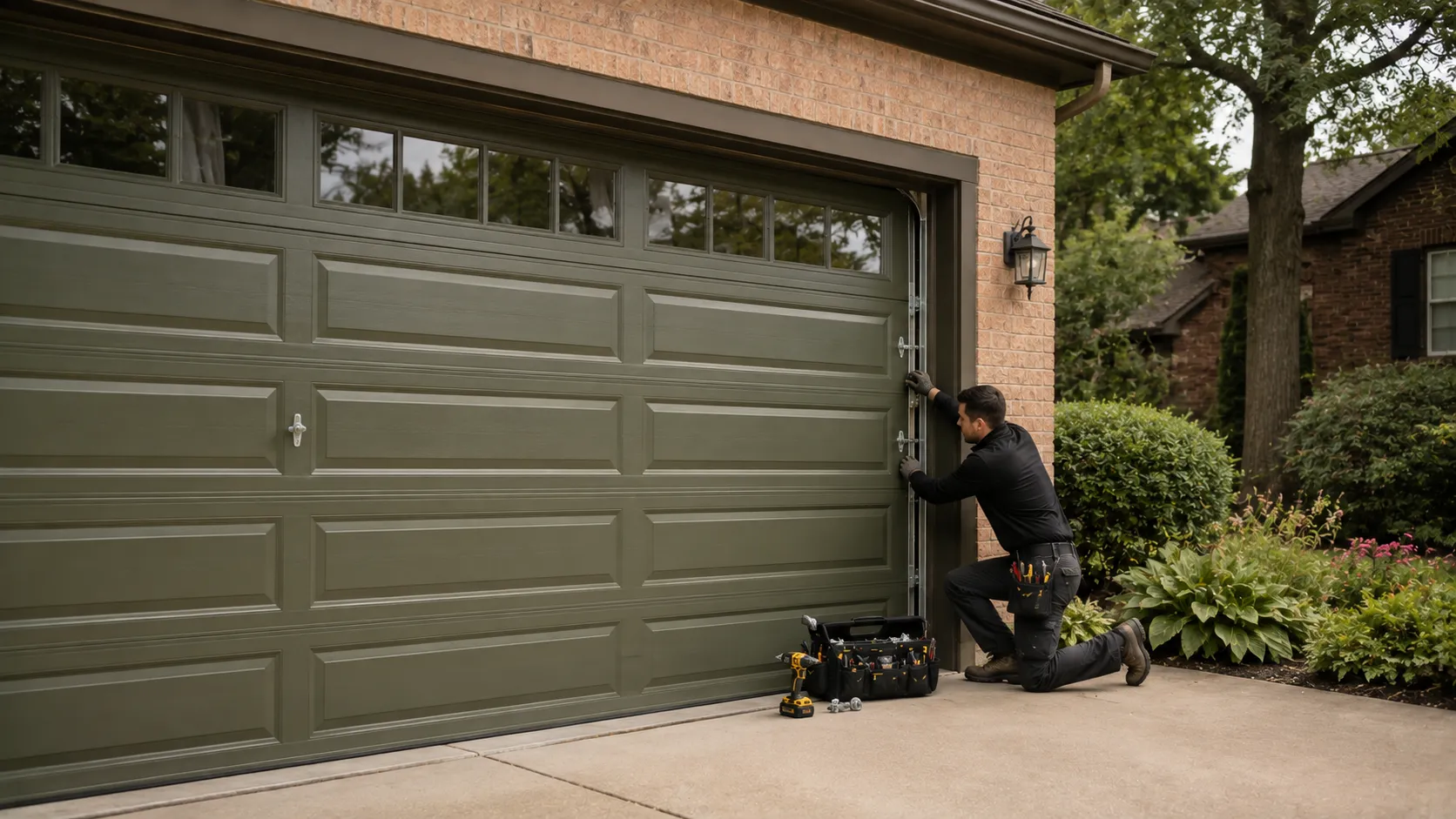
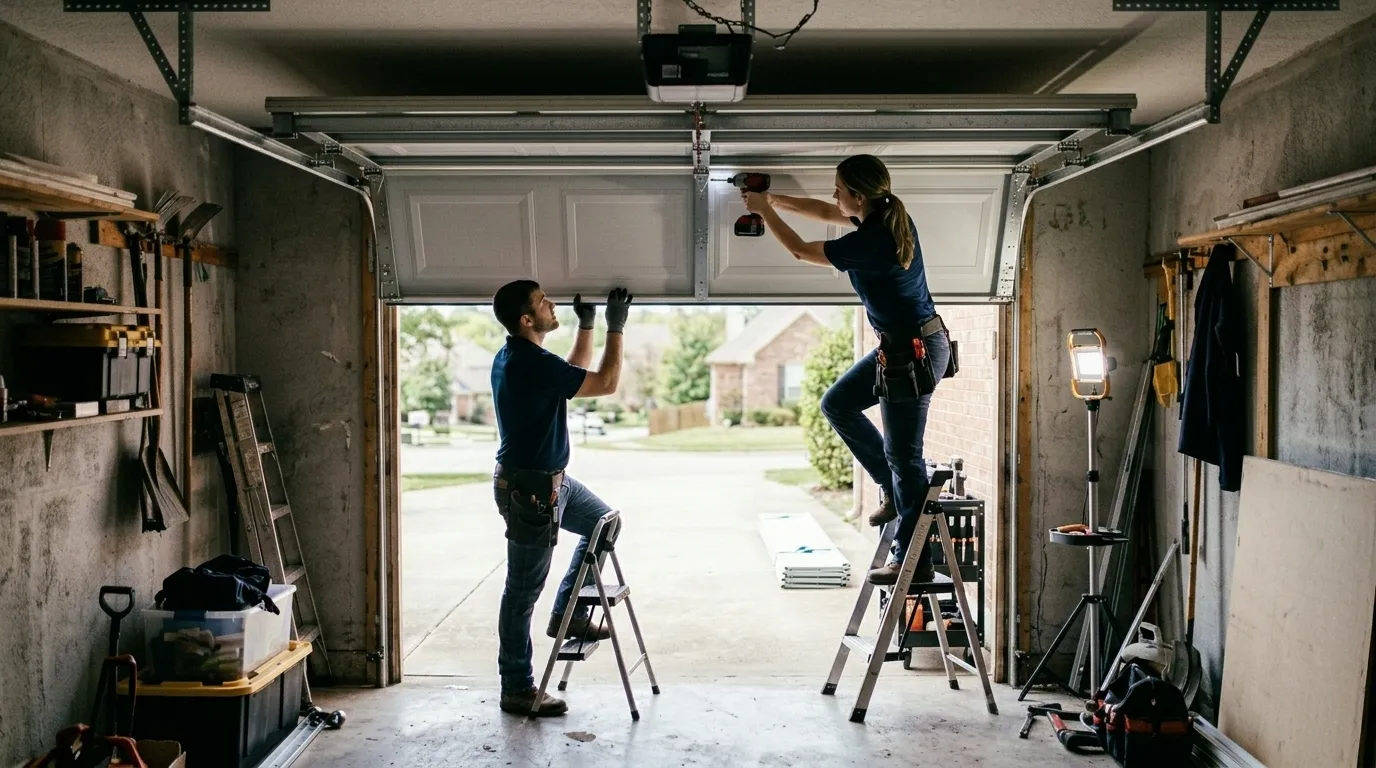
We carry common panel sizes and standard steel gauges on the truck for the doors that show up most across this service area, and Hubbard's stock - mostly mid-1960s construction - lines up with a good share of that. Standard-width single and double-panel sections in the usual colors are usually a same-visit fix once we've confirmed the match.
What we don't keep on hand: discontinued panel profiles from doors that predate common manufacturer lines, and some wood-look composite styles that were regionally distributed decades back and aren't made anymore. Those require a special order, and we'll tell you honestly if that's what your door needs rather than trying to force a near-match that won't sit right.
If your panel turns out to be one of the harder-to-source styles, we can talk through whether a full door replacement makes more financial sense than chasing a discontinued part - sometimes it does, sometimes it doesn't, and that's a call worth making before money's spent. For the broader range of panel and door work we handle across the area, see garage door panel replacement.