The DIY Question
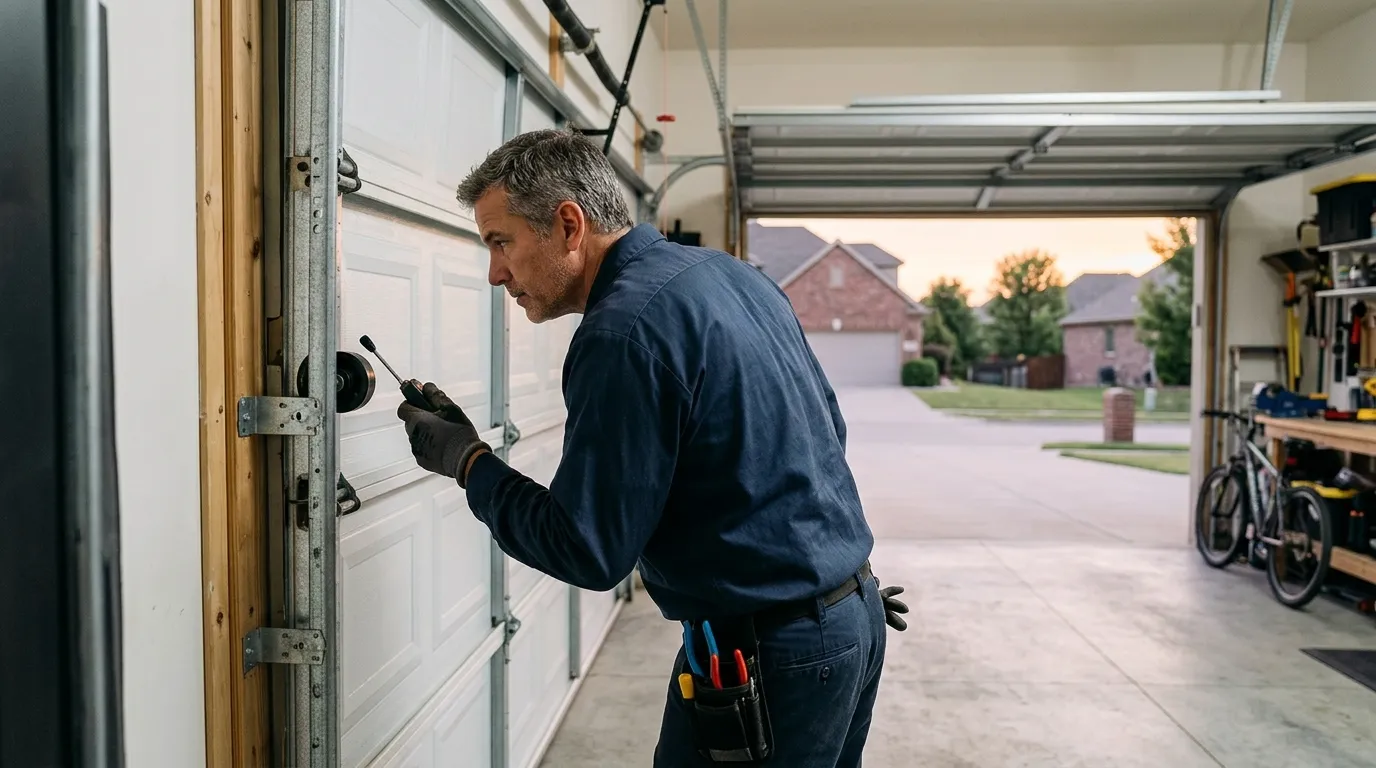
A lot of Struthers homeowners are handy with an older house - you kind of have to be. Tightening loose hinges, lubing hinges and rollers, and squaring up a track that's walked an inch off plumb are all reasonable weekend jobs, and none of them need a call to us.
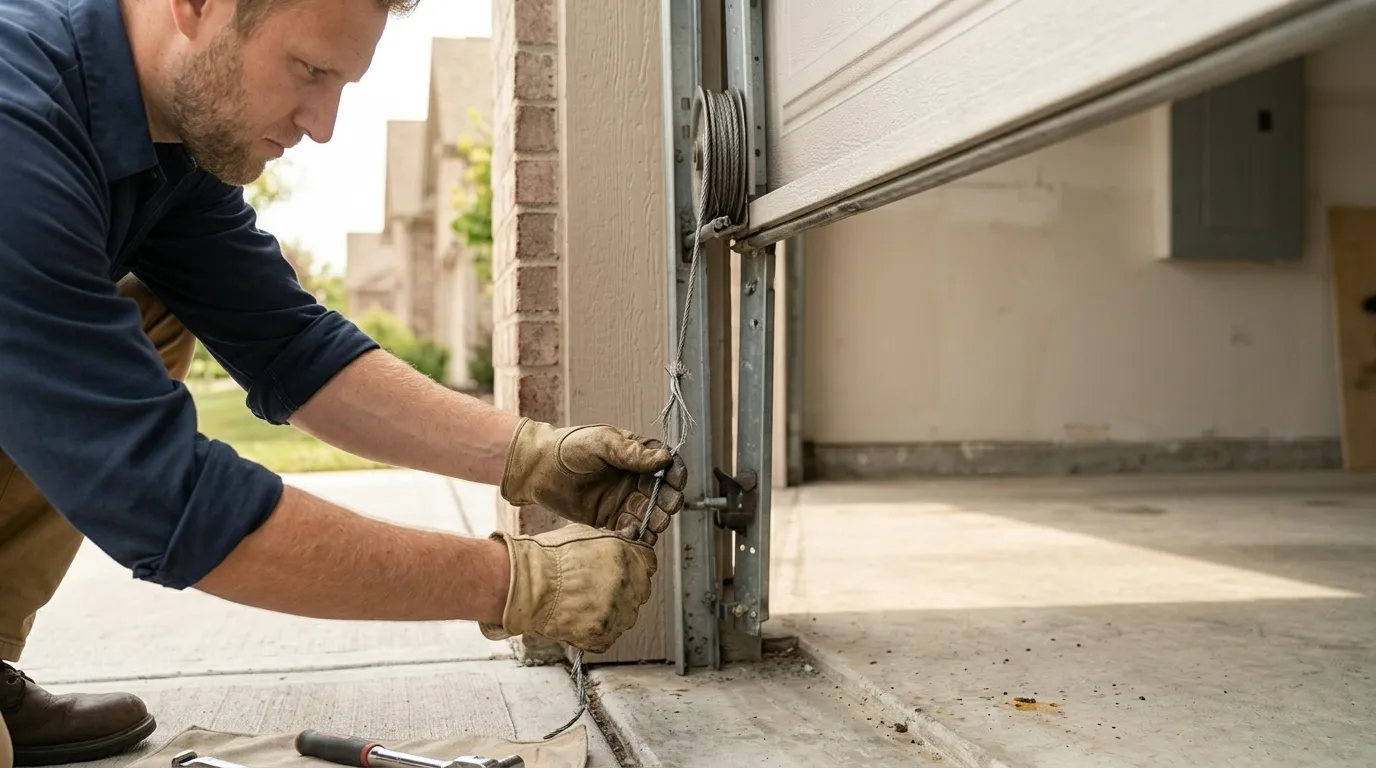
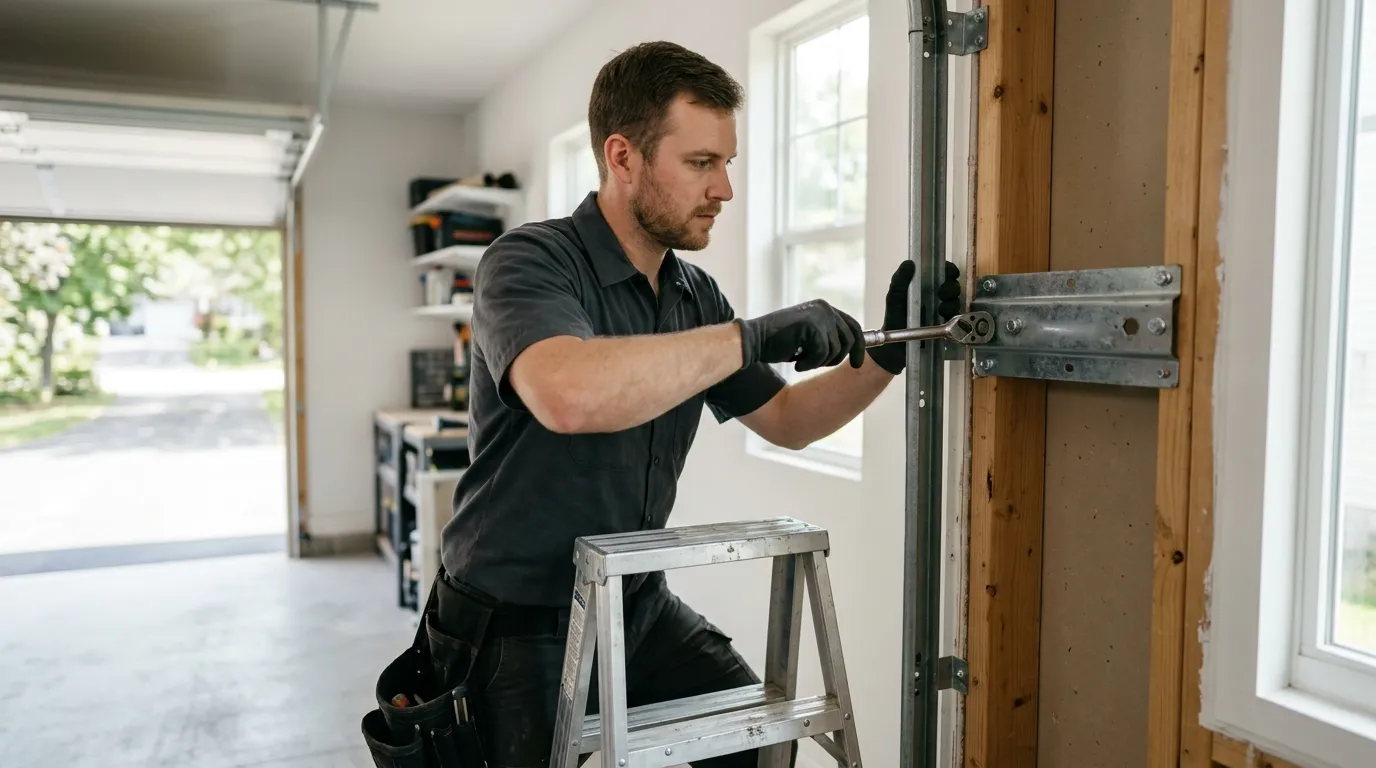
What isn't a DIY job is anything involving a torsion spring under tension, especially on hardware this old. A spring that was installed on a 1950s frame and never properly matched to a later opener swap is carrying load nobody measured recently, and it can let go with enough force to break a hand or worse. Cable work on the same vintage of drum is the same story - the drum wear you can't see from the ground is exactly what lets a cable jump the groove.
If your income and budget mean you're stretching a repair as far as it'll go, that's fair - median household income here runs around $51,894, noticeably below the roughly $60,598 median across the service area, so we're not going to tell you to replace a door that can be fixed. But we will tell you straight when a repair is throwing good money after bad.
Stocked Parts
Because Struthers skews older than most of what we cover, the truck carries springs and drums sized for the shorter, lighter panel doors that were common on 1950s single-car and narrow double garages, not just the wider, heavier stock from the 1960s-70s builds that make up most of the service area. That distinction matters - a spring rated for a modern insulated door will over-torque an old lightweight panel and wear the hinges out early.
We also keep torsion hardware conversion parts on hand, since a fair number of houses here were retrofitted from extension springs to torsion at some point and the transition work was uneven from job to job. Rollers, cables, and standard 1-3/8
How We Fix It
On a Struthers call, the first thing we do is figure out what decade the hardware actually dates to, because the nameplate on the opener rarely matches the age of the spring or track underneath it. It's common to find a 2000s opener bolted onto a track that's original to the house.
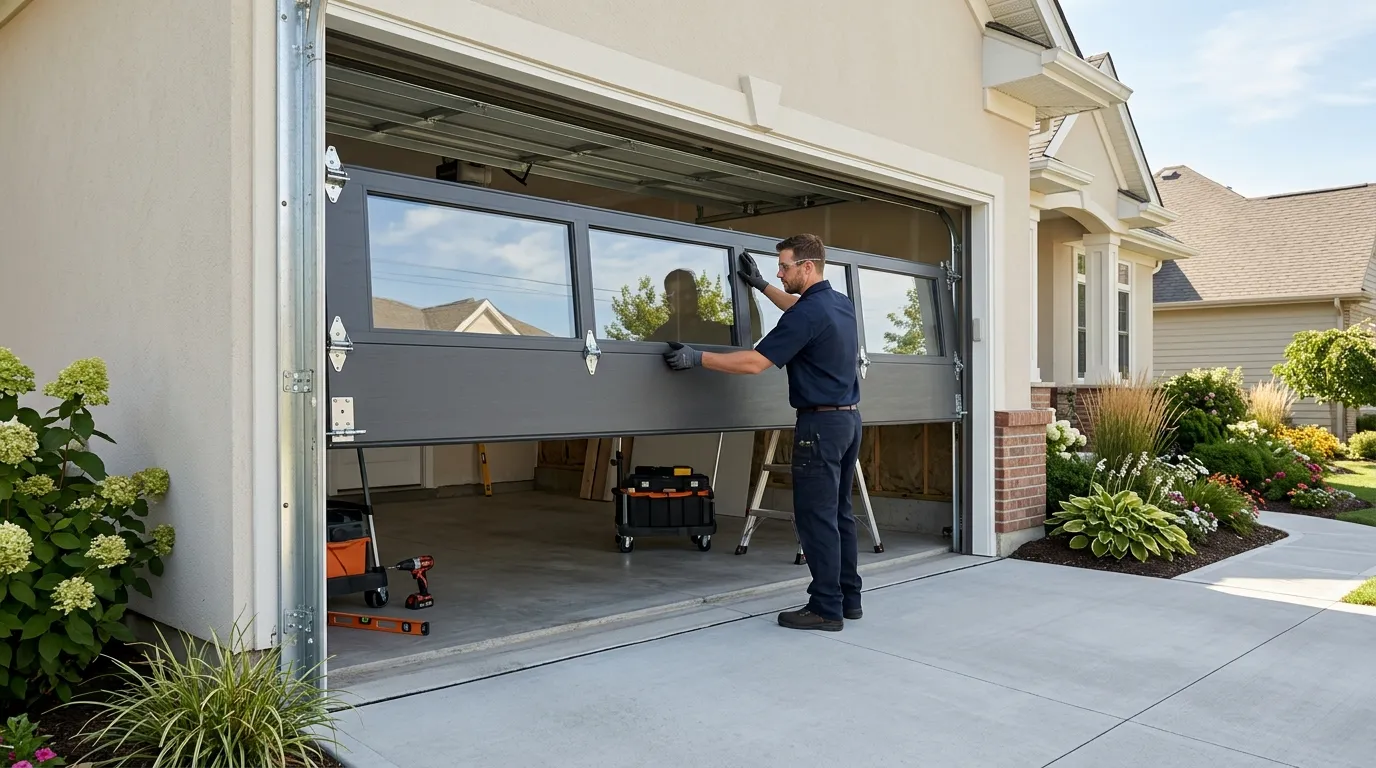
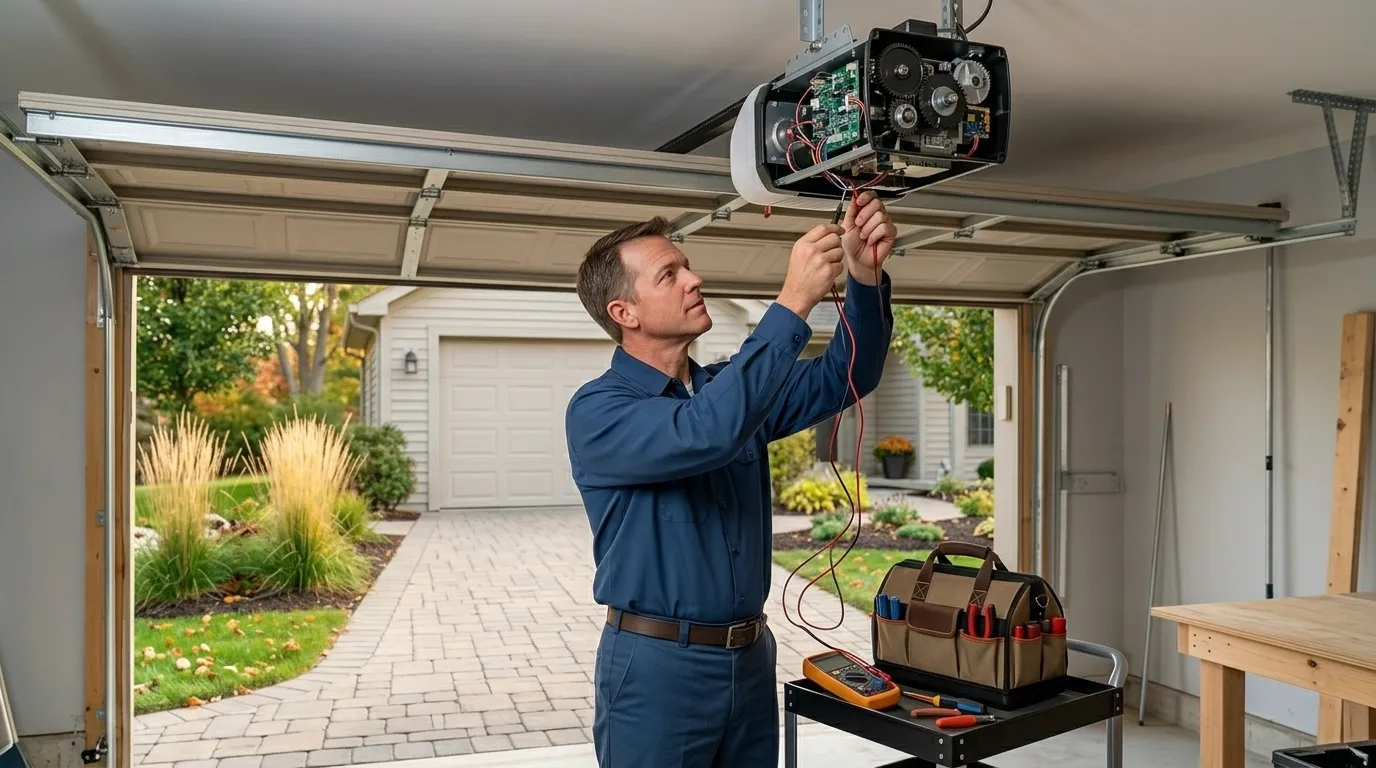
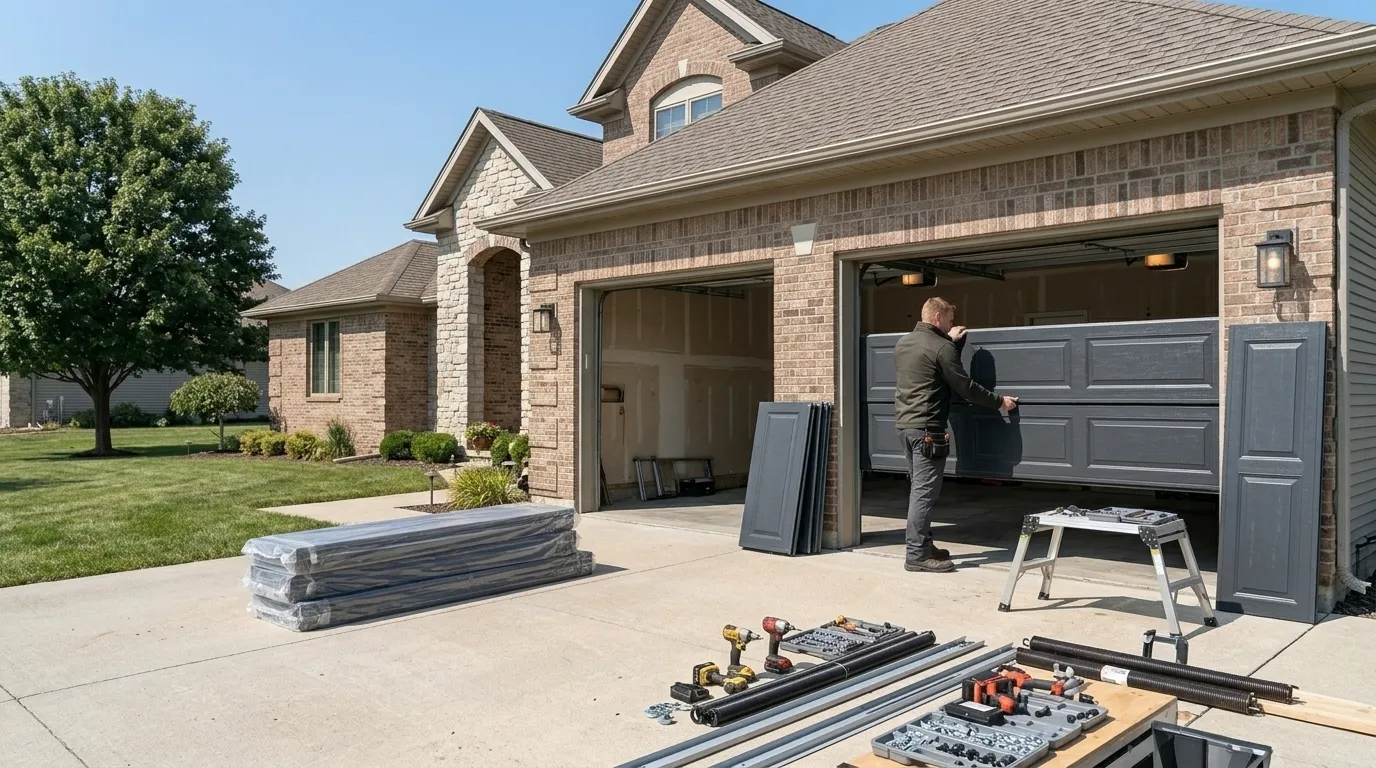
Once we know what we're working with, most jobs are a straight swap: matched torsion spring set sized to the actual door weight, new cable if the drum shows wear, rollers if they're the old steel type rather than nylon. We balance the door by hand before we touch the opener settings, because an opener fighting an unbalanced door will burn out its motor early regardless of how new it is.
We travel to Struthers from Youngstown, about 4 miles out, so we're not a local depot with a same-day guarantee built in - we schedule the visit and get there, but we don't promise a response time we can't back up.
Where This Job Goes Sideways
The job goes sideways when the original 1950s frame has shifted enough that a standard replacement track won't seat square without shimming, which happens more here than in newer construction because the wood has had seven decades to move. We can usually work around it, but it adds time to a job that looked simple on the phone.
It also goes sideways when a homeowner has already had a partial fix done - a spring replaced without replacing the matching drum, say - and the mismatch has been quietly wearing something else out for months. We'll tell you if that's what we're looking at rather than just patching over it again.
Our honest limit: if the frame itself has rotted or racked out of square, that's carpentry work before it's a door repair, and it's outside what we do. We'll say so rather than force a door onto a frame that isn't going to hold it.