What Is Going On
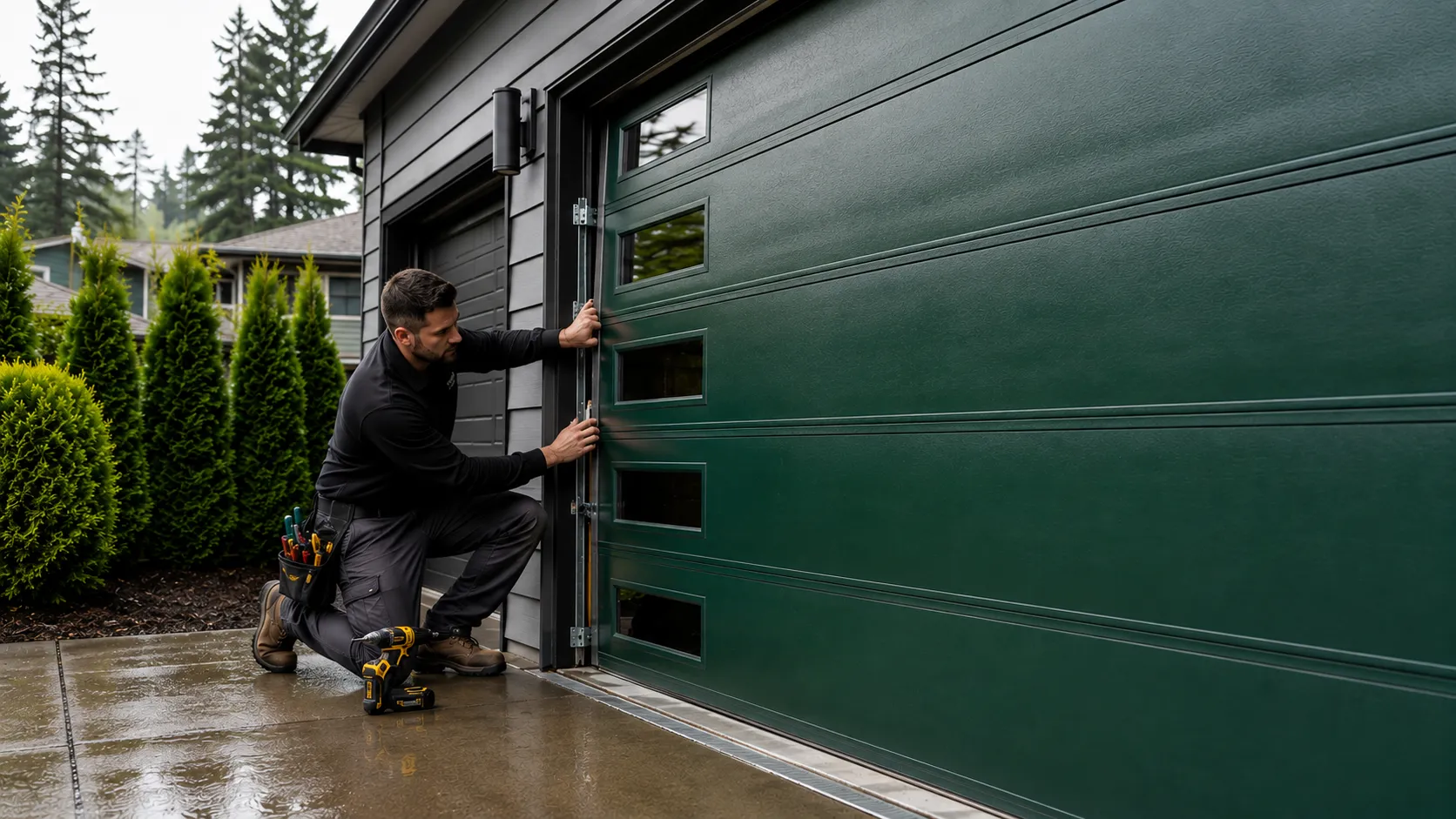
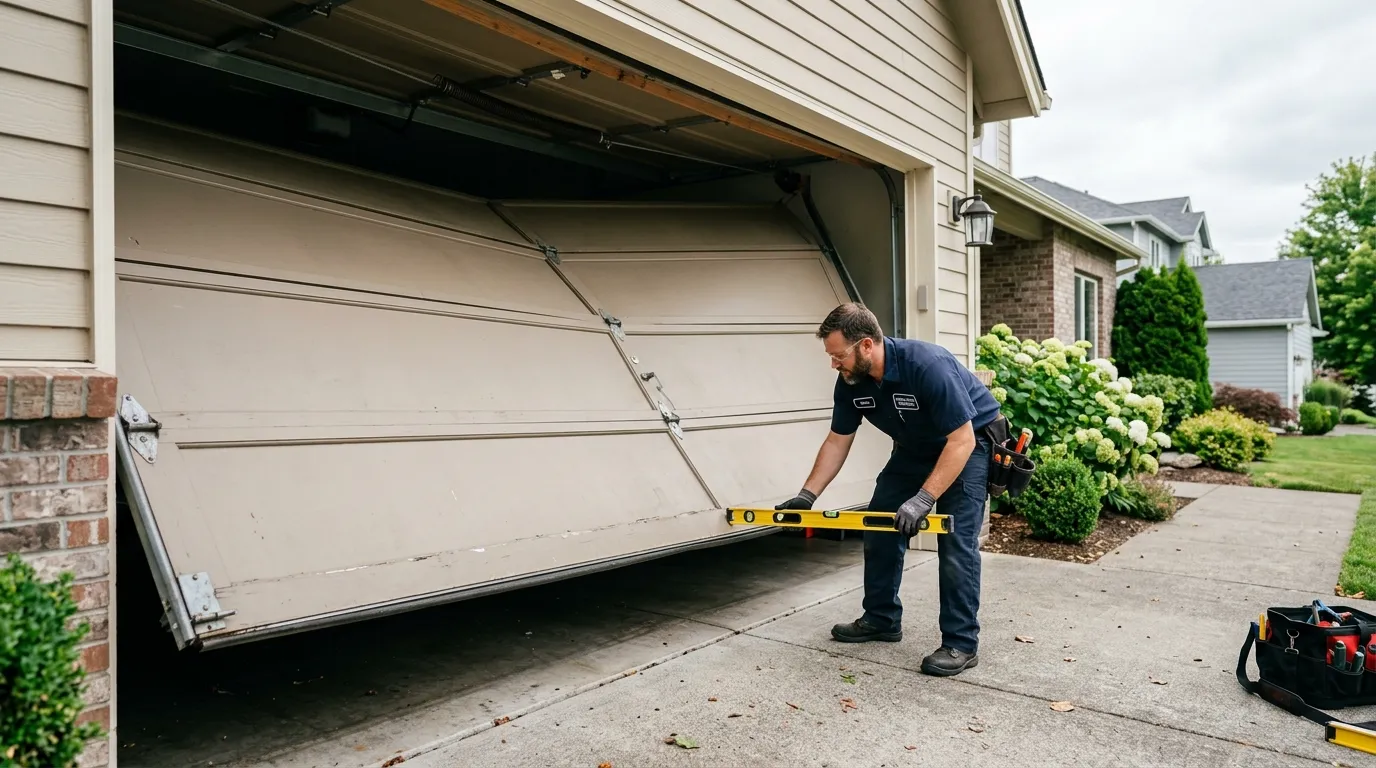
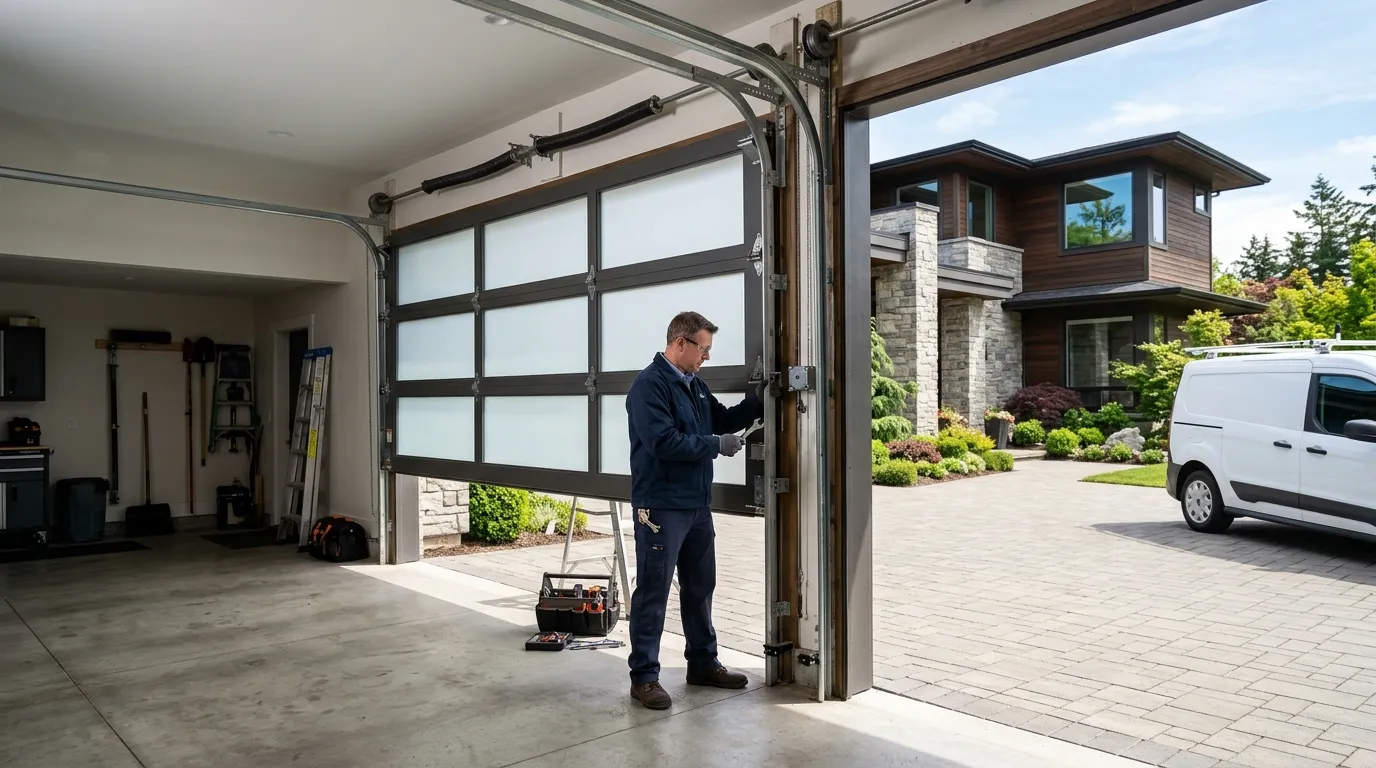
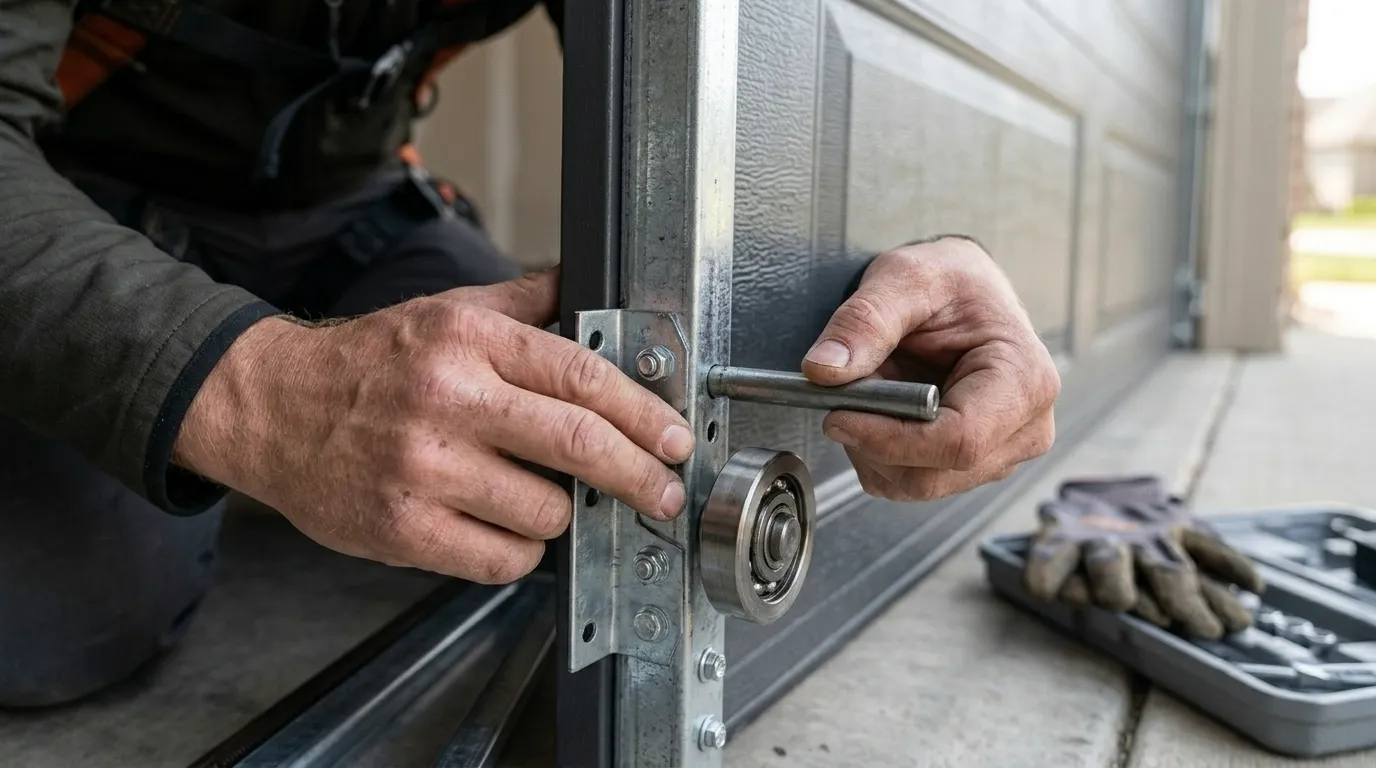
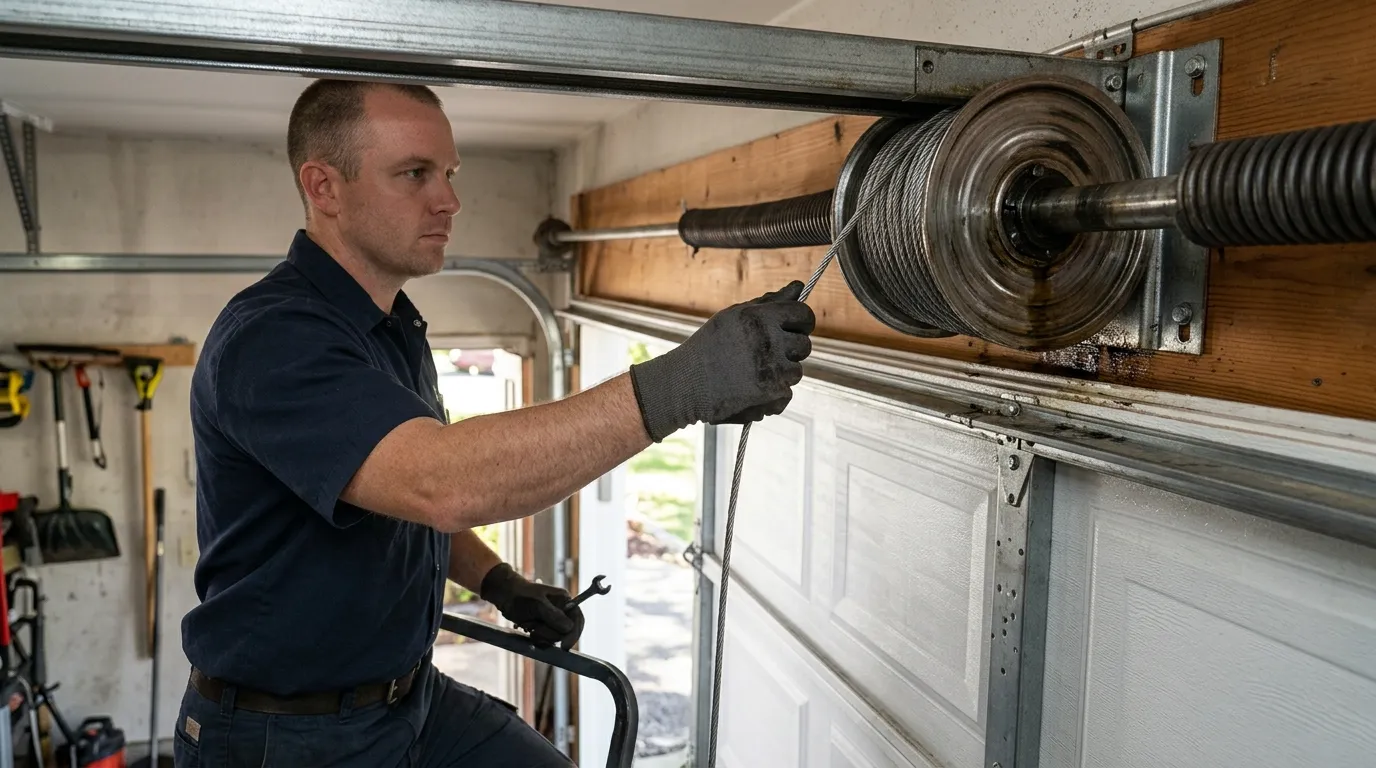
Twenty-eight named areas in and around Youngstown are dominated by 1960s and '70s construction, and that generation of garage doors used steel gauges and torsion hardware that manufacturers stopped making replacement parts for decades ago. A popping sound on the way up is usually a spring under stress finding its coil binding against age-hardened lubricant. A rattle that travels with the door, rather than staying in one spot, points to loose track brackets - the kind that were often lag-bolted straight into original framing and have worked slightly loose over sixty winters of expansion and contraction. A squeal on rollers usually means the bearings are dry, not damaged, and that's the cheap fix. A hum from the opener with no door movement is a different story - could be a stripped gear, could be a capacitor going in the motor. None of these sounds are dramatic on their own. What matters is that a house built in this era carries hardware old enough that 'it's always made that noise' stops being a safe answer somewhere around year fifty.
What the Weather Here Does to It
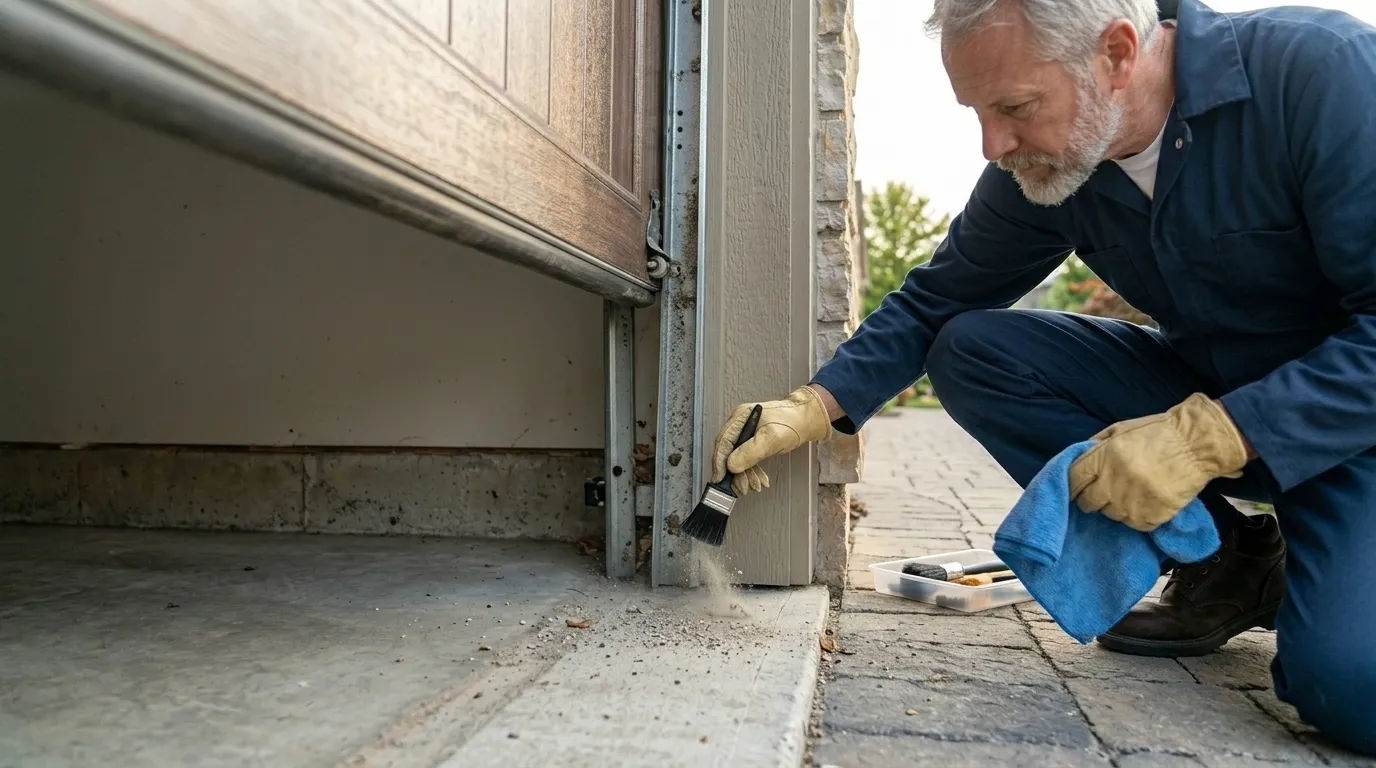
Youngstown sits in a cold-severe climate band, and that matters more for a garage door than for almost anything else attached to the house. Steel torsion springs lose a measurable amount of tension as the metal contracts in cold weather, which is why doors that lift fine in October start feeling heavy, and noisy, by January. Grease that was fine in summer thickens and stops doing its job, so rollers and hinges that were quiet all fall start squealing the first hard-freeze week. Weatherstripping on doors from the 1960s and '70s stock common across this area was rarely designed for the freeze-thaw cycling we get, so a scraping or dragging sound along the bottom seal often shows up right as temperatures start swinging. None of this means something's broken. It means cold steel behaves differently than warm steel, and a door that's already carrying sixty-year-old hardware has less margin to absorb that change quietly. The noise is usually the hardware telling you it's working harder than it used to, not that it's about to fail.