What Is Going On
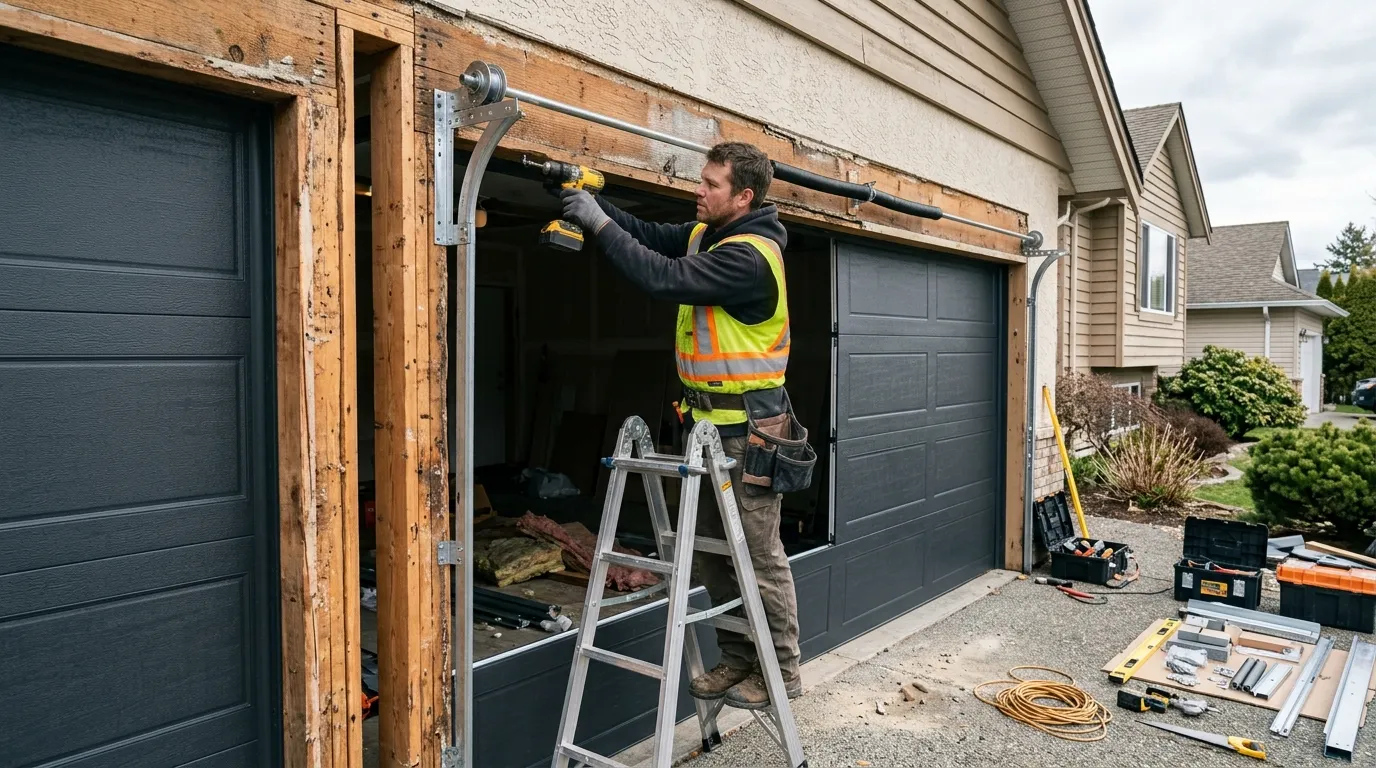
A torsion spring is just wound steel storing energy so the door doesn't fall on the opener or on you. Every open-close cycle uses up a little of that steel's life, and cold makes the metal more brittle on top of normal fatigue. In a house from the 1960s or 70s - which describes most of the housing across the 28 named areas this company works in - the spring on the door may be original or a mismatched replacement sized for a lighter door than what's currently hanging.
One-piece and early sectional doors from that era often ride on side-mounted torsion hardware that isn't stocked the way modern extension springs are. That's the honest limitation here: if the spring or the drum on an older door is a discontinued size, sourcing the exact match can take longer than a same-day repair on newer hardware. Sometimes the right call is to replace the whole assembly with current hardware rather than chase a part for a 50-year-old door.
What the Weather Here Does to It
This area sits in a severe cold climate band, and that matters more for a garage door spring than most people think. Steel contracts in cold, and a spring that's already fatigued from thousands of cycles loses flexibility faster once temperatures drop hard overnight. The classic failure - a bang in the early morning, right when the door's asked to work for the first time that day - lines up with exactly that pattern: cold steel, cold garage, first pull of the day.
Houses built before the 1980s in this area typically have less insulated garage bays than newer construction, so the inside of the garage tracks close to outdoor temperature swings rather than staying buffered. That's harder on both the spring and the opener's gears. It's not a defect in any one door - it's what severe cold does to aging torsion hardware year after year, and it's why late-winter and early-spring calls for broken springs run heavier here than in a mild climate.