What Is Going On
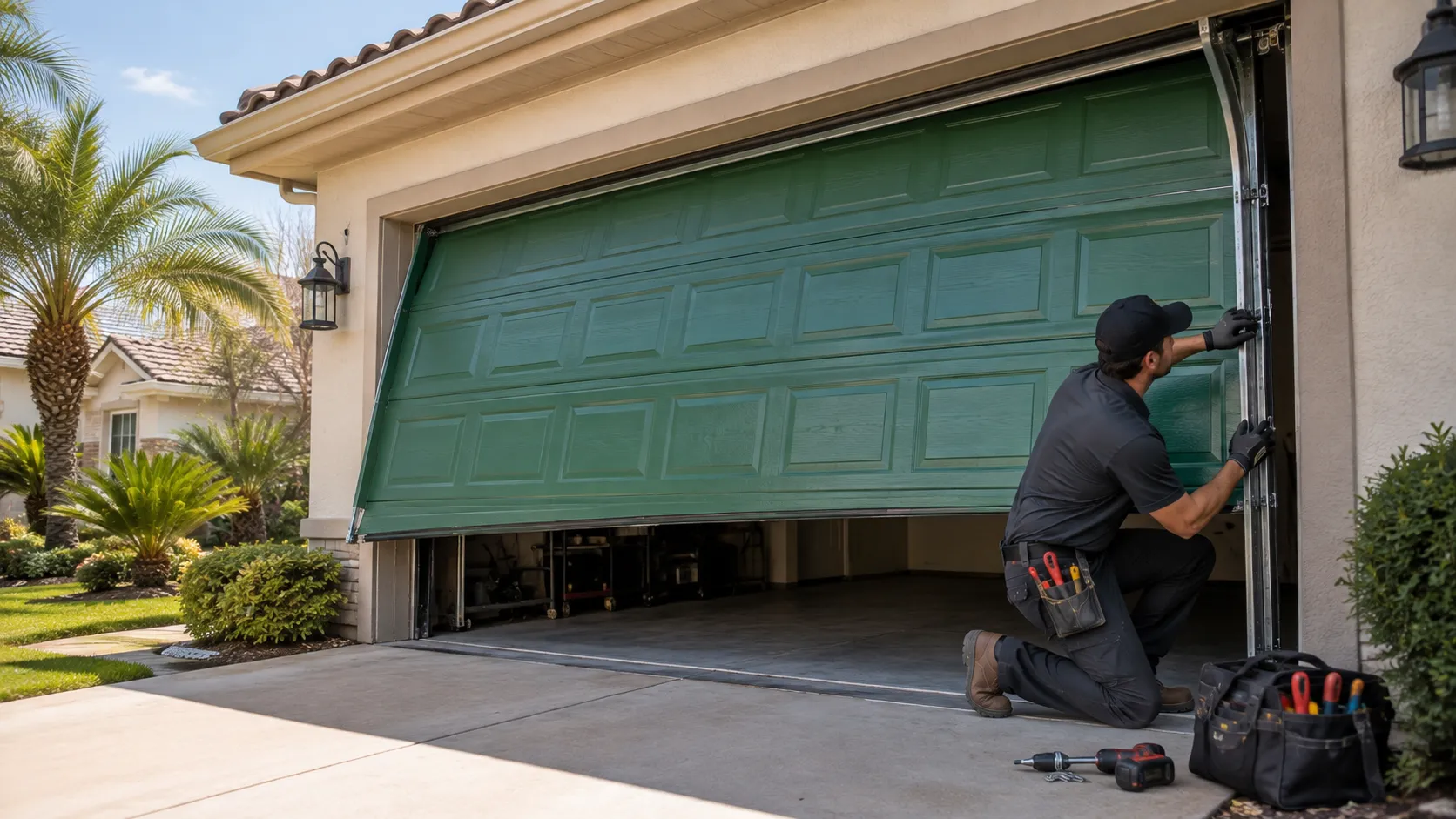
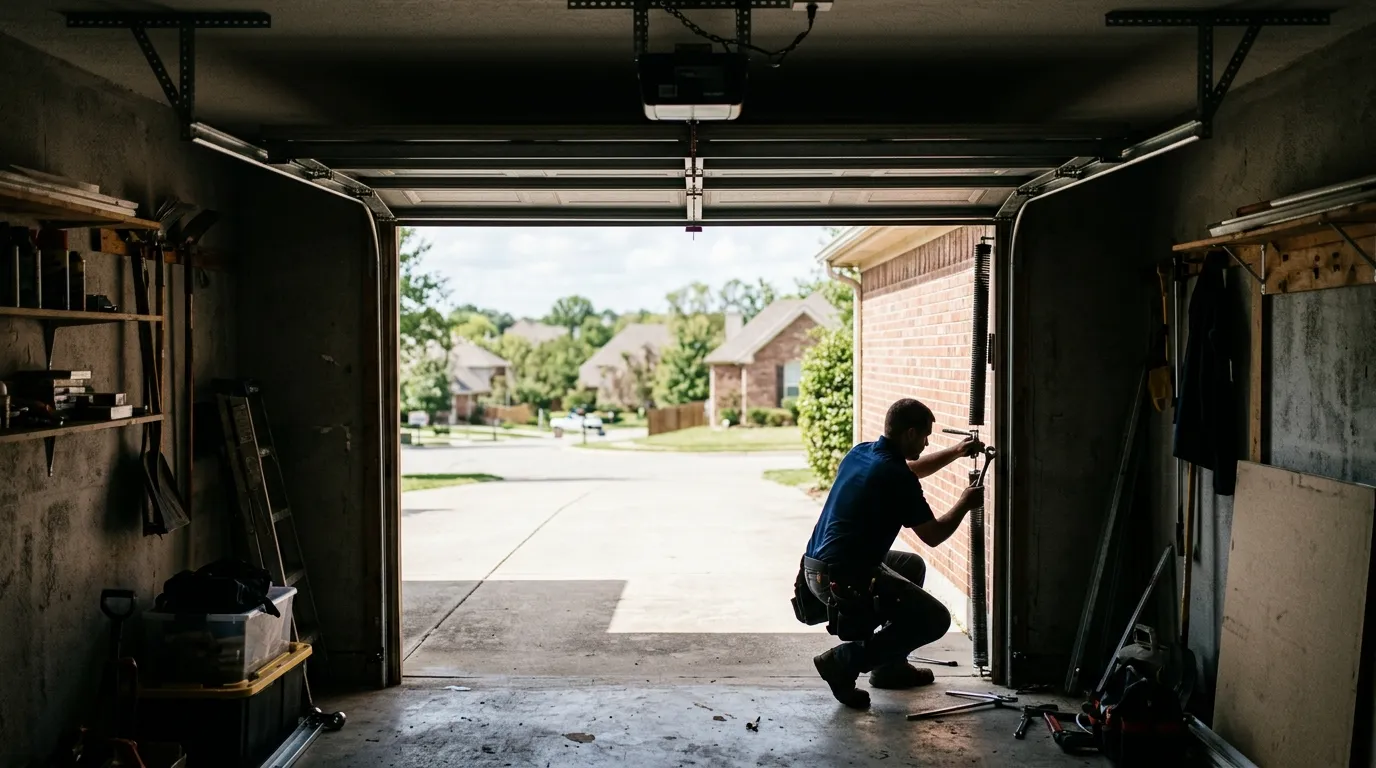
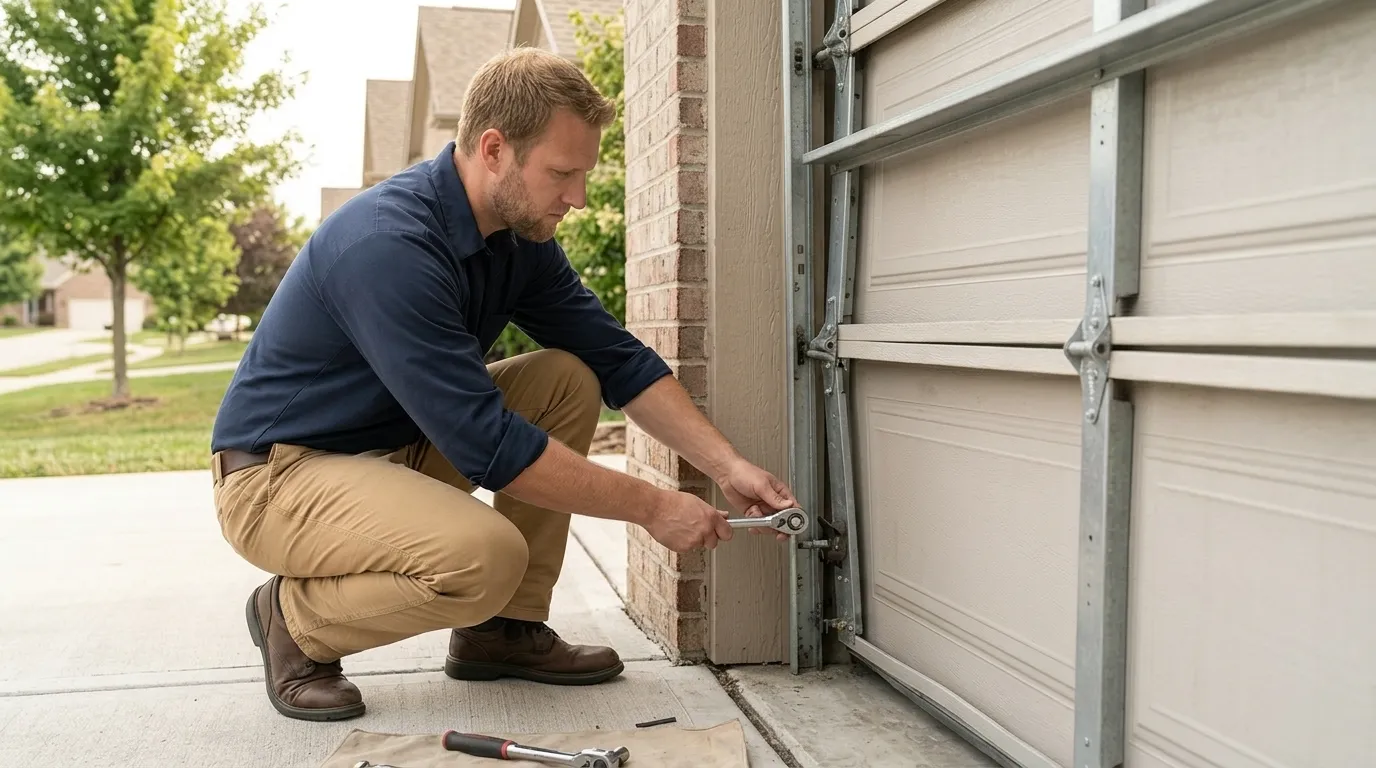
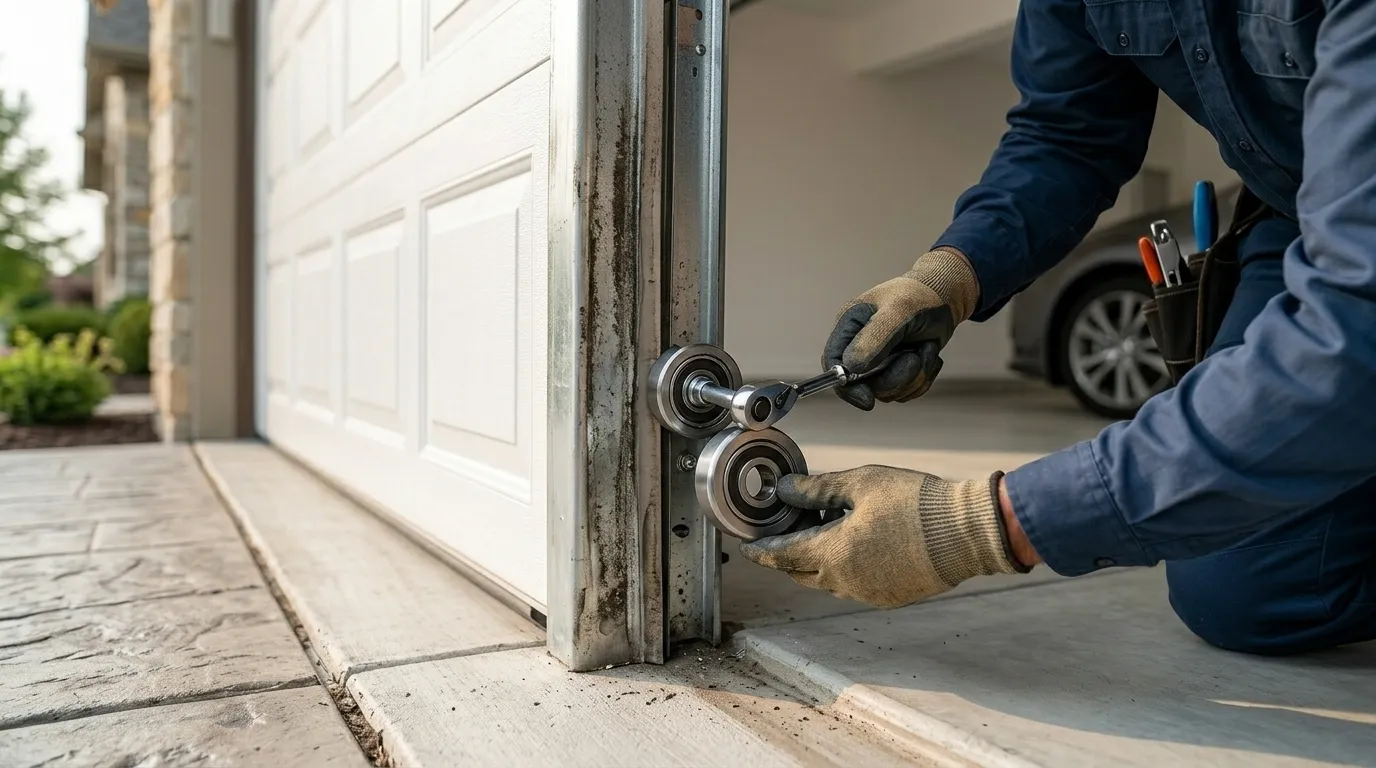
Across the 28 named areas in this service territory, the bulk of the housing stock dates to the 1960s and 70s. Doors from that era, or the replacements installed on those openings since, tend to be lighter steel, single layer, with rollers and hinges rated for a lot fewer cycles than what's on the market now. After decades of use the symptoms are predictable: rollers wear oval and start binding in the track, hinges stretch their screw holes until the panel racks side to side, and the torsion spring - rated for a fixed number of cycles when it was wound - reaches the end of that life and either sags or snaps outright. None of this is a design flaw. It's just a door built when it was built, doing the number of open-and-close cycles a door that age has done. The question isn't whether the door is old. It's whether the track, the opener, and the frame around it are still square and worth building on, or whether the fix is chasing a door that's already given up.
What the Weather Here Does to It
This area sits in a cold, severe climate band, and that changes what fails first. Steel panels contract in a hard freeze and expand again on the next thaw, and a door that's already a little out of square from age moves more than a newer one - enough that weatherstripping tears at the corners and stops sealing years before you'd expect from wear alone. Track brackets that have loosened over time get worse fast once ice starts forming at the base of the door and locking a panel to the slab overnight. Openers with worn gears struggle harder in cold air, since the grease inside stiffens and the motor has to push against more resistance to get a heavy, aging door moving. None of this is unique to any one house - it's what a cold winter does to hardware that's already past its original service life, which is most of what's out there on stock this age.