What Is Going On
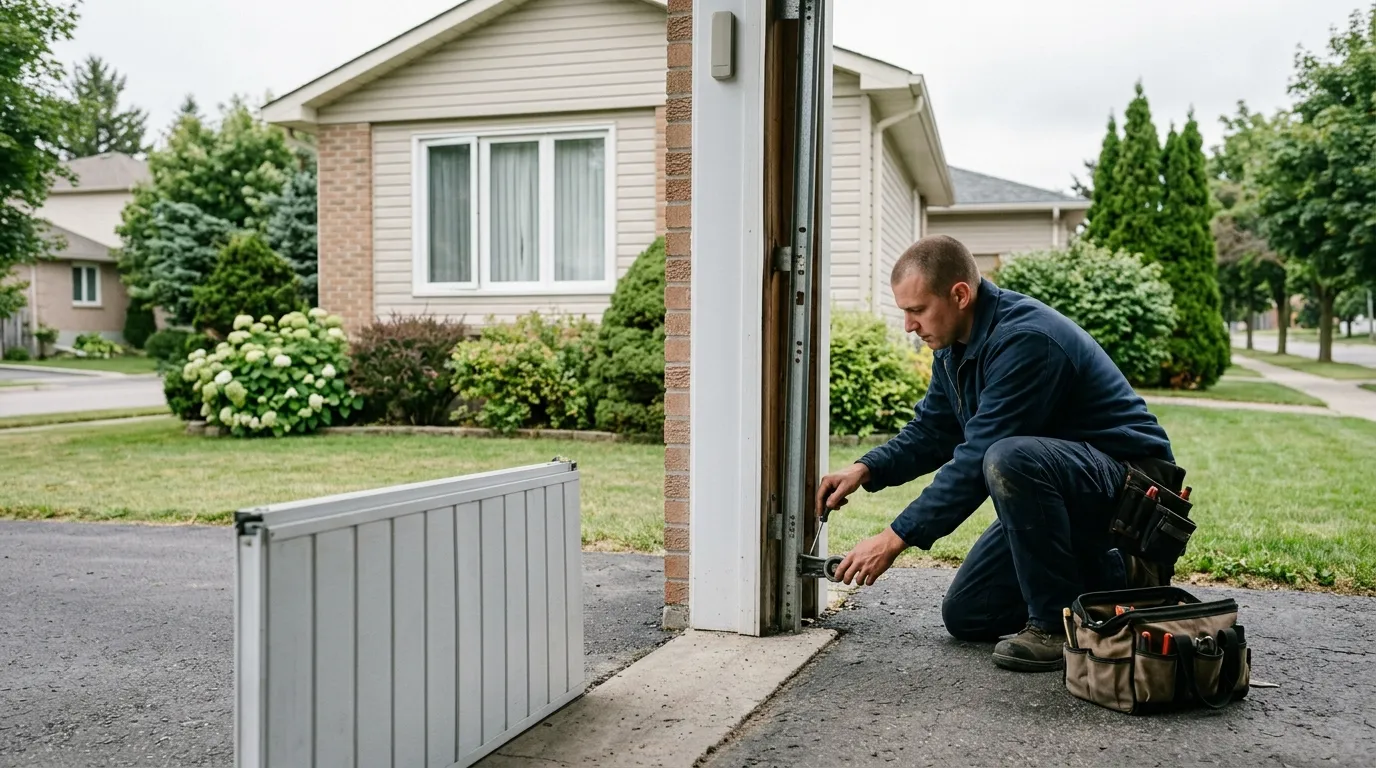
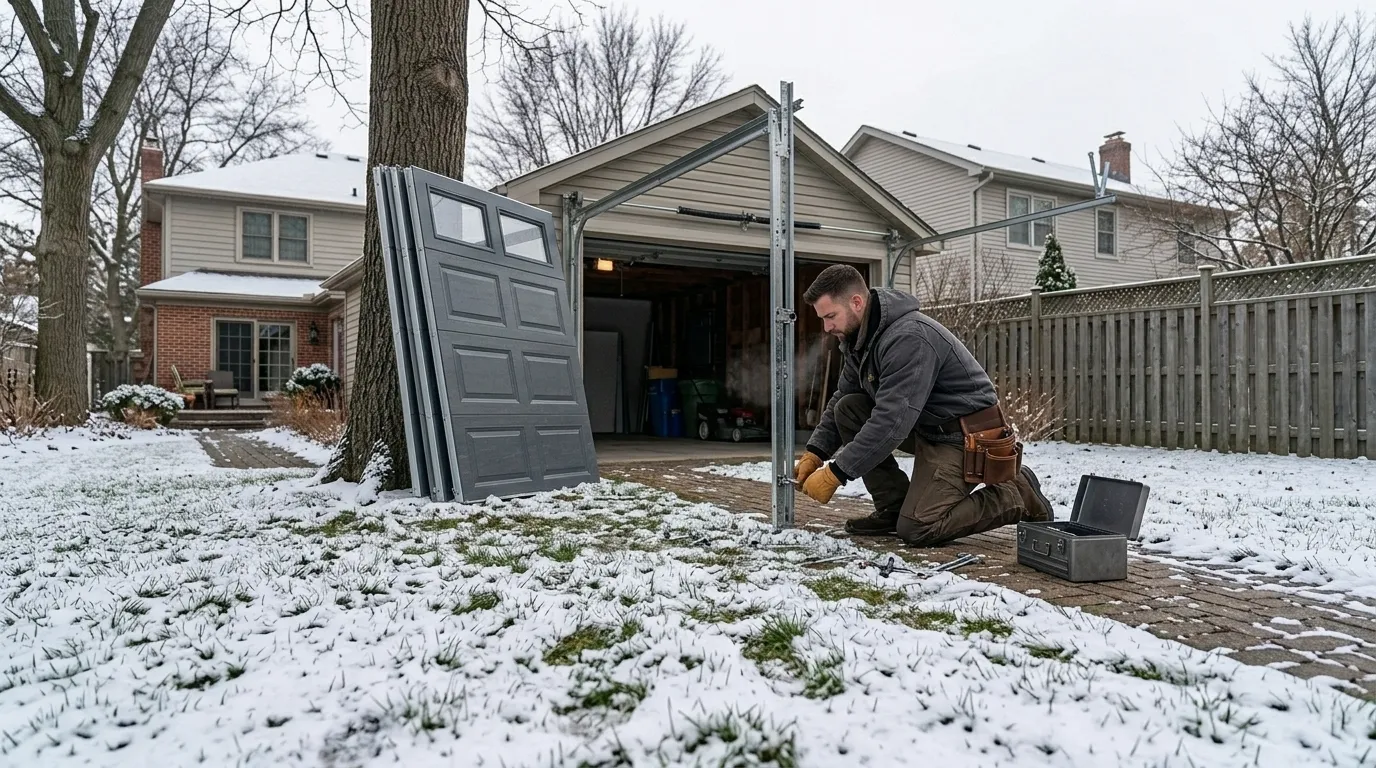
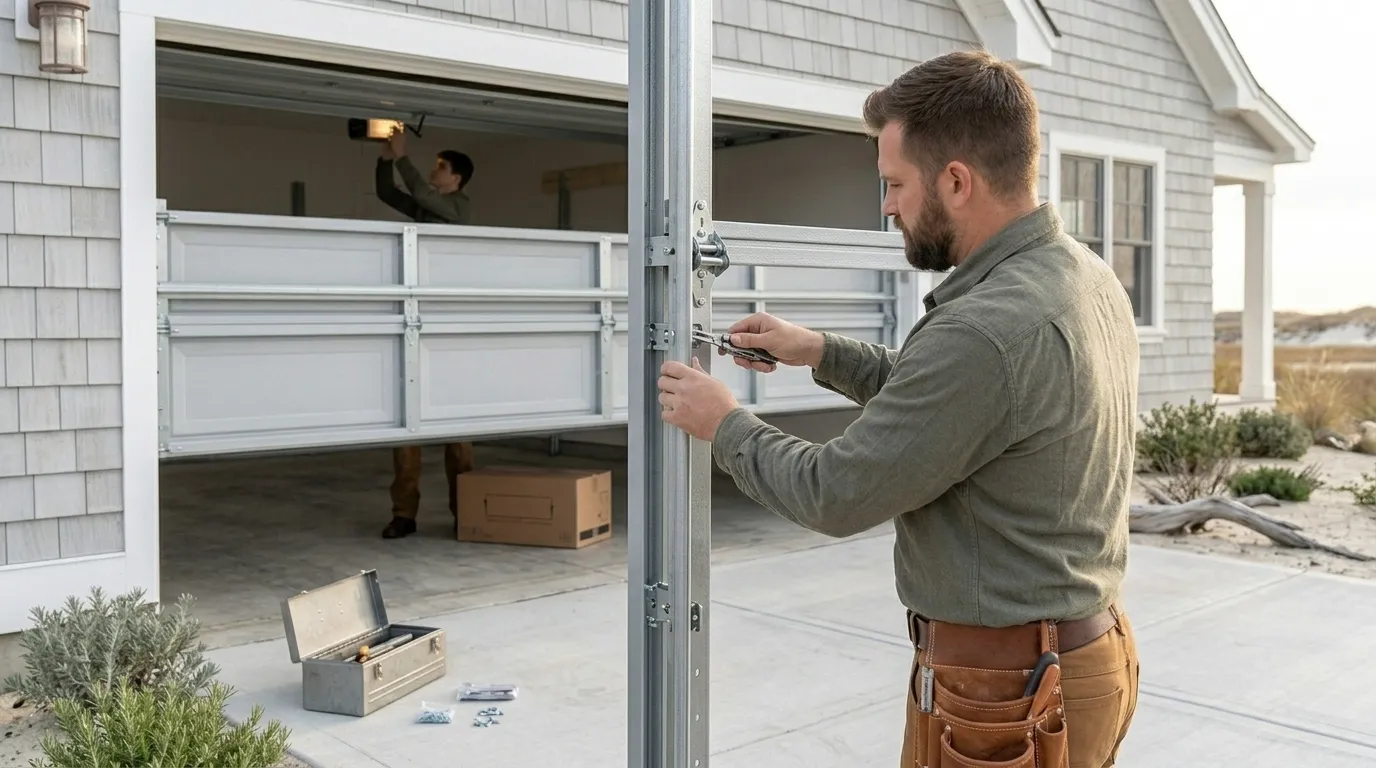
A garage door doesn't usually jump the track from one big event. It's roller wear against a track that's shifted a few degrees off plumb, and once a roller rides the flange edge instead of sitting inside the channel, every open-close cycle pushes it further out of line. In housing built between 1938 and 2000, with a median build year around 1964, the track brackets were fastened to jamb framing that's had six decades to settle, shrink, and move slightly with the seasons. That's not a defect - it's just what happens to a structure this age. Loose lag screws at the bracket, a bent section from a car bumper tap years ago, or a spring that's lost tension and lets the door drop unevenly on one side - any of these can start the drift. Once a track is out of alignment, the door looks fine sitting closed and then hangs up or jumps somewhere in the middle of travel, which is usually the first sign an owner notices.
What the Weather Here Does to It
This is a severe cold climate, and cold does specific things to steel and to the wood framing a track is bolted into. Metal track contracts in hard freezes, which can loosen bracket screws that were already marginal in older jamb wood. Lubricant that was fine in October gets stiff in January, rollers drag instead of rolling, and a dragging roller puts sideways load on the track instead of straight vertical load. Add in the freeze-thaw cycling this region gets every winter, and a foundation or slab that's shifted even an eighth of an inch over sixty years can throw the whole door opening slightly out of square. None of this is dramatic on its own. It's cumulative - a house from the 1960s that's been through fifty-plus winters has had fifty-plus chances for a bracket to loosen a little more.