What Is Going On
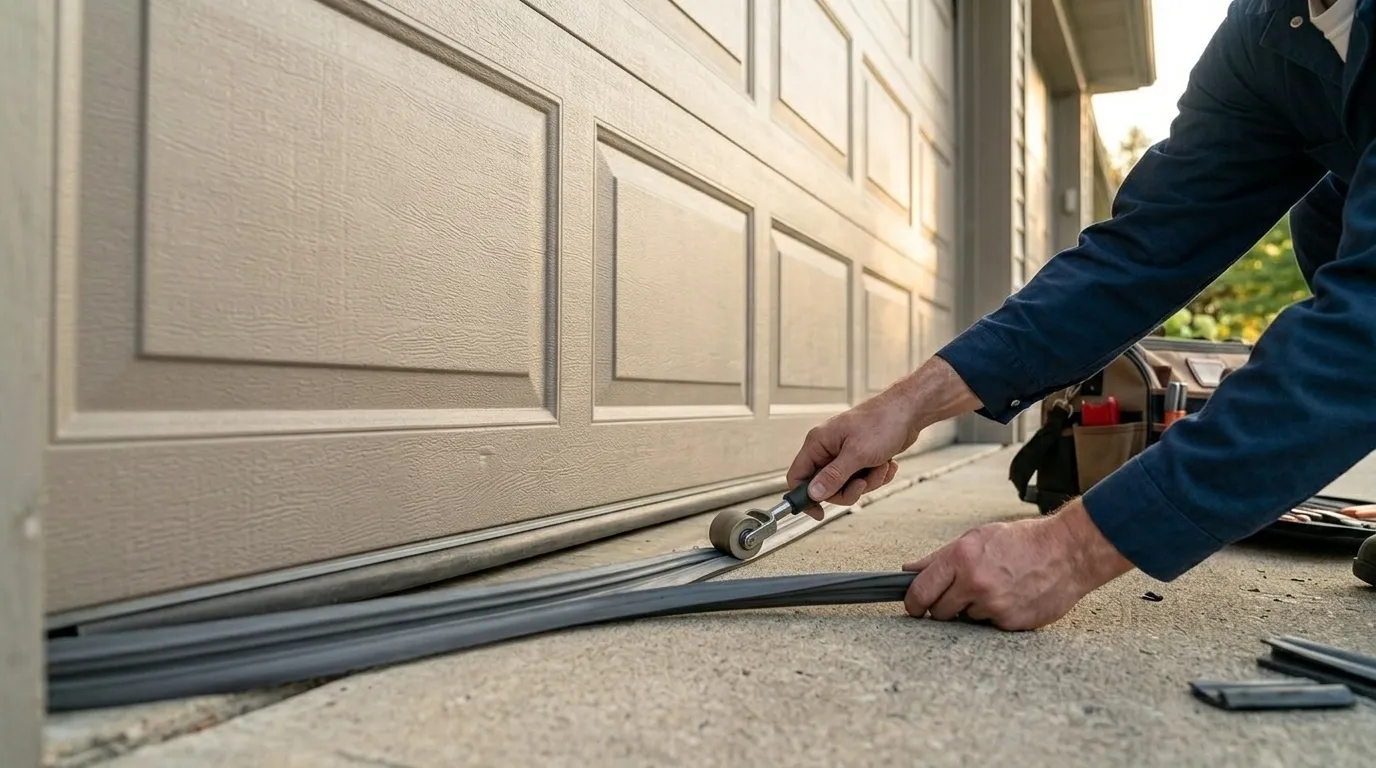
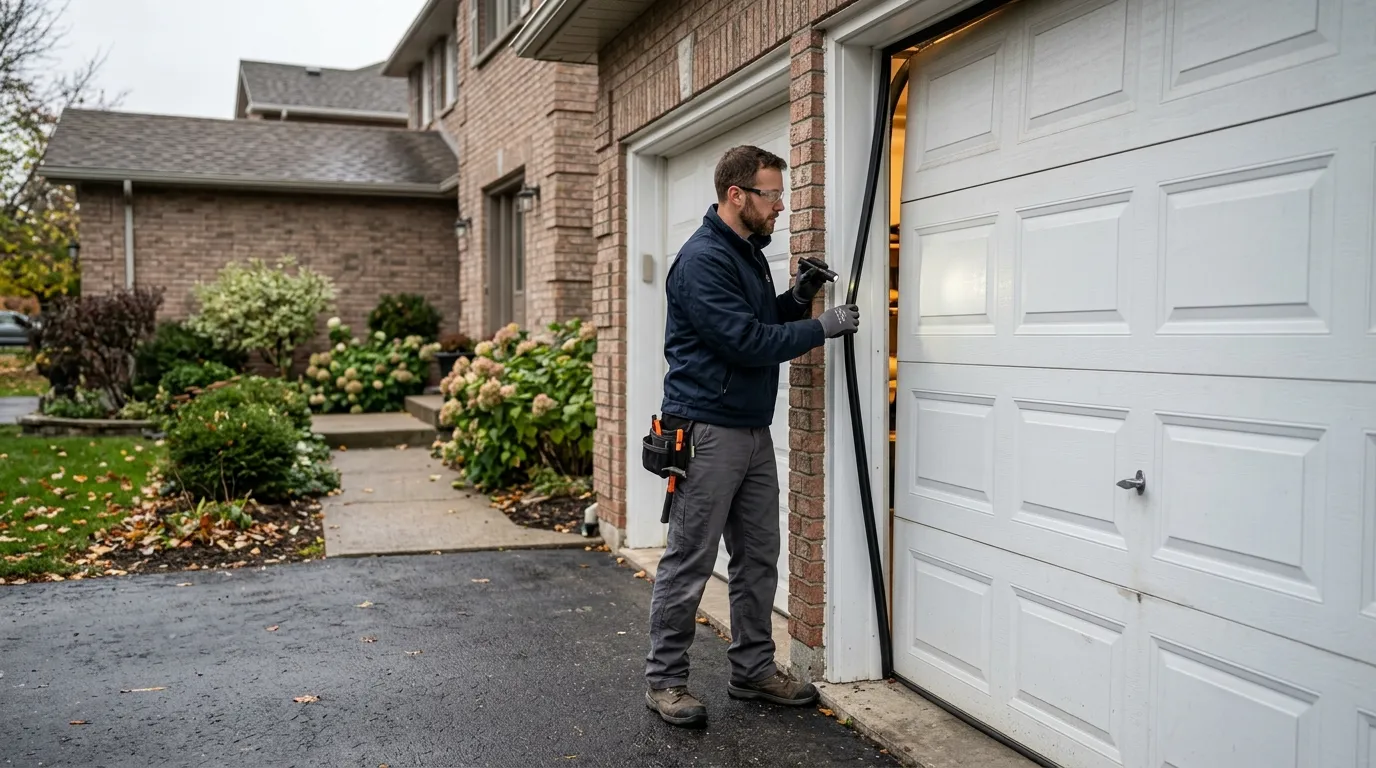
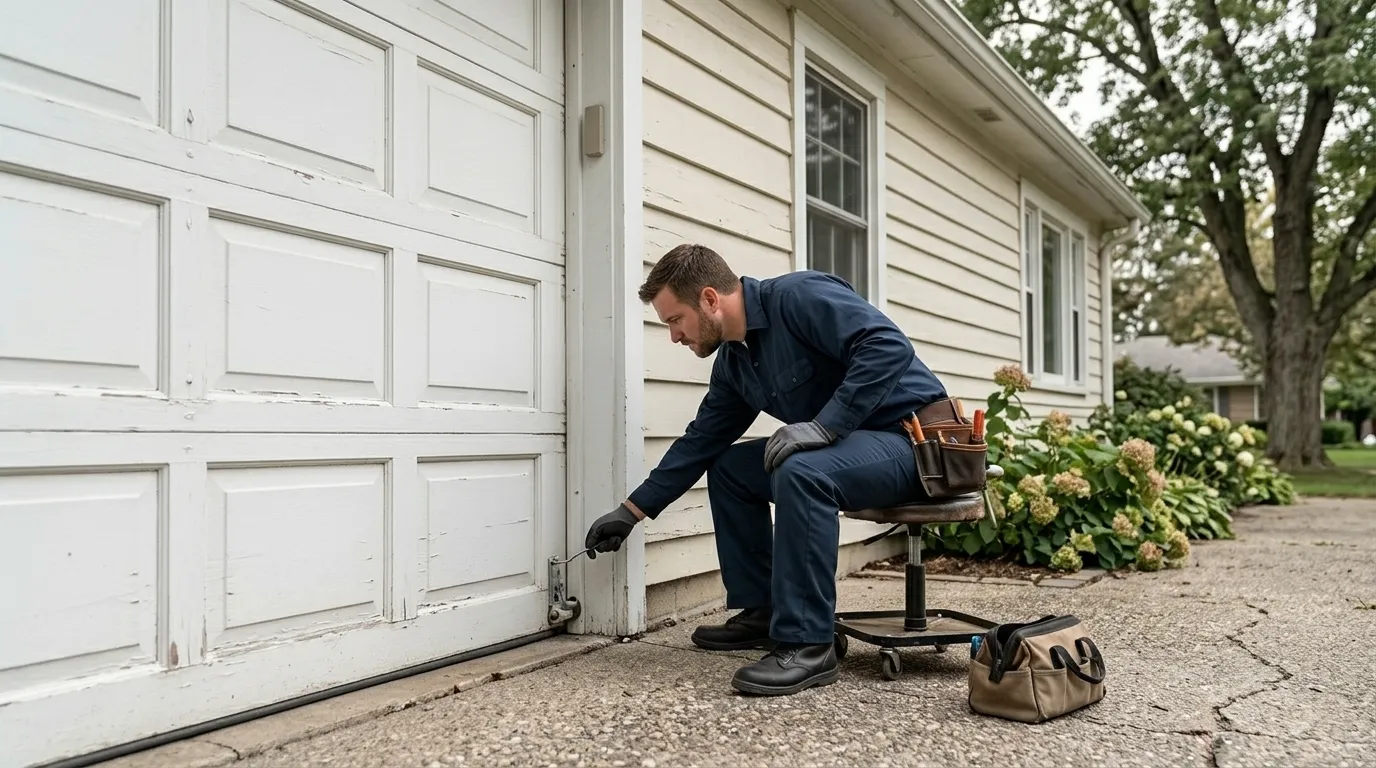
Most garage doors in this area, across the roughly 28 named communities that make up the service region, are from the 1960s and 70s wave of home construction. Doors from that era are usually thin steel or aluminum with little to no foam core, held together with basic astragal seals along the bottom and simple vinyl strips on the sides. Over 50-plus years those materials shrink, harden, and pull away from the fasteners. Once the rubber loses flexibility, it stops compressing against the slab and just sits there, letting air move freely underneath. On older sectional doors, the seal between panels wears out too, especially at the hinges where the door flexes most on every open and close cycle. None of this is a defect - it's just what happens to a seal that's done its job for decades longer than it was rated for. The fix is usually straightforward: new bottom astragal, new side and top seals, sometimes a threshold strip if the slab has settled unevenly, which happens on older poured driveways more than people expect.
What the Weather Here Does to It
The climate band here is classified as cold and severe, and that matters more for seals than for almost any other part of the door. Rubber and vinyl weatherstripping goes through repeated freeze-thaw cycles every winter - flexible on a 40-degree afternoon, brittle and cracking by the next morning's cold snap. That cycling is what actually kills a seal, more than straight cold ever does on its own. Across the roughly 41,076 owner-occupied houses in this service area, a large share sit on doors installed before insulated steel became the standard option, so the seal is doing most of the work of keeping cold air out of the garage, and by extension, out of any room that shares a wall with it. Ice buildup at the base of the door is common too, especially where a driveway pitches toward the garage instead of away from it - that ice can tear a seal right off the track on the first warm-up if nobody's checked it since fall.