Garage Door Service for Howland Center's 1970s-Built Homes
Howland Center homes mostly date to the early-to-mid 1970s, later than the Youngstown area average. We travel 12 miles to work on the doors and openers that era left behind.
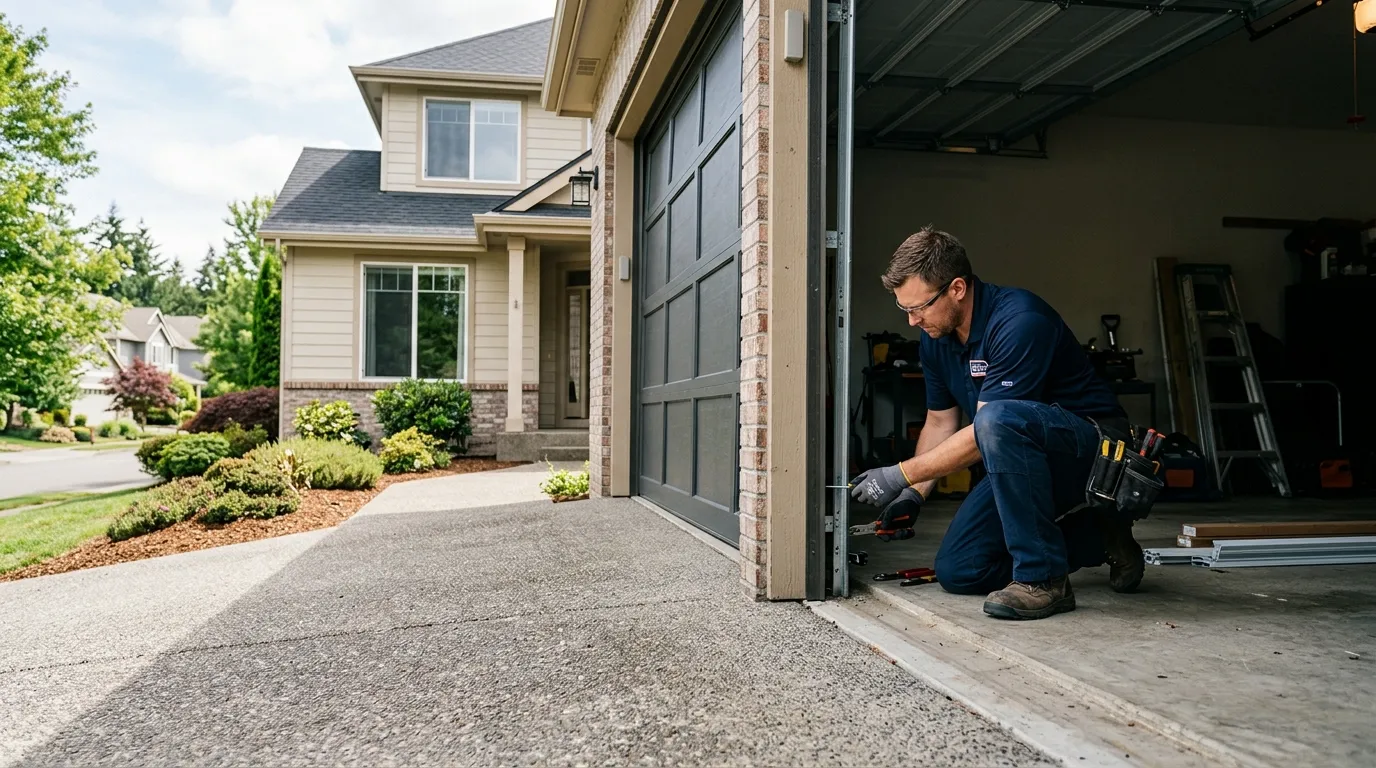
Howland Center's housing stock centers on 1974, noticeably newer than the 1964 median across the wider Youngstown service area. That ten-year gap matters more than it sounds. Homes built in the early-to-mid 1970s came with steel sectional doors as standard rather than the older wood or one-piece slab doors common in 1950s-60s construction. Torsion spring systems from this era were factory-installed rather than retrofitted, and the openers - where original units survive at all - are chain-drive models with far less safety reversal circuitry than anything sold today.
With 2,656 households in the area, you're looking at a fairly consistent building wave rather than a patchwork of decades. That consistency shows up in service calls: a lot of doors here share the same track width, the same drum style, and the same failure points, because they went up around the same construction cycle. It also means original hardware, where it hasn't been replaced, is now approaching or past the 50-year mark on springs and rollers that were never meant to last that long.
What That Means for Doors
A door built in 1974 is not a door built in 1958, and the parts don't interchange the way people assume. Early-70s sectional doors typically ran on 2-inch track with standard-lift torsion springs sized for lighter panel weight than modern insulated steel doors. When a homeowner here swaps in a heavier insulated replacement panel without upsizing the spring, the opener strains and burns out faster than it should - a mismatch we see more in this build era than in older or newer stock.
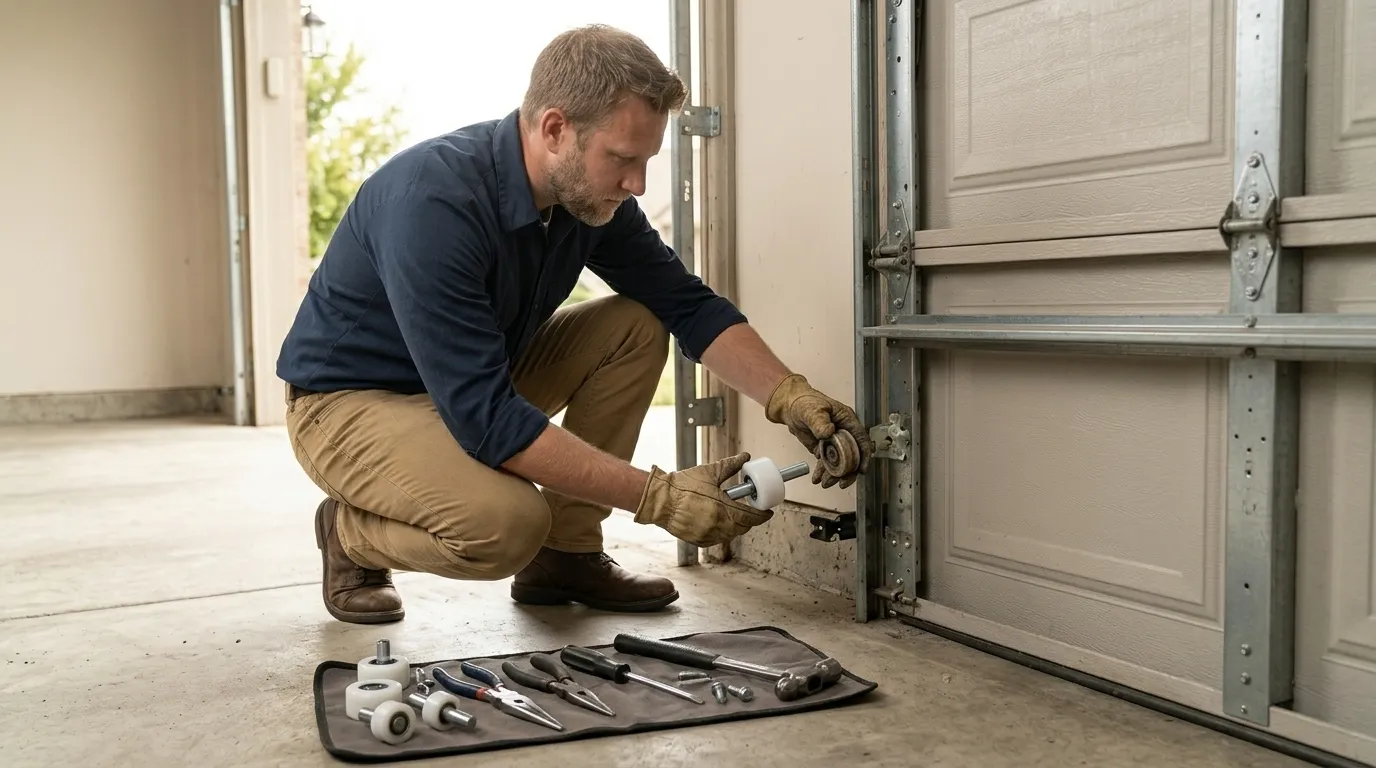
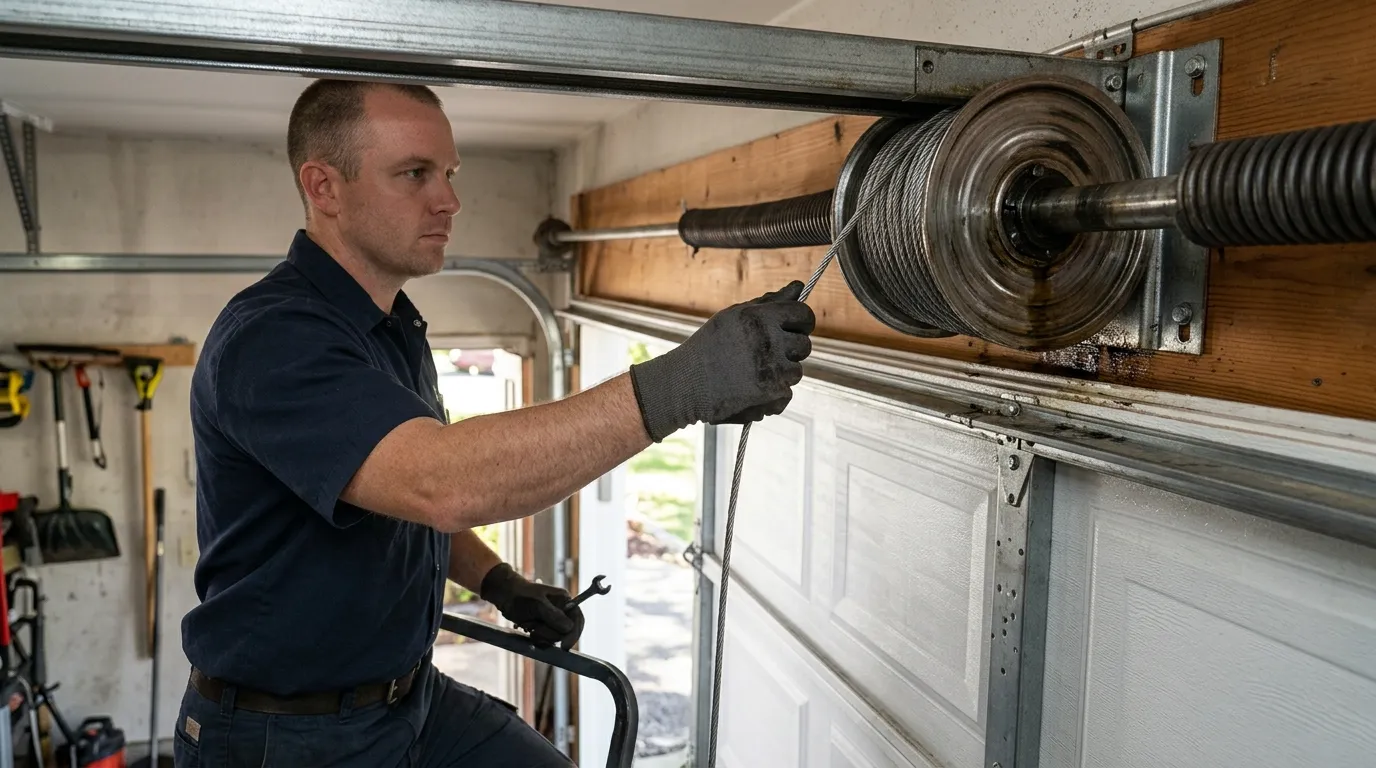
Cold-climate severity adds another layer specific to hardware this age. Nylon rollers and non-galvanized cable from the 1970s don't hold up to freeze-thaw cycling the way sealed bearings and galvanized cable do now. On a 45-50 year old door, a cable that's never been replaced is closer to end-of-life than most owners realize, and a cold morning is exactly when it tends to let go. We're not saying every door here needs replacing - plenty of these openers and doors are still solid - but if yours hasn't had a spring or cable service since it was installed, it's due.
When We Can Get There
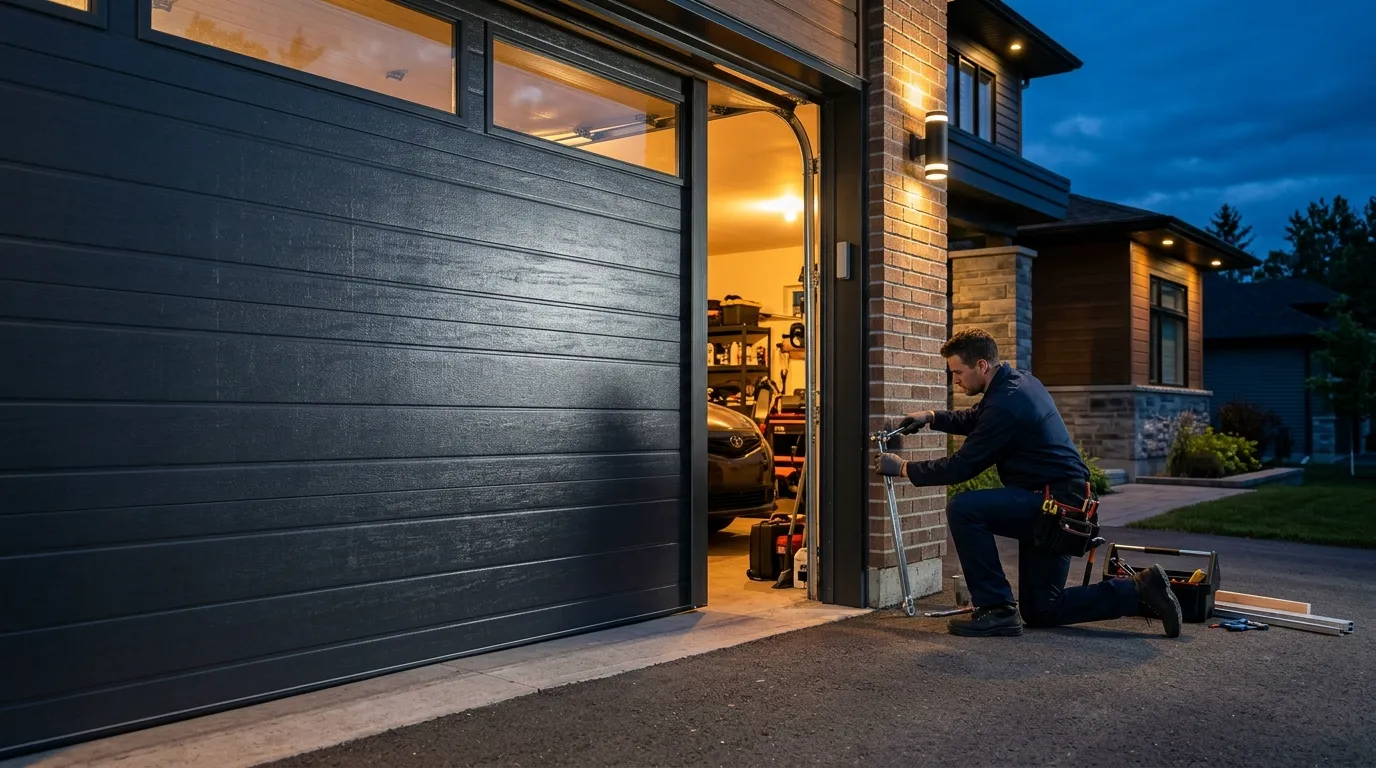
We run out of Youngstown, and Howland Center sits about 12 miles out. We don't keep a truck stationed here, so we're not going to tell you we've got same-day-in-an-hour coverage the way a shop based on your street might promise. What we can tell you is we build the route with the rest of that day's calls in mind, and a broken spring or a door stuck open on a cold morning gets bumped ahead of routine maintenance work.
If you're calling about a door that won't close and you've got kids, pets, or a car you need out of the garage, say so up front - it changes how we sequence the day. For anything that isn't an emergency, expect us to slot the visit in around other stops in the Niles, Cortland, and Champion Heights direction, since they sit along a similar line out from Youngstown. The honest limitation here is timing: we can't match a company with a local depot on response speed, and we won't claim otherwise.
The Calls We Get From Here
The calls from this area skew toward original hardware finally giving out - torsion springs that have never been touched since the house was built, and openers from the chain-drive generation that are starting to grind, stick, or trip on the way down. We also get calls about mismatched replacements: a panel or opener swapped in at some point that doesn't match the spring size the original door needed, which shows up as an opener straining or a door that won't stay put halfway open.
With median household income here at $84,306, well above the wider service-area figure, we also see more owners opting to replace an aging door outright rather than keep patching 50-year-old parts, especially once a spring, rollers, and cable all need attention in the same visit. That's a fair call in a lot of cases - past a certain point, repeated repair costs more over a few years than one new door. We'll tell you straight if your door's at that point rather than stacking small fixes on it.
How it works
From “it’s stuck” to “it’s fixed”
01
Tell us what’s wrong
Describe the symptom - won’t open, loud bang, opener runs but the door won’t move.
02
On-site diagnosis
A technician tests the door under power and by hand and finds what actually failed.
03
Clear, up-front plan
You get the fix that’s needed and what drives the cost - before any work starts.
04
Repaired & tested
The repair is done, the door is set true and tested, and the work area left clean.
Serving Youngstown, OH - tell us what your door’s doing and we’ll take it from there.
No. We work out of Youngstown and drive out to Howland Center, about 12 miles away. We don't keep a depot or a truck stationed locally, so we're upfront that response time depends on the day's route rather than a next-door presence.
Why does my 1970s garage door use different parts than my neighbor's older house?
Howland Center's housing centers on 1974, later than a lot of the surrounding area which runs closer to the 1960s. Doors from this slightly later build wave often came with different track width and spring sizing than older 1950s-60s stock, so parts aren't always interchangeable.
Is my original 1970s opener still safe to use?
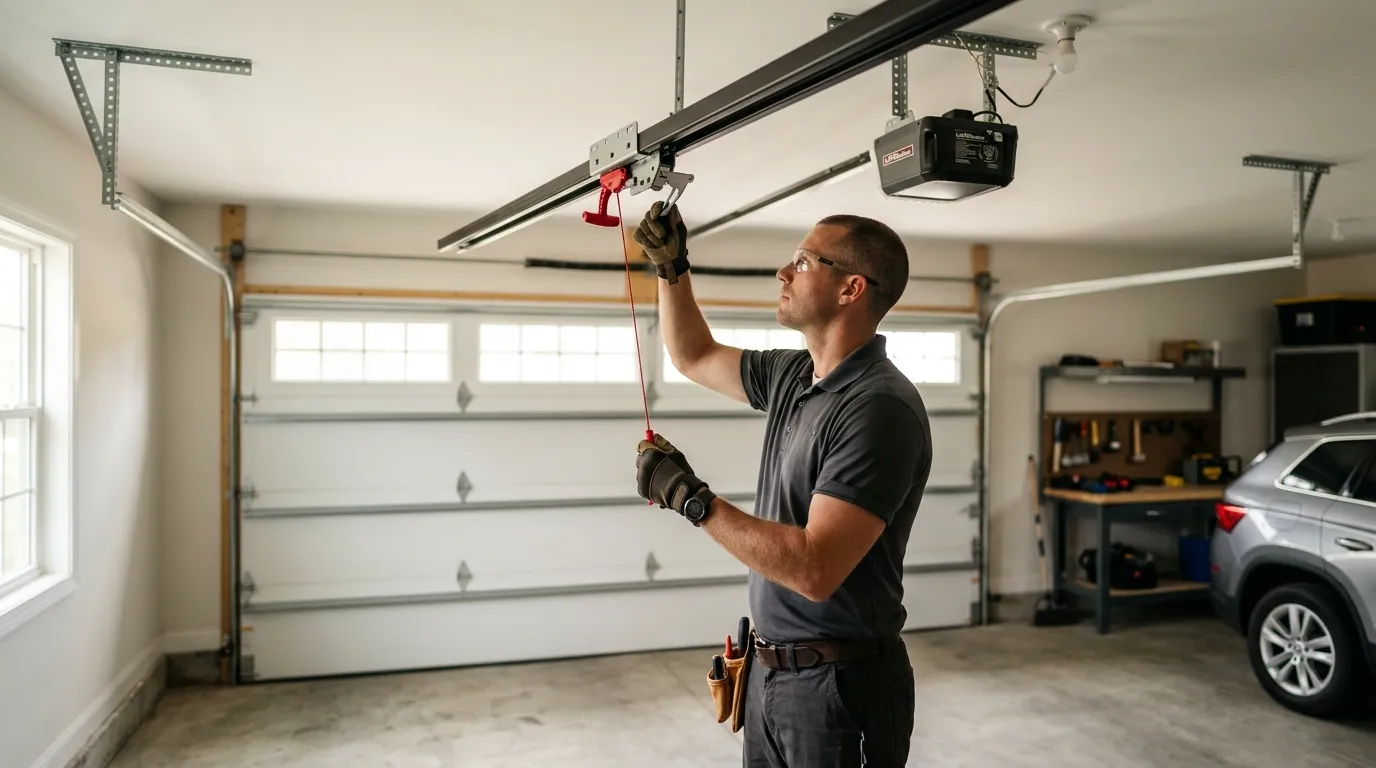
Chain-drive openers from that era generally lack the safety reversal sensors required on units sold today. If yours hasn't been replaced or retrofitted with modern sensors, it's worth having it checked - not because it will definitely fail, but because the safety standard has moved a long way since it was installed.
My cable snapped on a cold morning - is that common here?
It happens more with older, non-galvanized cable in a cold climate like this one. Freeze-thaw cycling is harder on original hardware than on newer sealed and galvanized parts, so a cable that's 40-50 years old and never been replaced is a reasonable one to fail on a cold day.