Garage Door Service for Hilltop's 1953-Era Housing Stock
Hilltop homes mostly date to 1953, older than the Youngstown-area norm. We travel from Youngstown to fix the springs, tracks, and openers that era of house actually needs.
Hilltop's houses run older than most of what we see across the wider Youngstown service area. The typical home here dates to around 1953, ahead of the 1964 median for the broader region covered by F1 and well inside the 1938-2000 build window that defines this part of Ohio. With about 216 households and a median income near $90,000, this is a small, tightly built pocket compared to the roughly 73,784 households spread across the full service territory. A neighborhood built almost entirely in the early 1950s tends to have one garage door generation installed, then patched, then patched again - not a mix of eras like you'd find in a newer subdivision. That matters because the fixes that work on a 1990s door often don't fit what's actually on these houses.
We don't have a count of exactly how many garages in Hilltop still run original hardware, but a build year this old tells us the odds are high that a good share of doors have been replaced at least once, and the openers even more than once. What hasn't always been replaced is the track and header framing built for the original door size.
What That Means for Doors
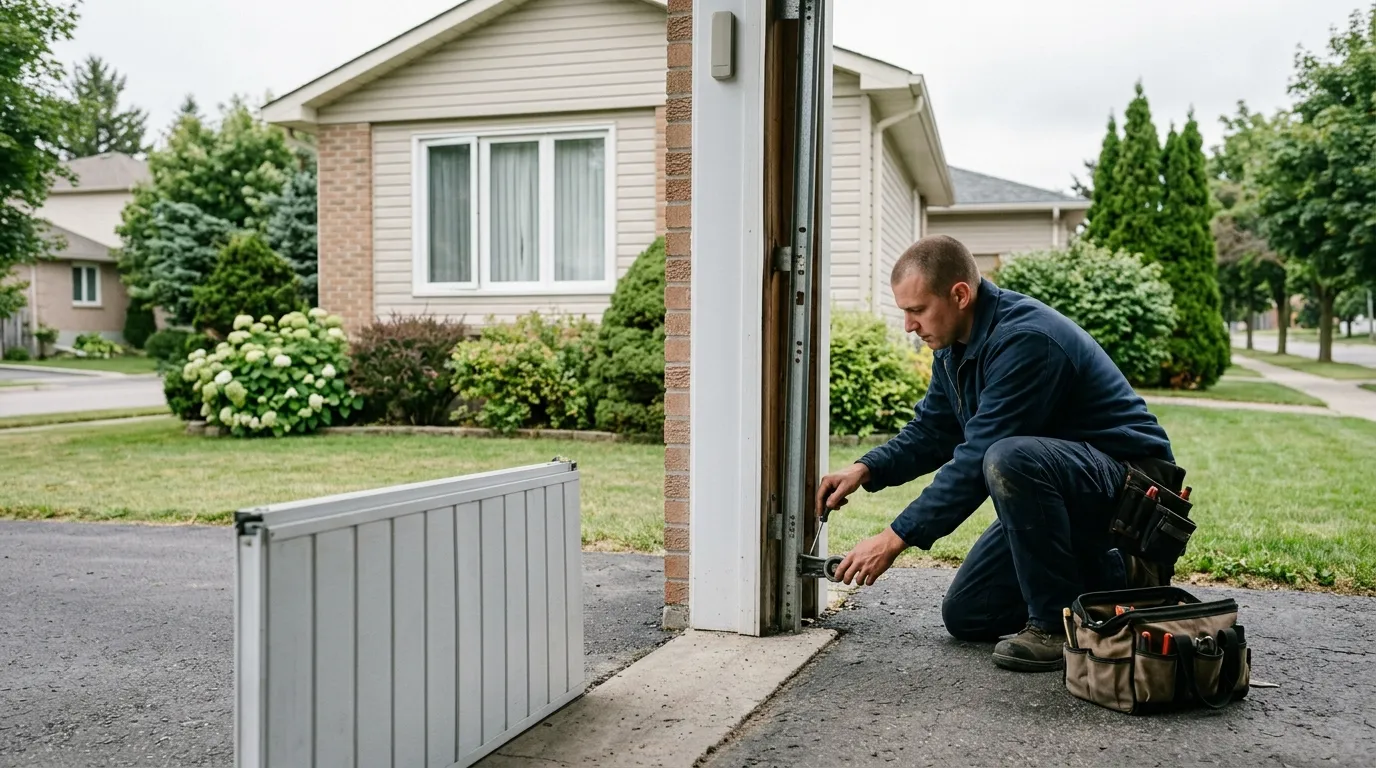
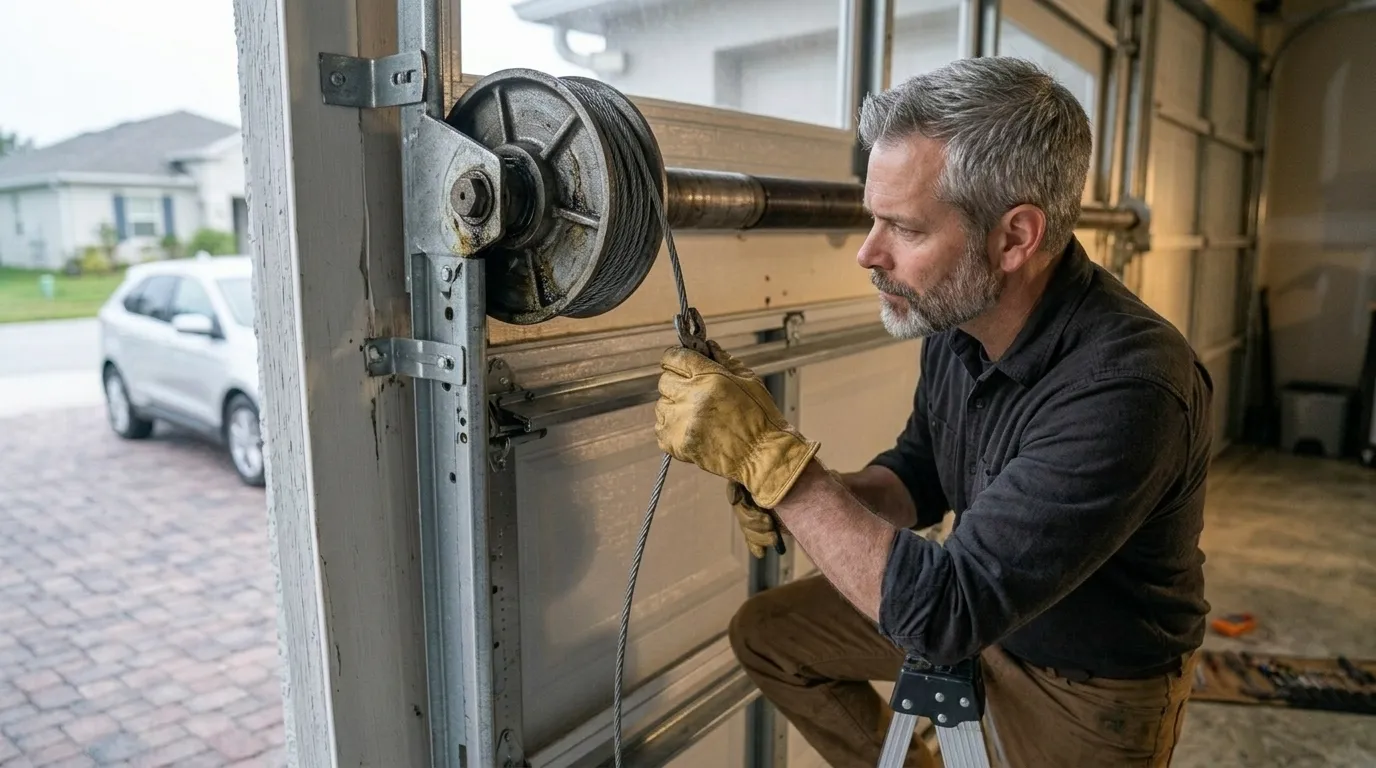
Doors installed on houses from the early 1950s were commonly narrower, single-panel, and hung on side-mounted torsion springs rather than the center-mounted torsion bars standard on new construction. If your garage in Hilltop still has its original opening, a modern steel sectional door may need a jamb adapter or a different track configuration to fit - not a straight swap. We see this pattern across the older pockets of the region, and it's a big part of why a call here isn't the same job as a call in a subdivision built in the 1990s.
Cold-climate stress adds to it. Steel components on a house this age have had roughly seven decades of freeze-thaw cycling on the original concrete apron and header, which is long enough for settling to throw an old track out of square even if nobody's touched the door. That combination - older opening dimensions plus decades of structural movement - is the main reason springs and rollers fail here differently than they do on newer stock. One honest limit: if the opening itself has shifted enough, a same-day parts swap won't fix it, and that's a conversation we have before we quote anything, not after.
When We Can Get There
We run out of Youngstown, and Hilltop sits about 7 miles out - closer than most of the towns on our route, including Canfield at 8 miles or Poland at 6. We don't keep a truck stationed in Hilltop, so we're not going to promise a same-hour window here; what we can tell you is that it's a short drive relative to the rest of our coverage, which spans out to places like Salem and East Palestine at 15-19 miles. For a broken spring or a door stuck shut, that shorter distance from Youngstown usually works in your favor.
We schedule by job urgency, not zip code alone, so a stuck door that's trapping a car gets bumped ahead of a routine tune-up regardless of how close you are. If you're calling about noise or a slow opener rather than something jammed, expect us to fit you into the regular route rather than treat it as an emergency run.
The Calls We Get From Here
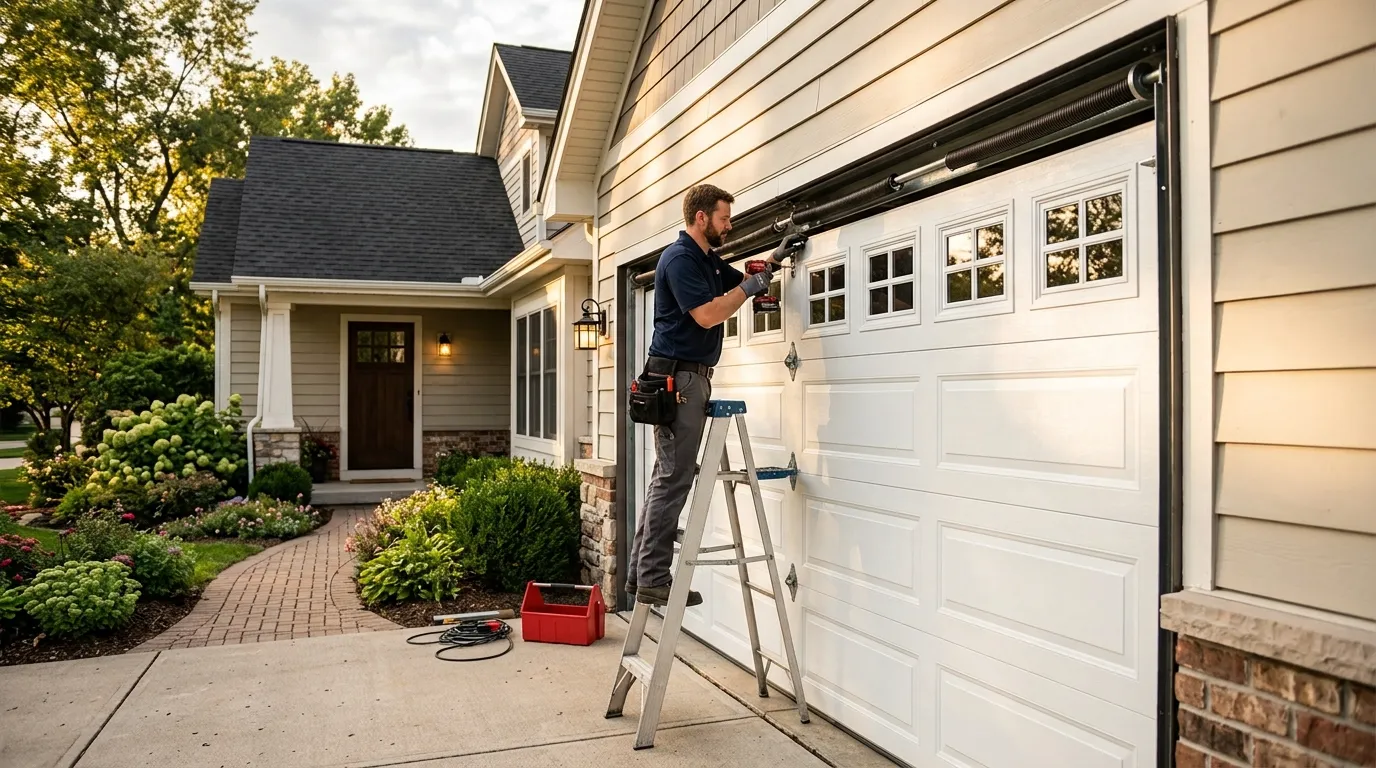
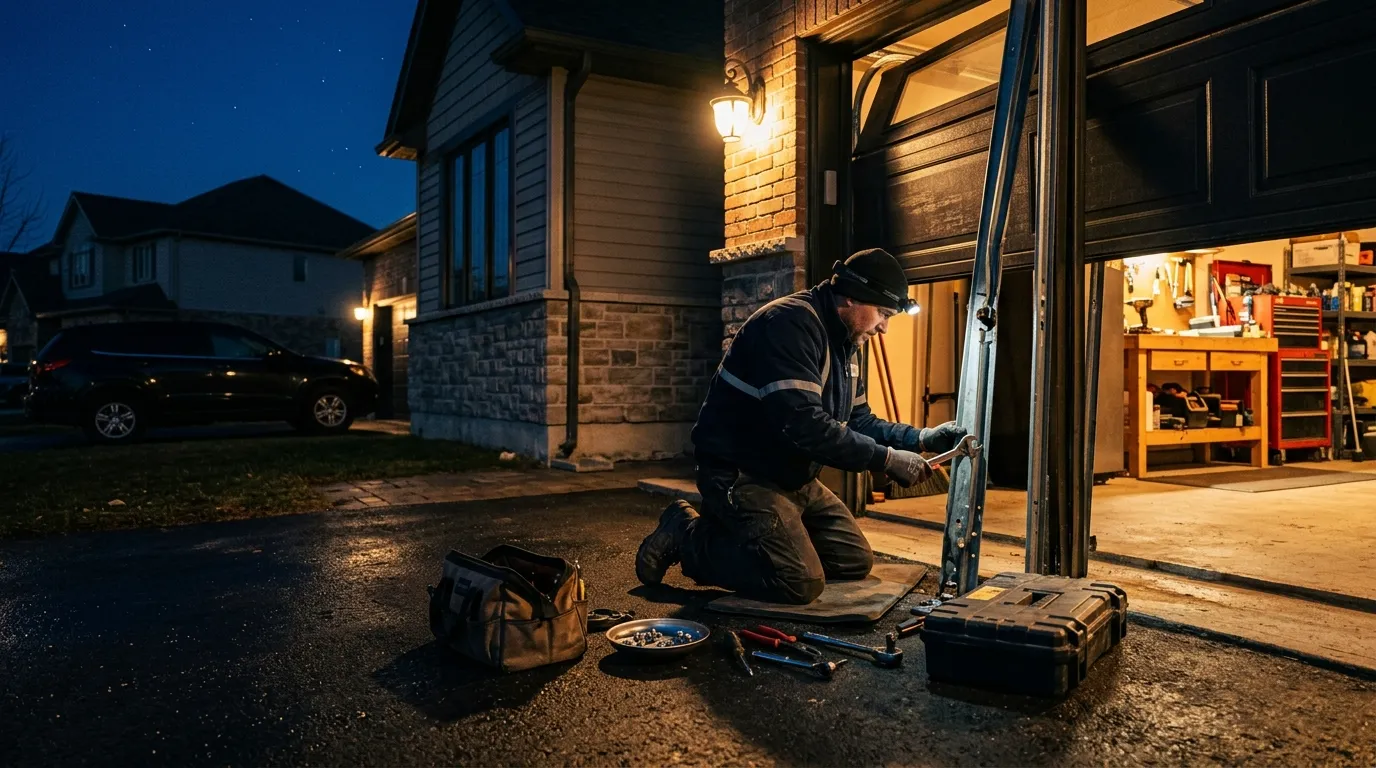
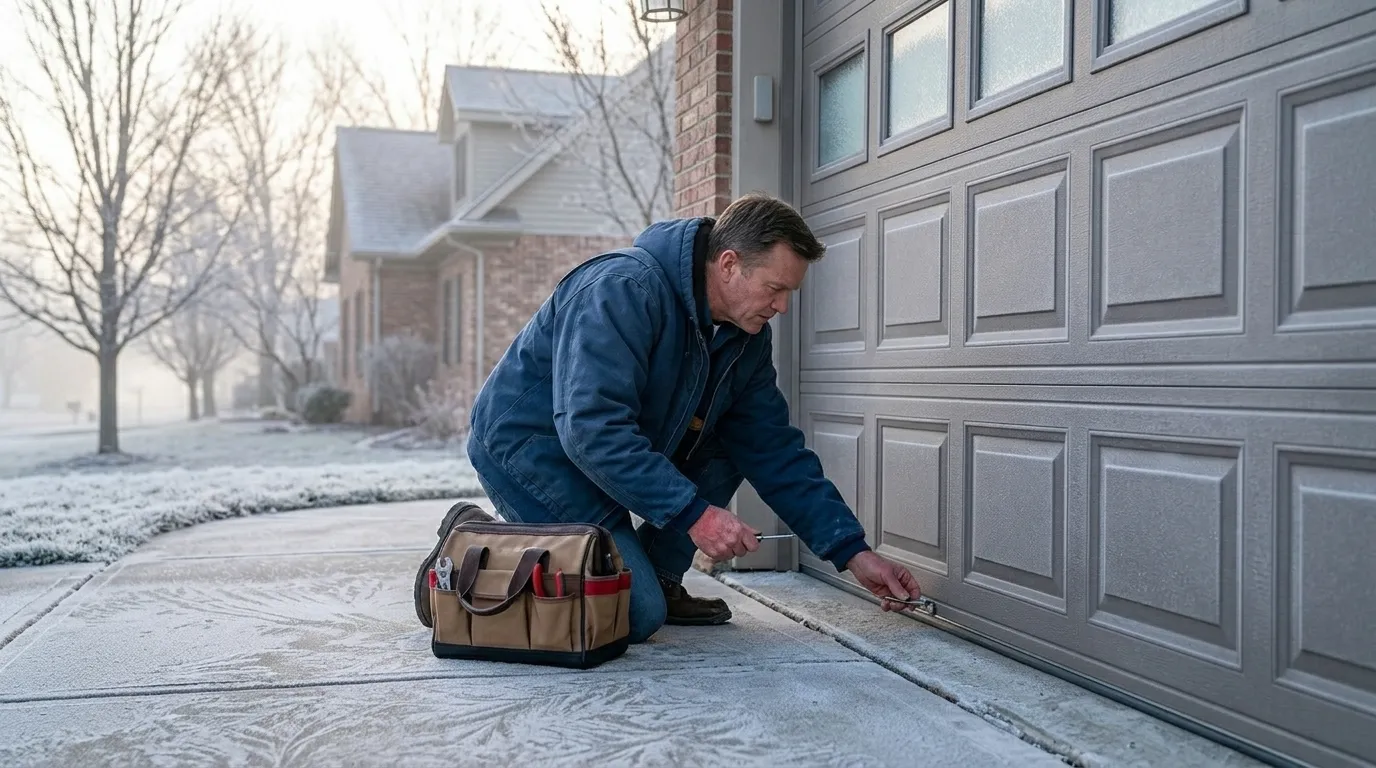
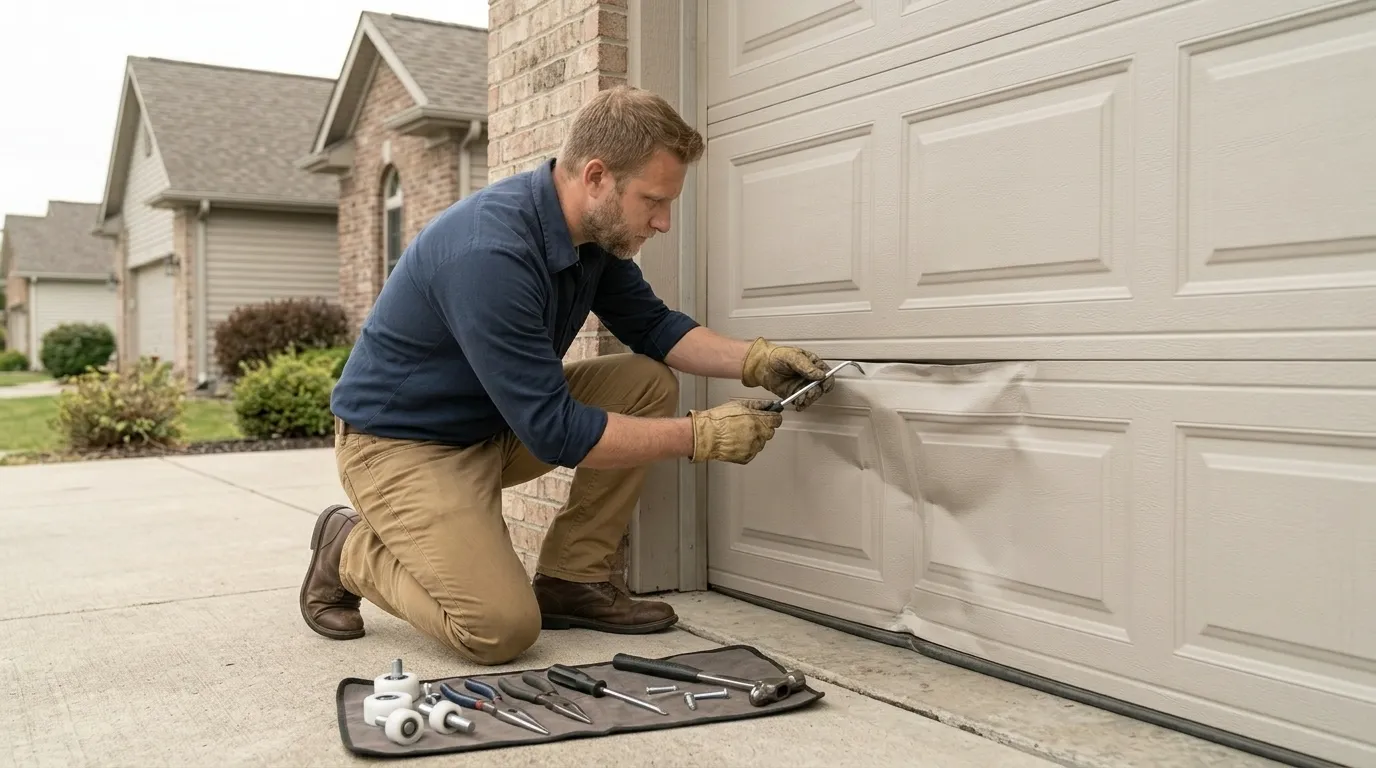
Given the age of the stock, the calls that come out of Hilltop skew toward worn torsion springs, brittle plastic idler pulleys on older extension setups, and openers that are original enough to still use a chain drive with no battery backup. On a 1953-era house, cold mornings (per the severe climate rating in F3) are when these fail - springs that have lost tension snap on the first hard-cold pull of the year, and old steel rollers seize in tracks that have picked up rust over decades.
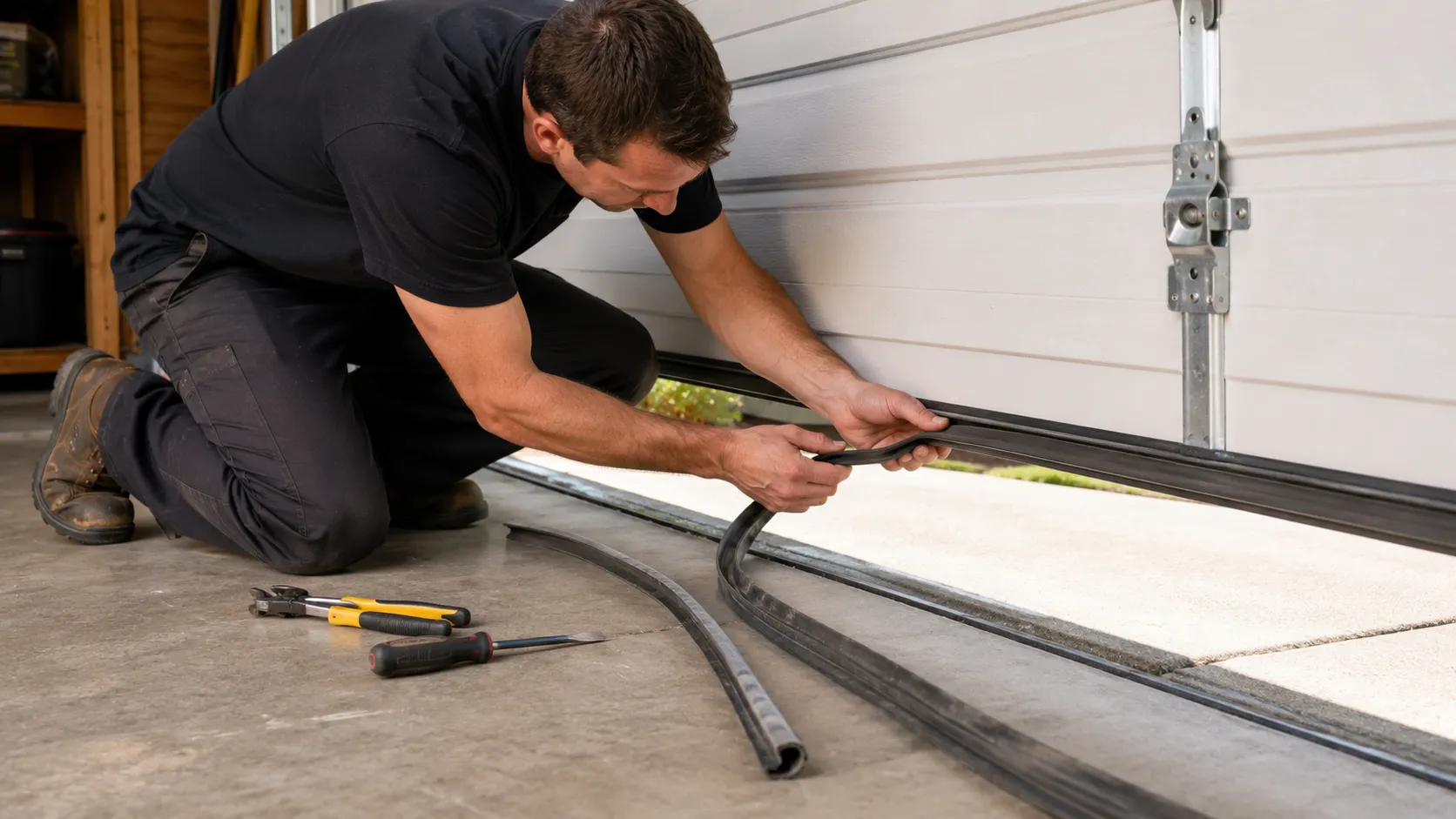
We also get calls about doors that look fine but won't seal at the bottom, which on housing this age is usually the slab settling under one corner rather than anything wrong with the door itself. That's a case where we'll tell you straight if a $40 astragal strip solves it or if you're looking at a bigger fix. We won't quote a full door replacement over the phone without seeing the opening - too many of these older frames have quirks that only show up in person.
How it works
From “it’s stuck” to “it’s fixed”
01
Tell us what’s wrong
Describe the symptom - won’t open, loud bang, opener runs but the door won’t move.
02
On-site diagnosis
A technician tests the door under power and by hand and finds what actually failed.
03
Clear, up-front plan
You get the fix that’s needed and what drives the cost - before any work starts.
04
Repaired & tested
The repair is done, the door is set true and tested, and the work area left clean.
Serving Youngstown, OH - tell us what your door’s doing and we’ll take it from there.
No. We're based in Youngstown, about 7 miles away, and Hilltop is one of the closer stops on our regular route. We don't stage a truck here, so we schedule based on job urgency rather than promising a same-hour arrival.
Why does my 1950s-era garage door act differently than my neighbor's newer one?
Houses in Hilltop mostly date to around 1953, older than much of the surrounding area. Older openings were often built narrower with side-mounted torsion springs, so a modern replacement door sometimes needs track or jamb adjustments that a newer house wouldn't.
Is a broken spring in winter common here?
Yes. The region's winters are rated severe cold, and older torsion springs that have lost tension over the years tend to snap on the first hard-cold pull of the season. It's one of the most common calls we get from this area.
Will you replace my whole door over the phone quote?
No. Older homes in this area sometimes have openings that have shifted or settled over the decades, and we won't commit to a replacement price without seeing the frame in person first.