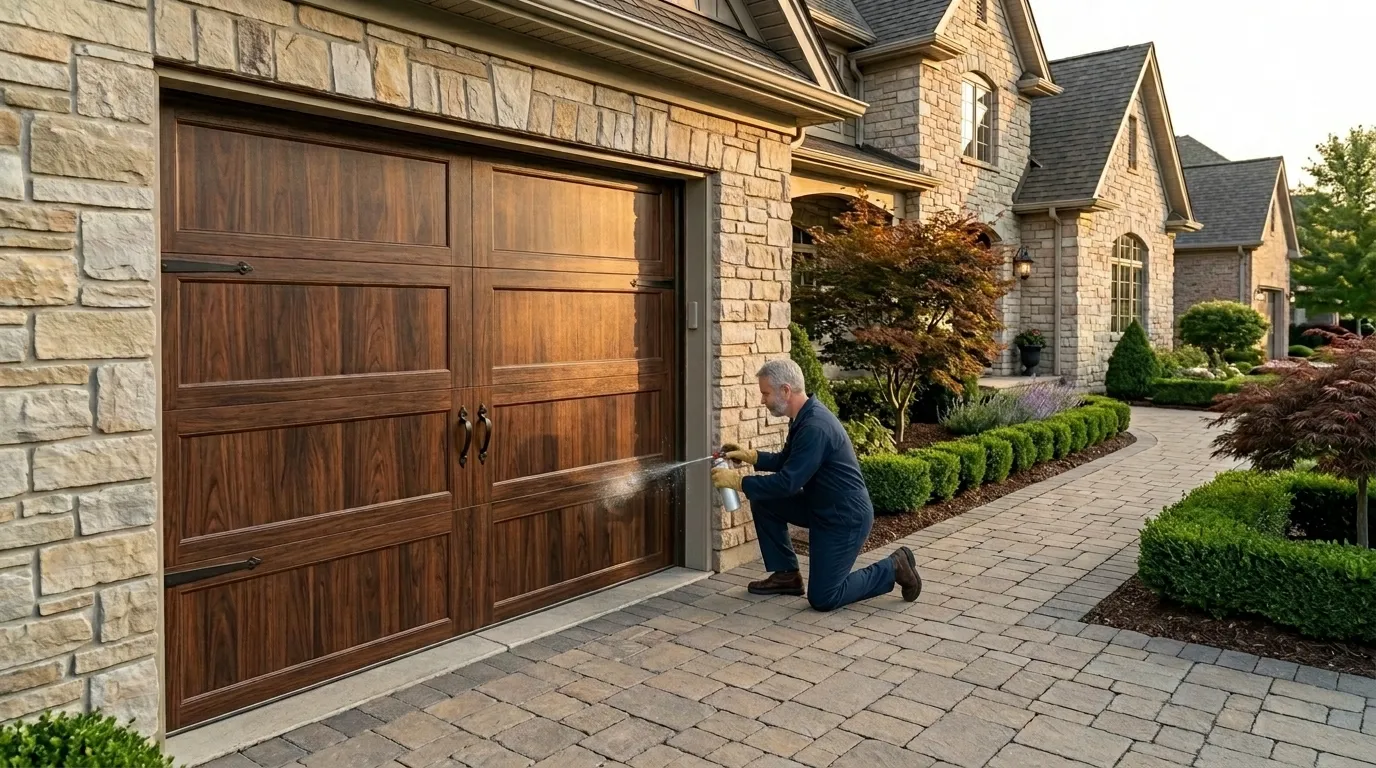
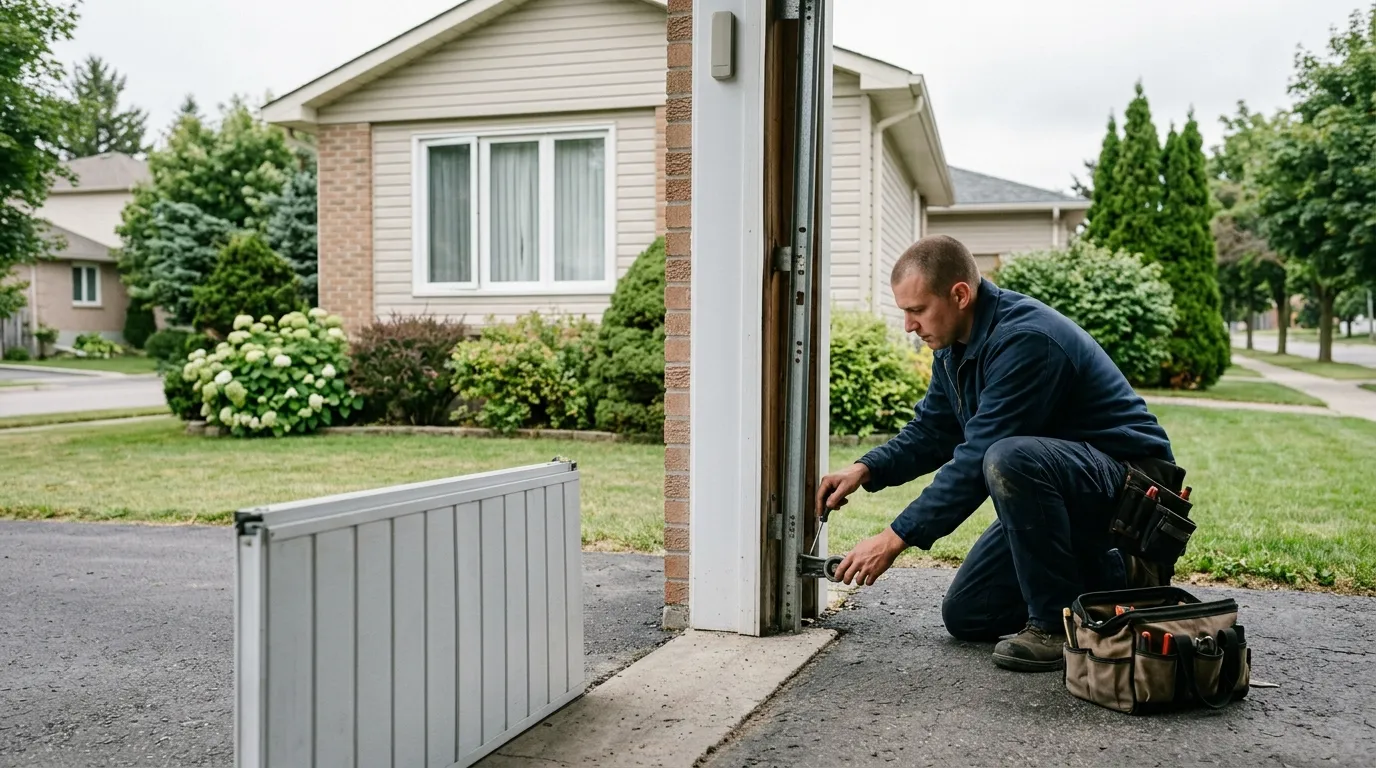
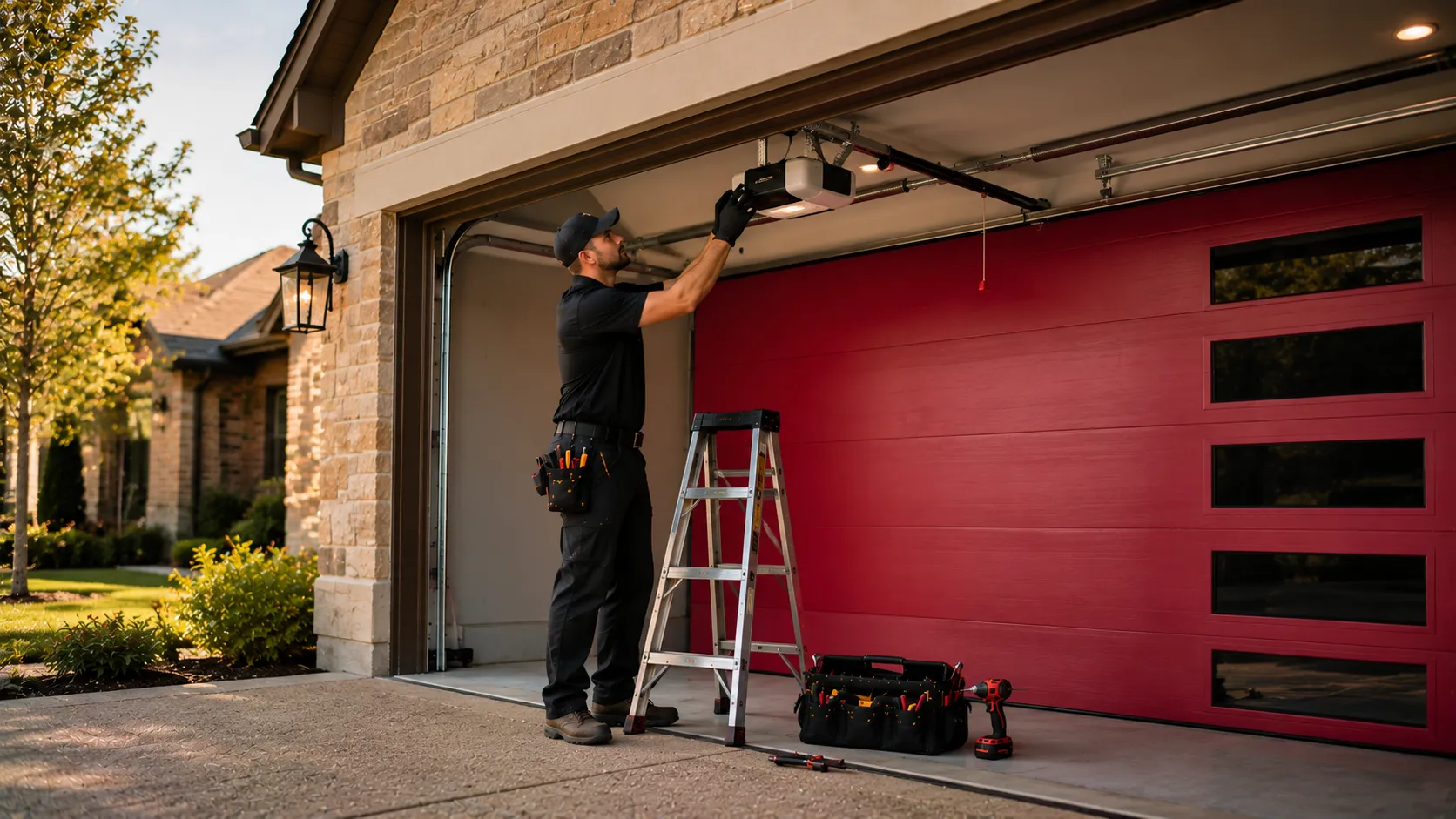
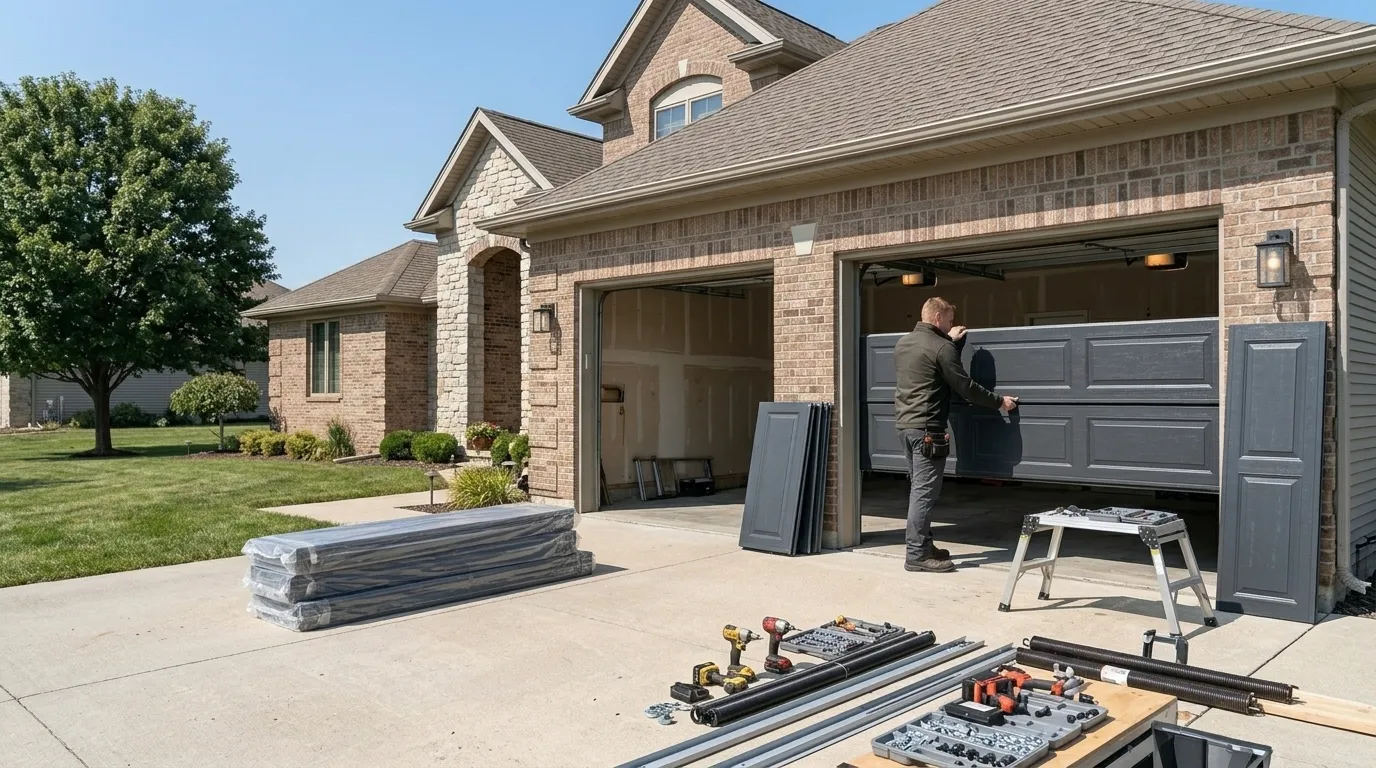
Serving Newton Falls's 1950s housing stock 18 miles from Youngstown, with repairs matched to original hardware and cold-climate wear on older torsion setups.
Newton Falls sits about 18 miles from our shop in Youngstown, and the houses out here skew older than the wider service area's already-old median. Where the broader coverage area centers on 1964, Newton Falls homes were built around 1955 on average - meaning more of the original garage doors and hardware from that first wave of postwar construction are still hanging on. With roughly 2,287 households in the area, this isn't a large market, but it's a consistent one: a lot of these garages were built to hold a single car and a door sized to match, well before the wider double-door bays became standard. Median household income here runs $51,840, below the broader area's $60,598, which we mention only because it shapes the calls we get - more folks asking us to repair what's there before they'll consider a full replacement, and that's a reasonable way to think about it.
What That Means for Doors
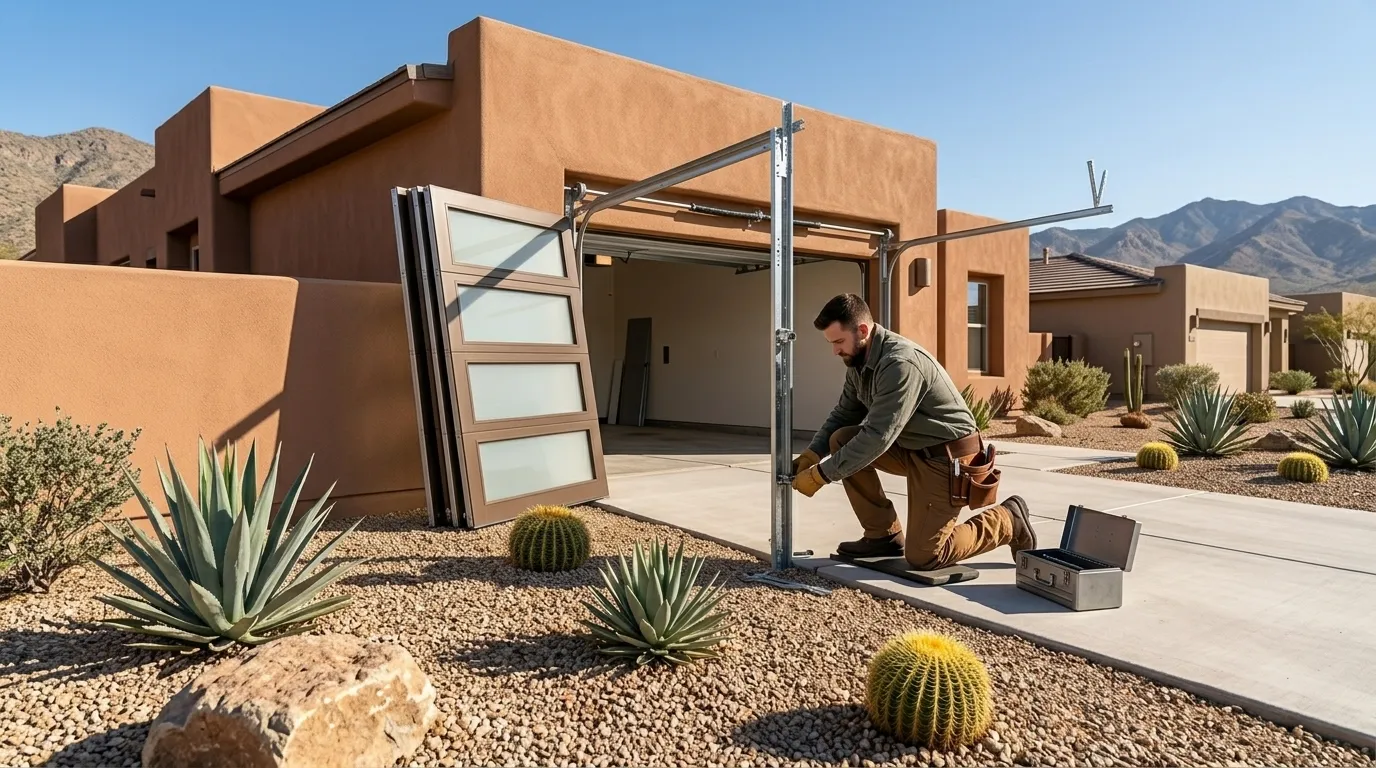
A door and track system installed around 1955 was not built for today's springs, openers, or rollers. A lot of what we find in Newton Falls garages is older extension-spring hardware mounted along the horizontal track rather than the torsion springs common in newer builds - different failure pattern, different fix. These setups also tend to have single-panel or narrower sectional doors, and replacement panels for that era aren't something you grab off a shelf; sourcing takes longer than it would for a door built in the last twenty years. Add in the cold-climate severity this whole region sits in, and you get steel that contracts hard in winter, putting extra strain on aging hinges and worn rollers that were already due. None of this means replacement is always the answer - plenty of these doors are solid and just need the right parts and a tech who knows what he's looking at.
When We Can Get There
We run out of Youngstown, and Newton Falls is about 18 miles out - farther than most of the area we cover day to day. We don't keep a depot or crew stationed in Newton Falls, so we're honest that we're not the fastest option for every same-day call. What we can tell you is that we do come out this way, and when we're on the road toward Newton Falls we're happy to bundle nearby stops if the timing works. If you've got a door that's stuck shut or a spring that's snapped and you need someone today, ask us directly what we can do - we'd rather tell you the real window than promise something we can't hit.
The Calls We Get From Here
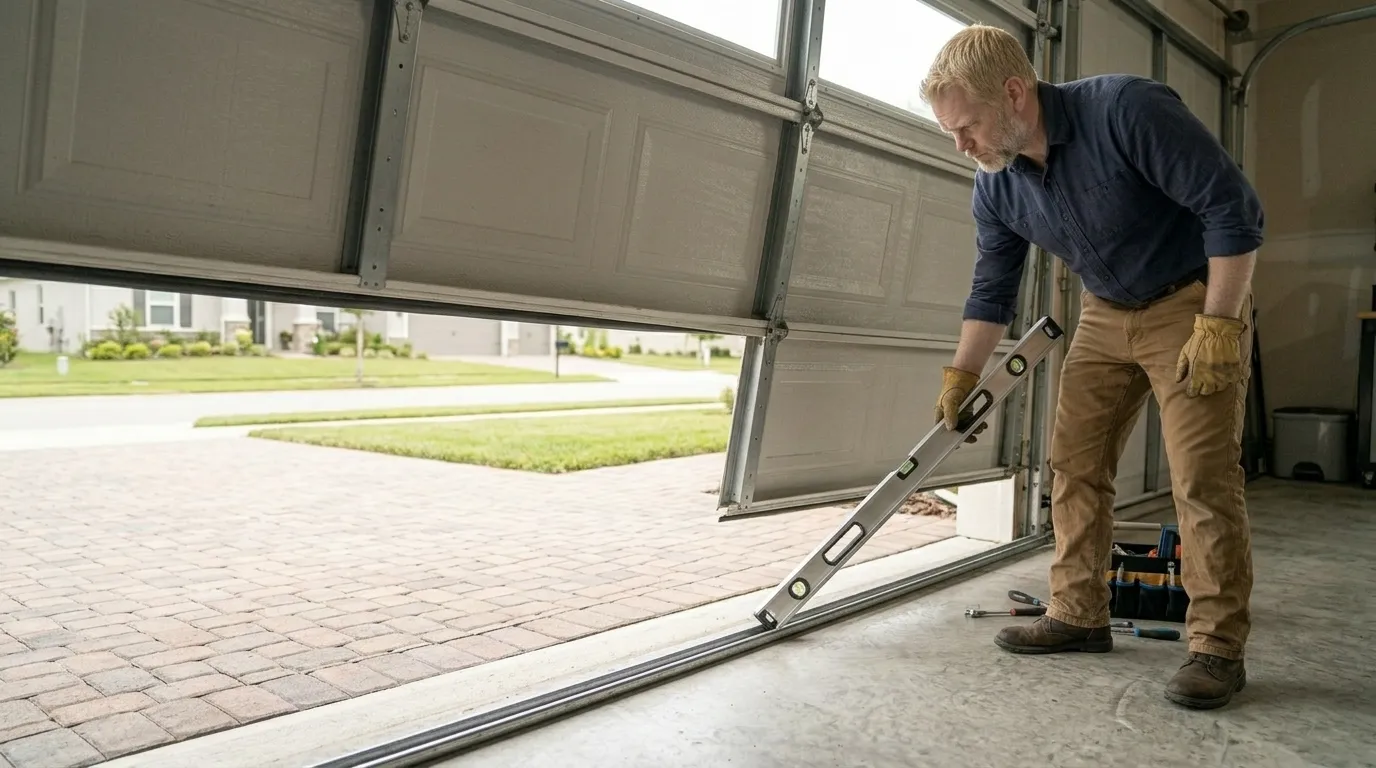
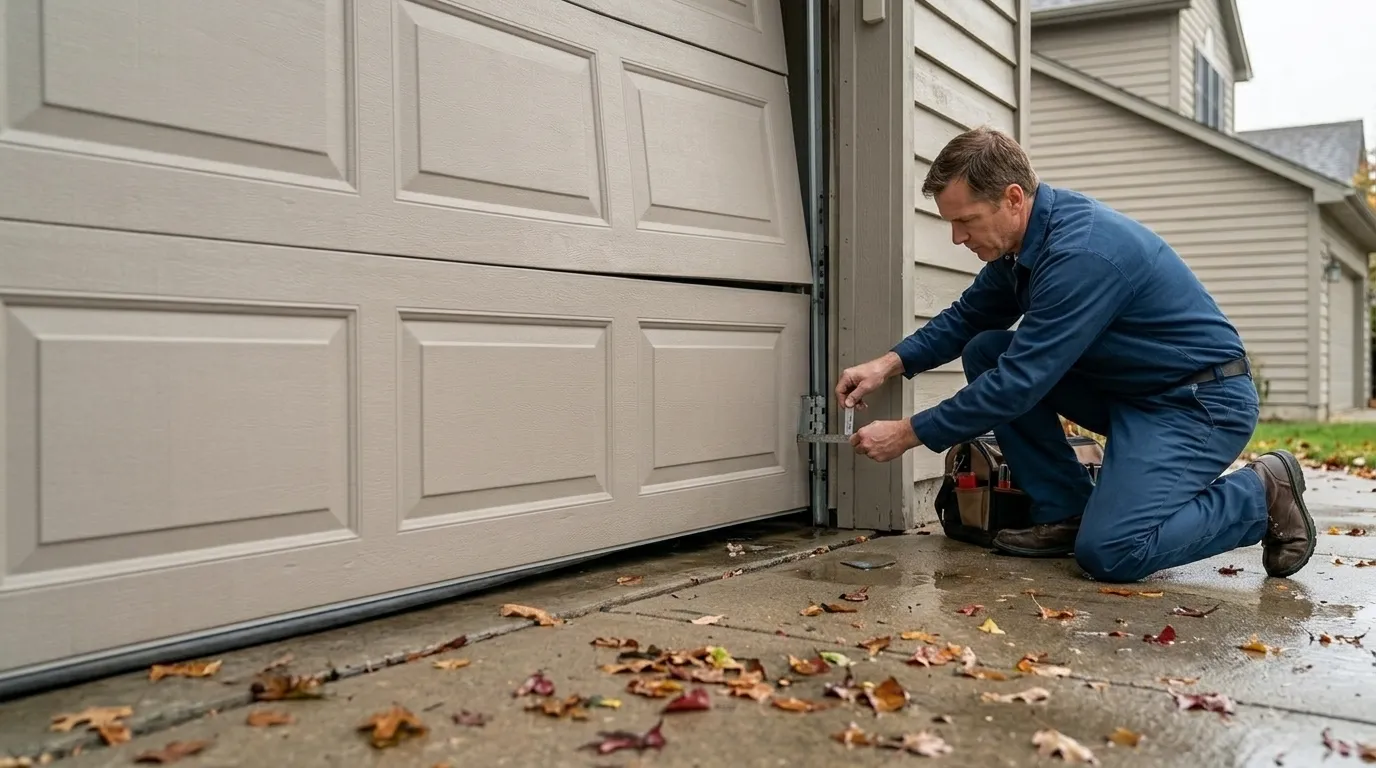
Given the age of the housing stock, the calls out of Newton Falls run heavier on spring replacement and roller and hinge wear than on opener electronics - the mechanical parts that take the brunt of decades of Ohio winters. We also get calls about doors that have gone out of square on their track, which tracks with houses this age settling over sixty-plus years. Fewer calls come in about smart-opener installs here than in newer subdivisions elsewhere in the service area, though we do them when asked. If your door is original to a house built in the mid-1950s, don't assume it needs to go - a lot of these frames and tracks are solid steel that outlasts what gets built today, and a repair is often the right call before a full swap.
How it works
From “it’s stuck” to “it’s fixed”
01
Tell us what’s wrong
Describe the symptom - won’t open, loud bang, opener runs but the door won’t move.
02
On-site diagnosis
A technician tests the door under power and by hand and finds what actually failed.
03
Clear, up-front plan
You get the fix that’s needed and what drives the cost - before any work starts.
04
Repaired & tested
The repair is done, the door is set true and tested, and the work area left clean.
Serving Youngstown, OH - tell us what your door’s doing and we’ll take it from there.
No. We work out of Youngstown, about 18 miles away, and travel to Newton Falls for service calls. We don't keep a local depot here, so we're upfront that response time depends on our schedule that day rather than a standing presence in town.
Why does my 1950s garage door act up more in winter?
This area sits in a cold-climate zone with severe winter conditions, and older extension-spring hardware common in houses built around 1955 wasn't designed for decades of steel contraction and expansion. That stress shows up as stiff rollers, worn hinges, and springs that finally give out.
Can you find parts for an original 1950s door?
Sometimes, but it takes longer than sourcing parts for a newer door. We'll tell you upfront if a part is hard to source and whether repair or replacement makes more sense once we've seen the actual hardware.