What That Means for Doors
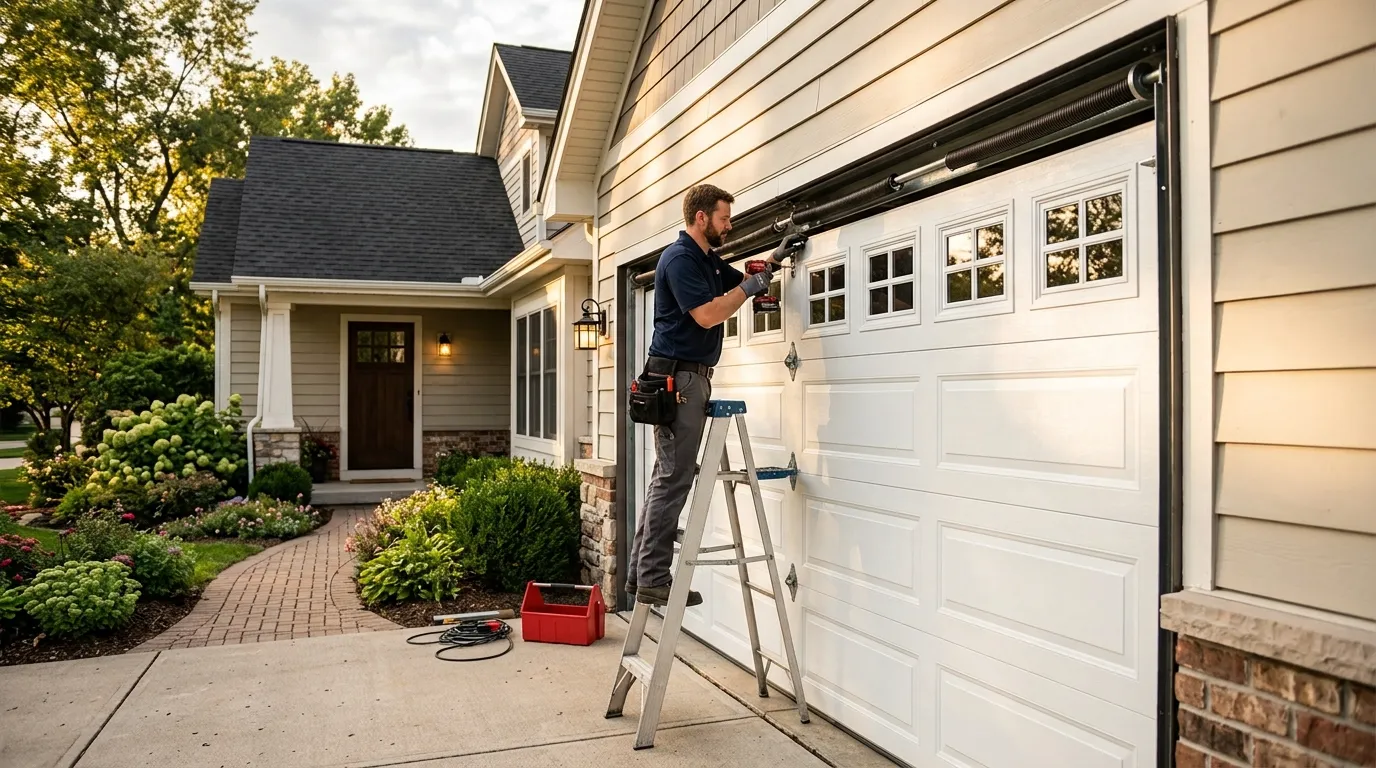
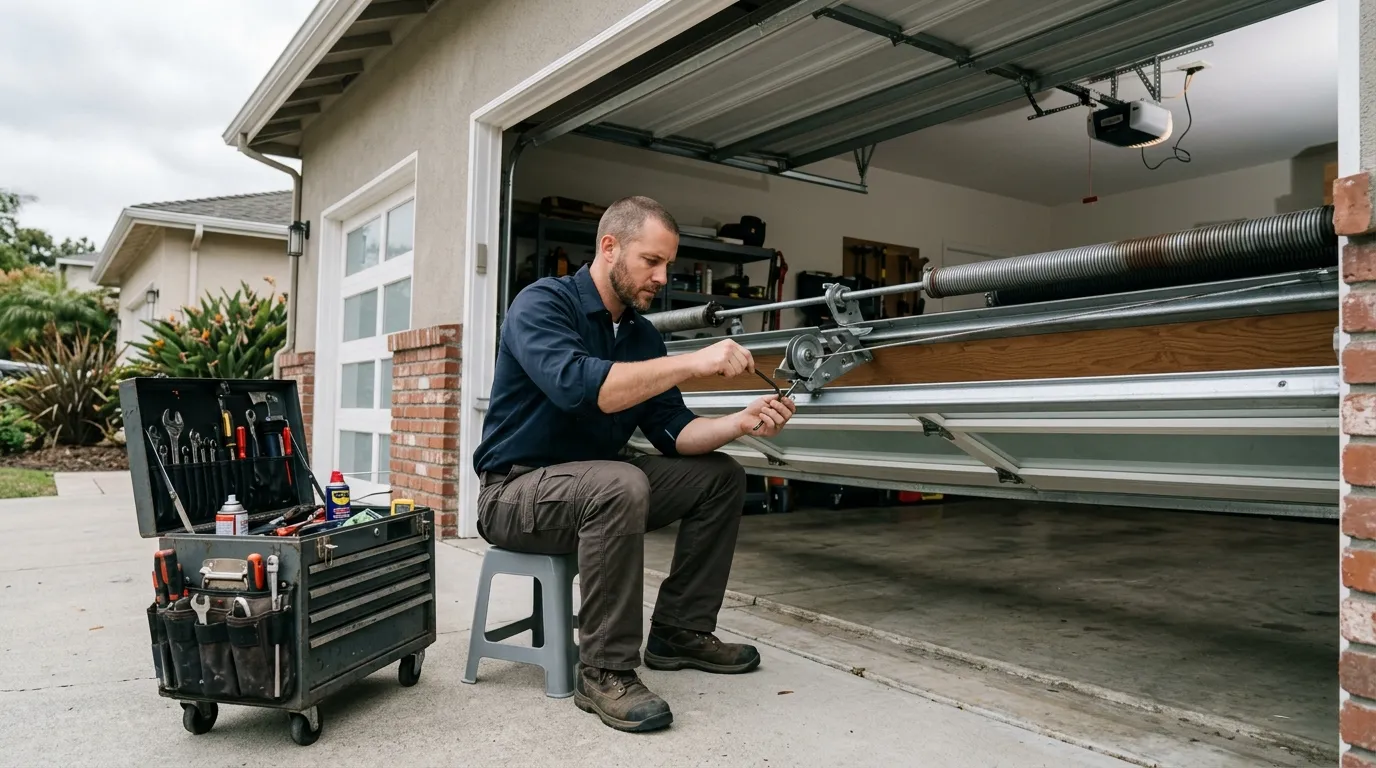
Doors installed on 1952-era openings were sized to different rough openings than what gets built today, and a lot of these garages were converted or widened at some point over seventy years, which means the track and header hardware don't always match what the door looks like from the driveway. You'll find extension springs mounted along the horizontal track more often here than in the newer subdivisions further out, simply because torsion setups weren't yet the default when these garages were framed. Panels from that era, if original, are heavier steel or solid wood, not the lighter insulated sandwich construction common now. That means the springs, cables, and rollers sized for an older heavier door can be wrong replacements if someone swaps in a modern lightweight door without re-balancing the whole system. The severe cold climate this region sits in doesn't help either - steel contracts, lubricant thickens, and a marginal spring on an old heavy door is more likely to let go on a January morning than in mild weather.
When We Can Get There
We run out of Youngstown, and Poland sits about 6 miles out, which puts it within easy reach on a normal route day. We don't keep a depot or a crew stationed in Poland itself, and we won't pretend otherwise - every call here is a truck coming from Youngstown, same as it would to Campbell or Struthers nearby. That's a short drive by any standard, but it does mean we schedule around the route rather than promising to be at your door in a fixed number of minutes. If a spring snaps and the car's trapped inside, say so when you call; we prioritize those over routine tune-ups.