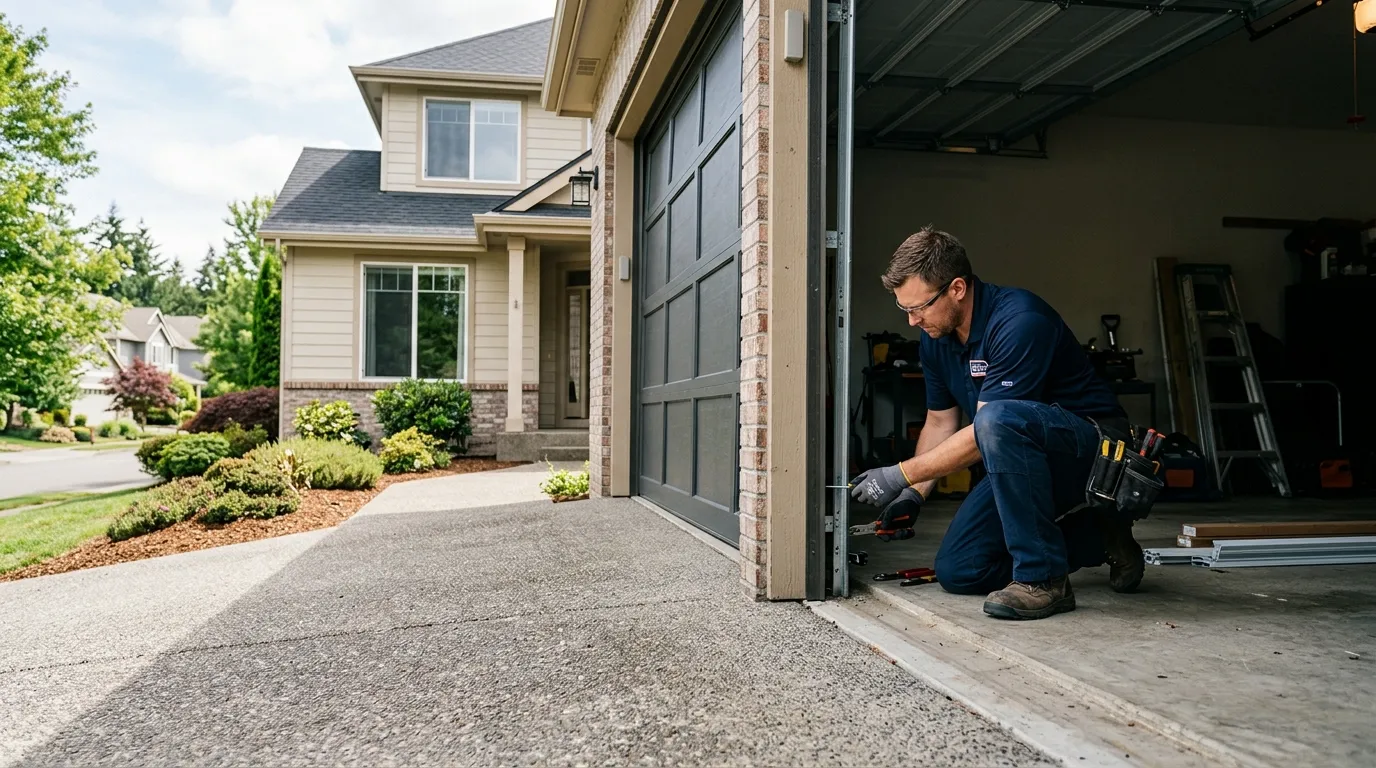
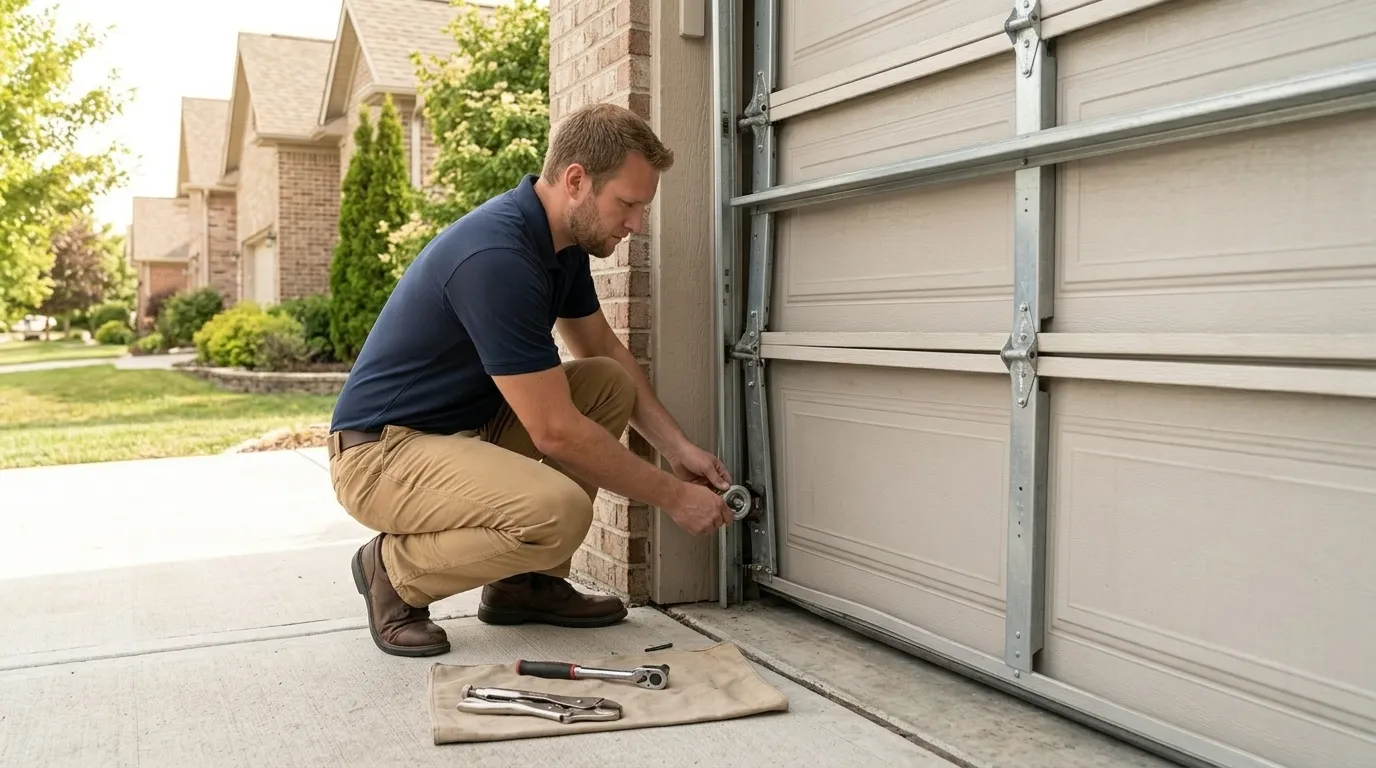
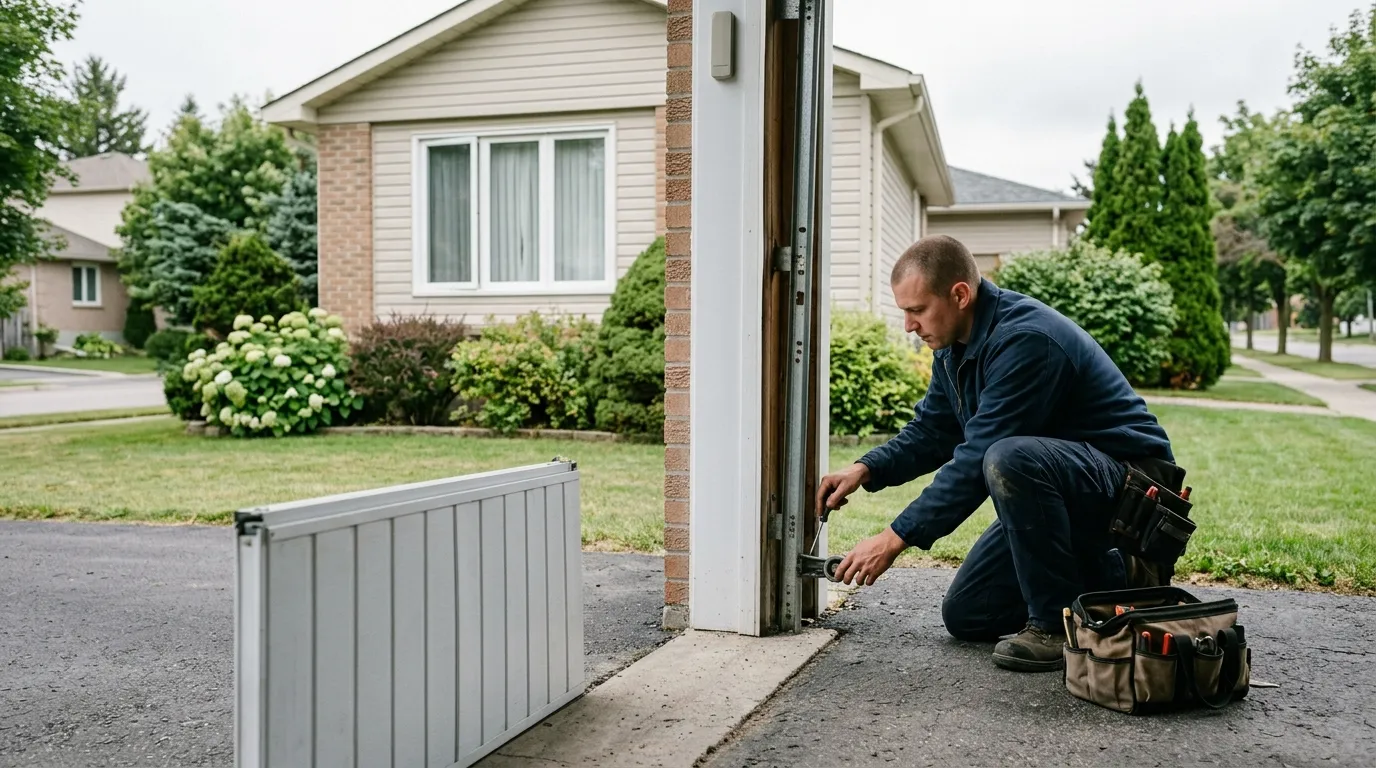
Serving Salem, OH from Youngstown, 17 miles out. We know the 1950s-era hardware common on this side of the service area and the cold-climate faults that come with it.
Salem's houses mostly went up around 1953, which puts this area a decade or so ahead of the broader service area's median build year of 1964. That gap matters more than it sounds. A house built in 1953 was framed before the standard 16-foot double door and torsion-spring-over-the-header layout became the default in a lot of new construction. Plenty of Salem garages still have the older extension-spring setup mounted along the horizontal track, or a single-car opening retrofitted later with a door that doesn't quite match the original jamb.
Across the wider 28-town area we cover out of Youngstown, most stock dates to the 1960s and 70s, so Salem sits at the older edge of what we run into. With about 5,109 households here, it's not a huge market, but it's a consistent one for a certain kind of call: original hardware that's outlived two or three openers bolted onto it. We don't assume every house here has the same setup - some have been fully replaced - but when a Salem homeowner calls about a door that's been fine for decades and suddenly isn't, the 1953-era build year is usually part of the story.
What That Means for Doors
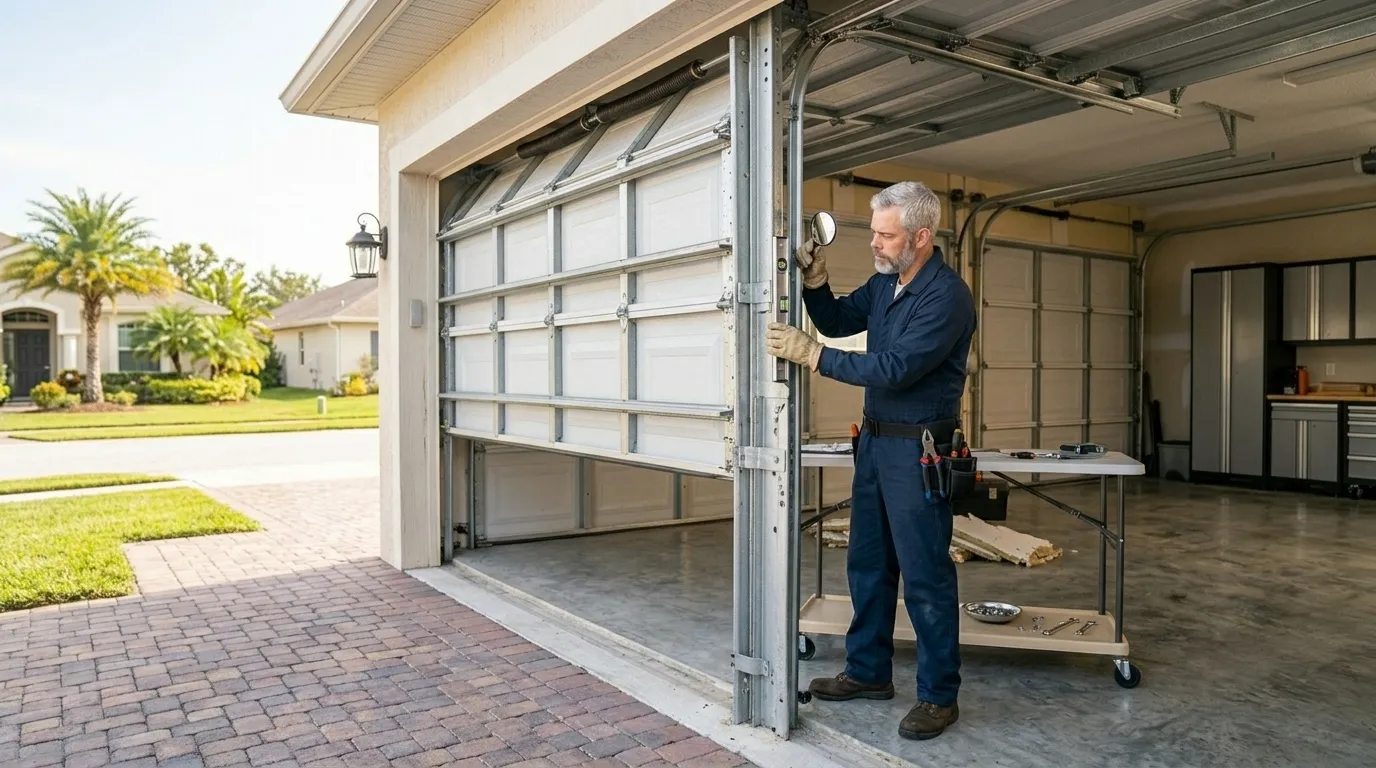
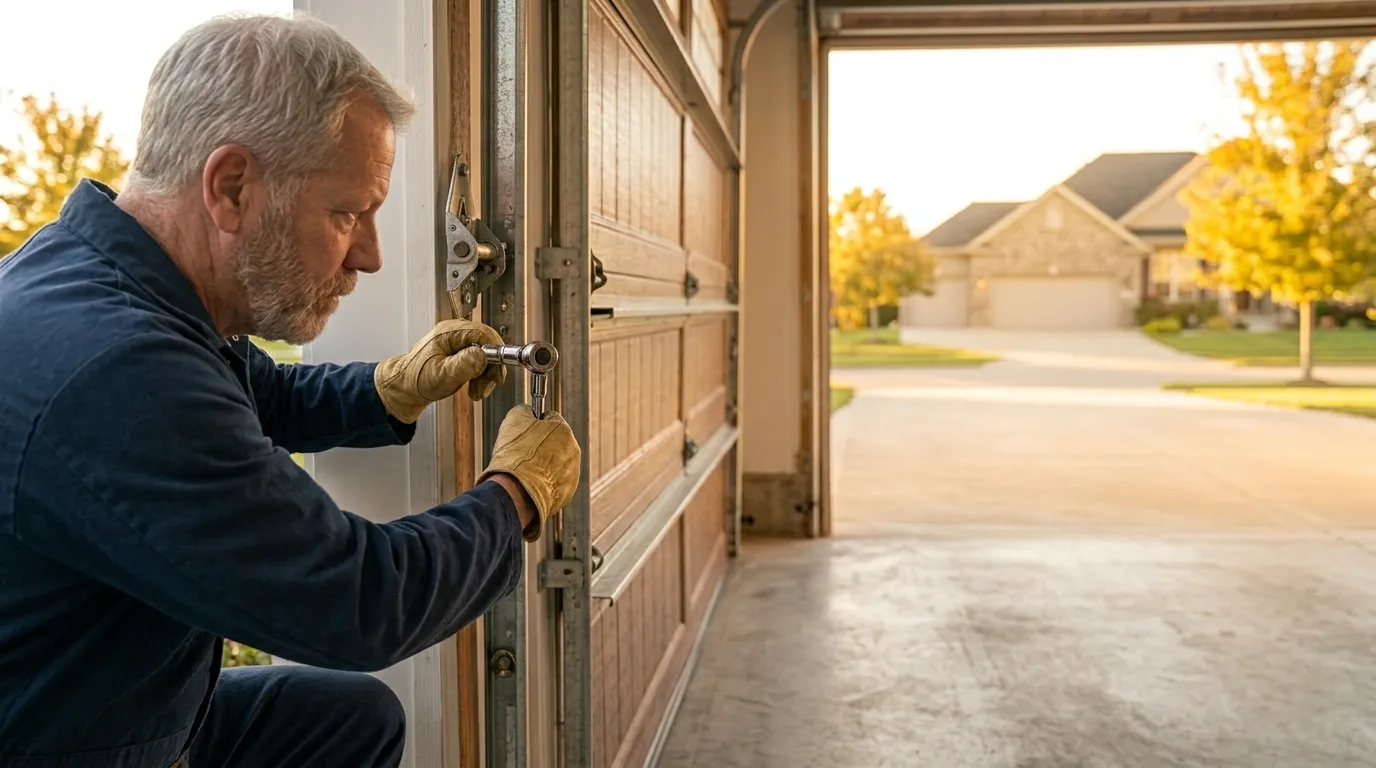
Older extension-spring systems don't fail the way modern torsion springs do. They stretch, they lose tension unevenly on each side, and the door starts binding or dropping crooked instead of just breaking clean. If your door in Salem has a spring on each side running along the track rather than one shaft over the top, that's the tell.
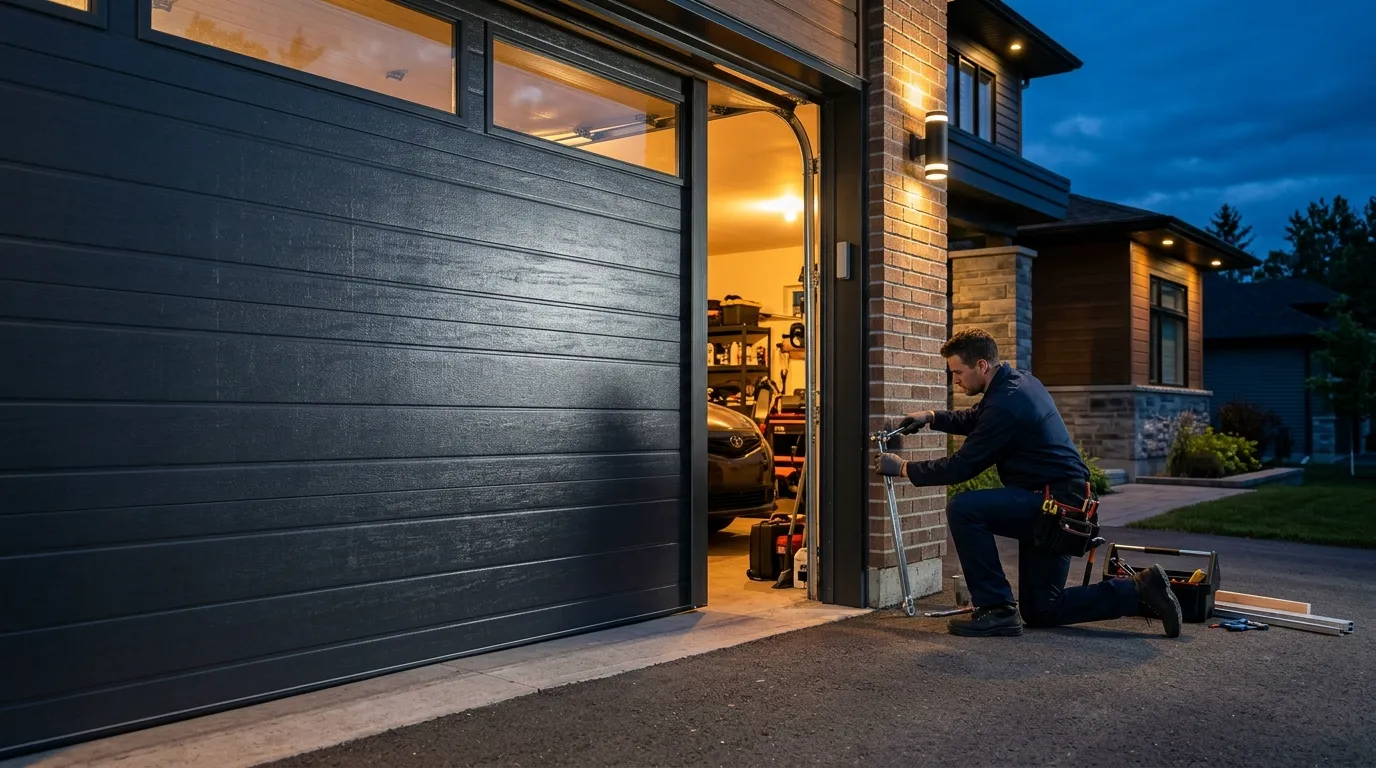
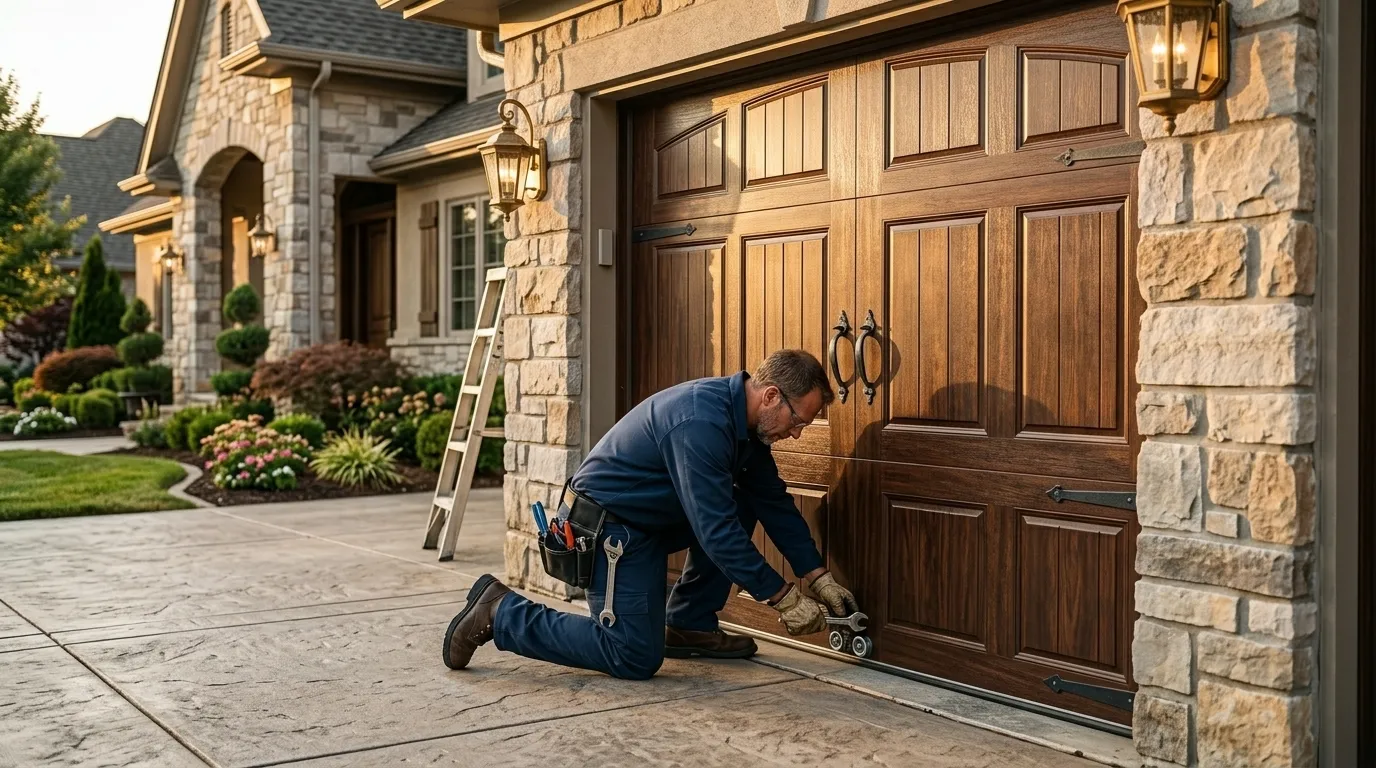
The climate here is the other half of it. This is a cold-severe band, and cold hits old steel track and old rollers harder than it hits a five-year-old door. Metal contracts, lubricant thickens, and a door that was already marginal in October is the one that won't open in January. We see more broken cables and cracked rollers on original hardware in the cold months than any other single cause.
One honest limit: if your door's hardware is original to a 1953 build and a part has failed, we may not carry an exact match on the truck. Some of that older extension-spring gear isn't something suppliers stock the way they stock modern torsion parts, and depending on what's needed, replacement of the whole spring assembly can end up making more sense than trying to source the original piece.
When We Can Get There
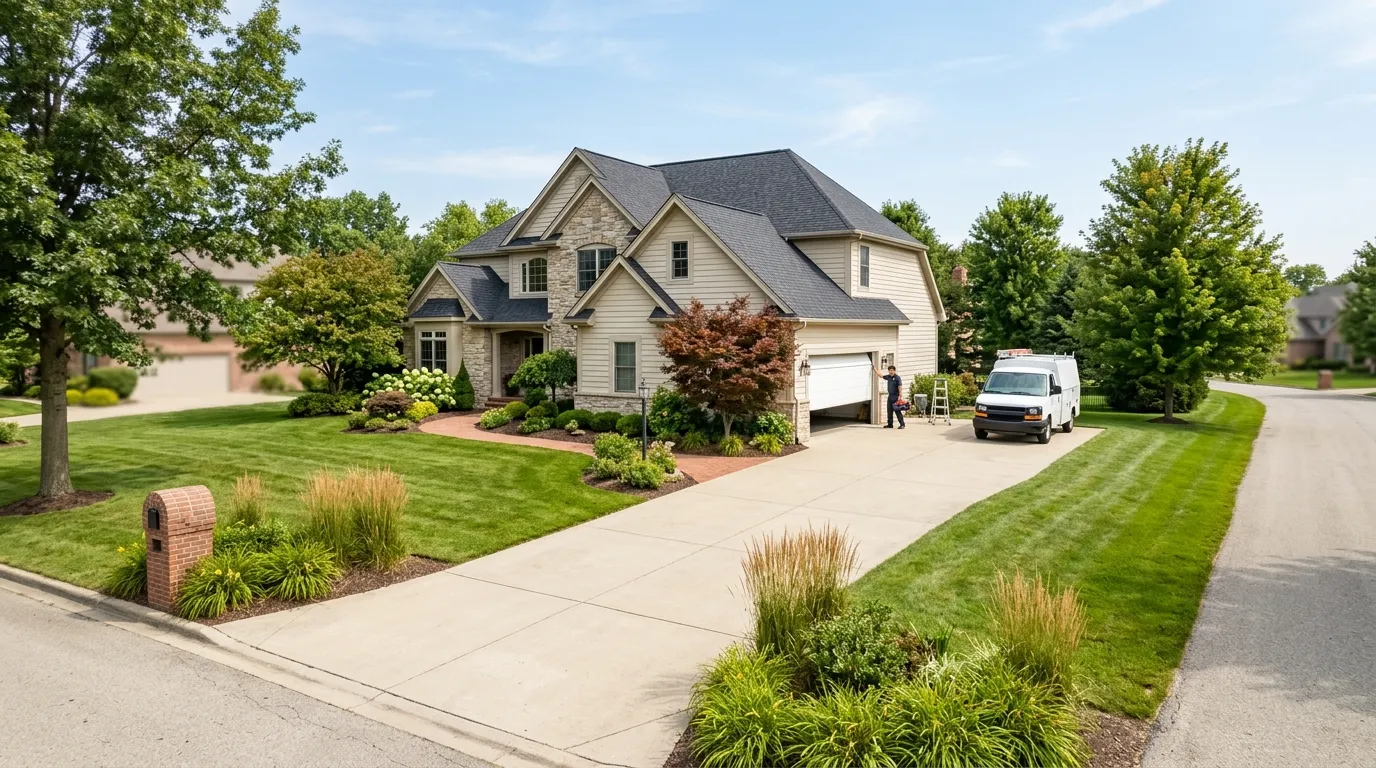
We run out of Youngstown, and Salem is about 17 miles from our yard - the farthest edge of towns we regularly cover, past Columbiana and Washingtonville on the way. We don't have a depot in Salem and we're not going to claim a response time we can't back up from that distance. What we can tell you is that we do come out here regularly as part of the same route that covers the rest of this side of the service area, so a Salem call isn't a special trip, it's a normal one.
Because of the distance, if you're dealing with a door that's stuck open or a spring that's let go and the car's trapped inside, say so when you call - that changes how the job gets slotted in versus a routine tune-up or a part that can wait a day. We'd rather be straight about the drive than promise something we can't hold to.
The Calls We Get From Here
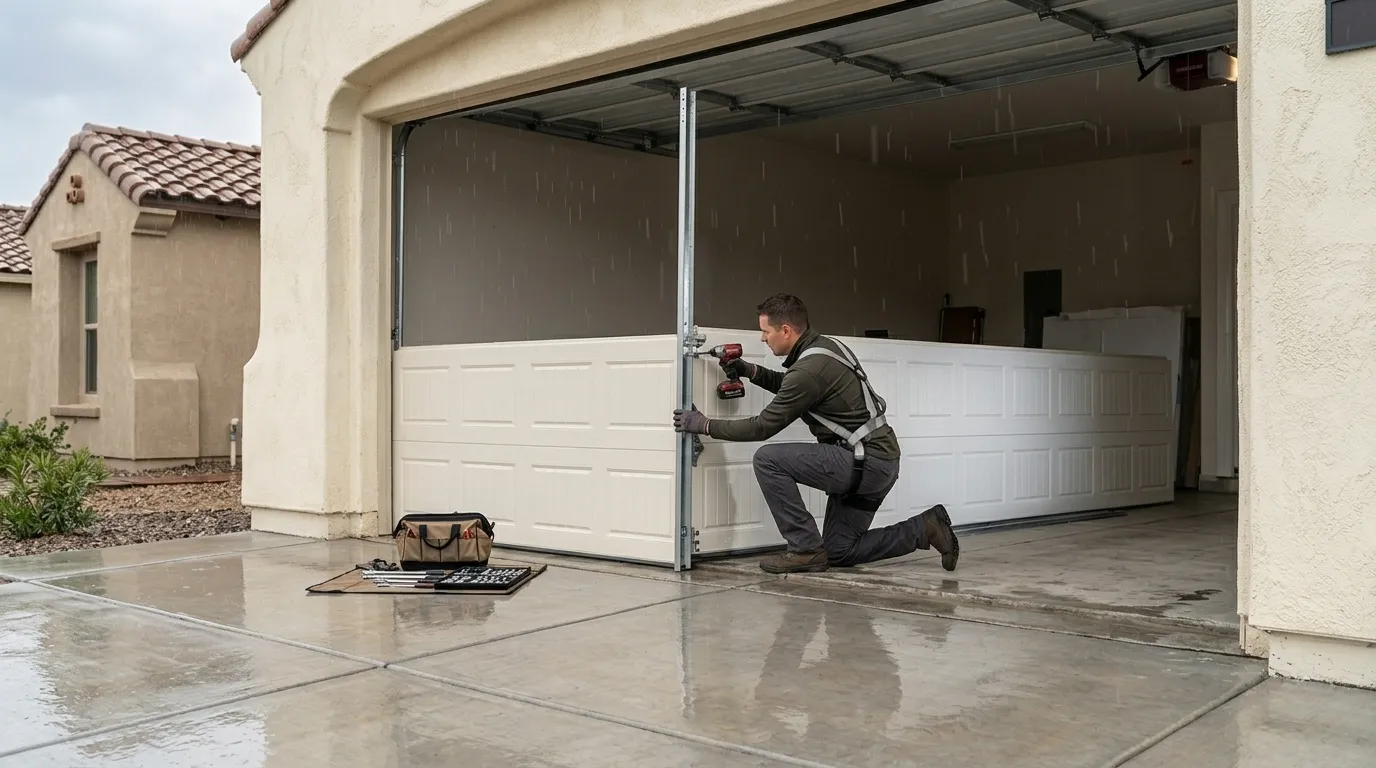
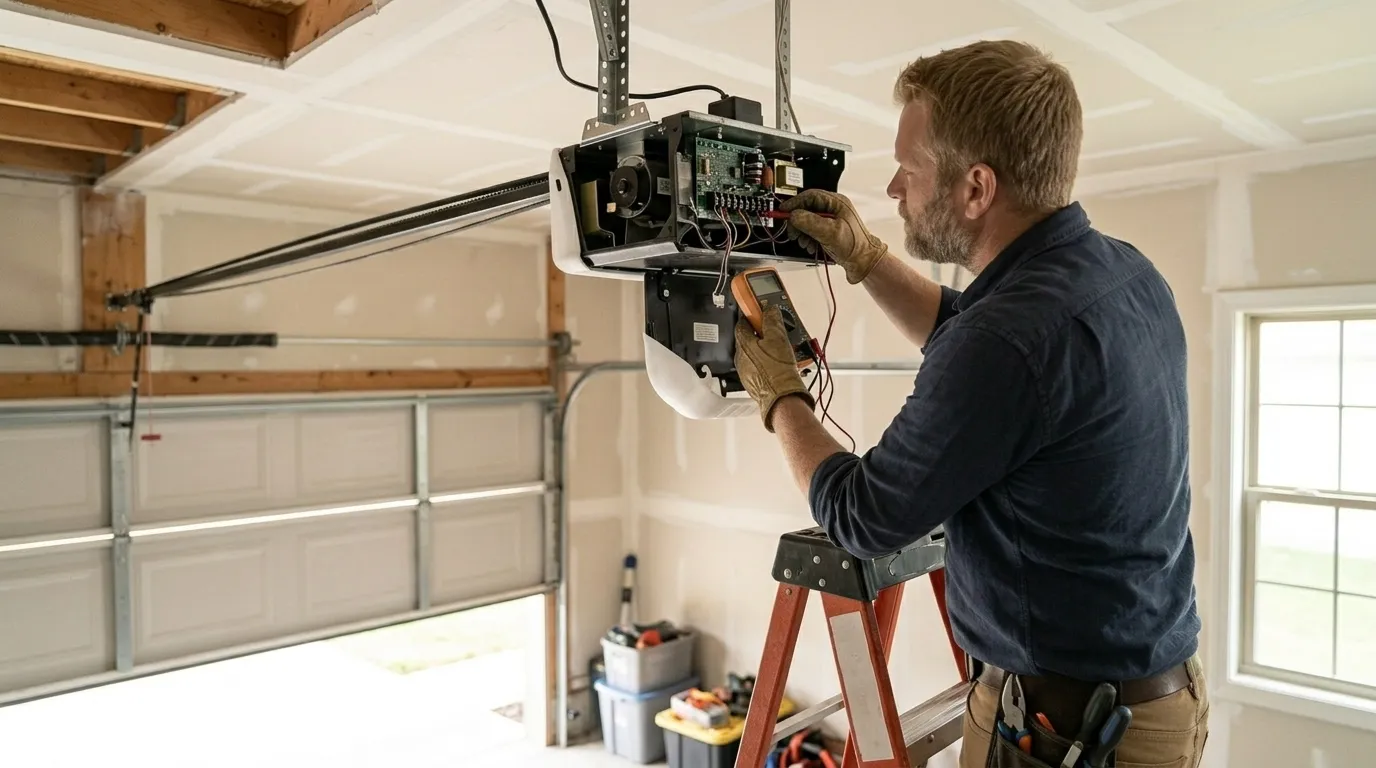
Most Salem calls fall into two groups. The first is original 1950s-era hardware finally giving out - an extension spring that's stretched past useful tension, a rusted track bracket, an opener that's clearly a later add-on straining against gear that predates it. The second is more ordinary: a broken torsion spring on a door that was already replaced at some point, cables that have frayed, or a panel that's taken a hit from a car bumper or a hard freeze.
With median household income here around $50,250, lower than the roughly $60,598 median across the full service area, we notice more Salem homeowners asking us to repair rather than replace where that's a real option - and with a 1950s door, that's often the more sensible call anyway once you've matched the hardware. When the springs, track, and opener are all original and all near the end of their life at once, we'll say so plainly rather than patch one piece and leave the rest to fail next winter.
How it works
From “it’s stuck” to “it’s fixed”
01
Tell us what’s wrong
Describe the symptom - won’t open, loud bang, opener runs but the door won’t move.
02
On-site diagnosis
A technician tests the door under power and by hand and finds what actually failed.
03
Clear, up-front plan
You get the fix that’s needed and what drives the cost - before any work starts.
04
Repaired & tested
The repair is done, the door is set true and tested, and the work area left clean.
Serving Youngstown, OH - tell us what your door’s doing and we’ll take it from there.
No. We run out of Youngstown, about 17 miles away, and cover Salem as part of our regular route through this side of the service area. We won't quote a response time as if we're based here, but Salem is a normal stop for us, not a special trip.
My garage door has springs on the sides, not over the top - is that a problem?
That's an extension-spring setup, common in houses built around Salem's 1953 median build year. It's not automatically a problem, but those springs wear unevenly and can leave a door hanging crooked before they fully fail. Worth having checked if the door's binding or sitting off-level.
Why does my door act up more in the winter?
This area sits in a cold-severe climate band, and cold hardware - especially older track, rollers, and cable - handles temperature swings worse than newer parts. A door that's marginal in fall often becomes a no-go in January. It's a common pattern on older Salem hardware specifically.
Can you match the original parts on an older door?
Sometimes, but not always. Extension-spring hardware from a 1953-era build isn't stocked the way modern torsion parts are, and depending on what's failed, replacing the full spring assembly can be more practical than hunting down an exact original match.